Jakarta, ThedailyID — Tens of thousands of tons of household food waste in Jakarta could soon find a new purpose beyond landfills. Bank Jakarta is turning kitchen waste into cooking gas and fertilizer through a communal biodigester initiative in North Jakarta.
The city-owned bank launched the project through its Corporate Social Responsibility (CSR) program at the Rorotan Public Housing (Rusunawa) and Rawa Badak Utara waste recycling facility.

The initiative converts food scraps into renewable biogas and fertilizers. It also aims to create a localized waste management system that benefits residents directly.
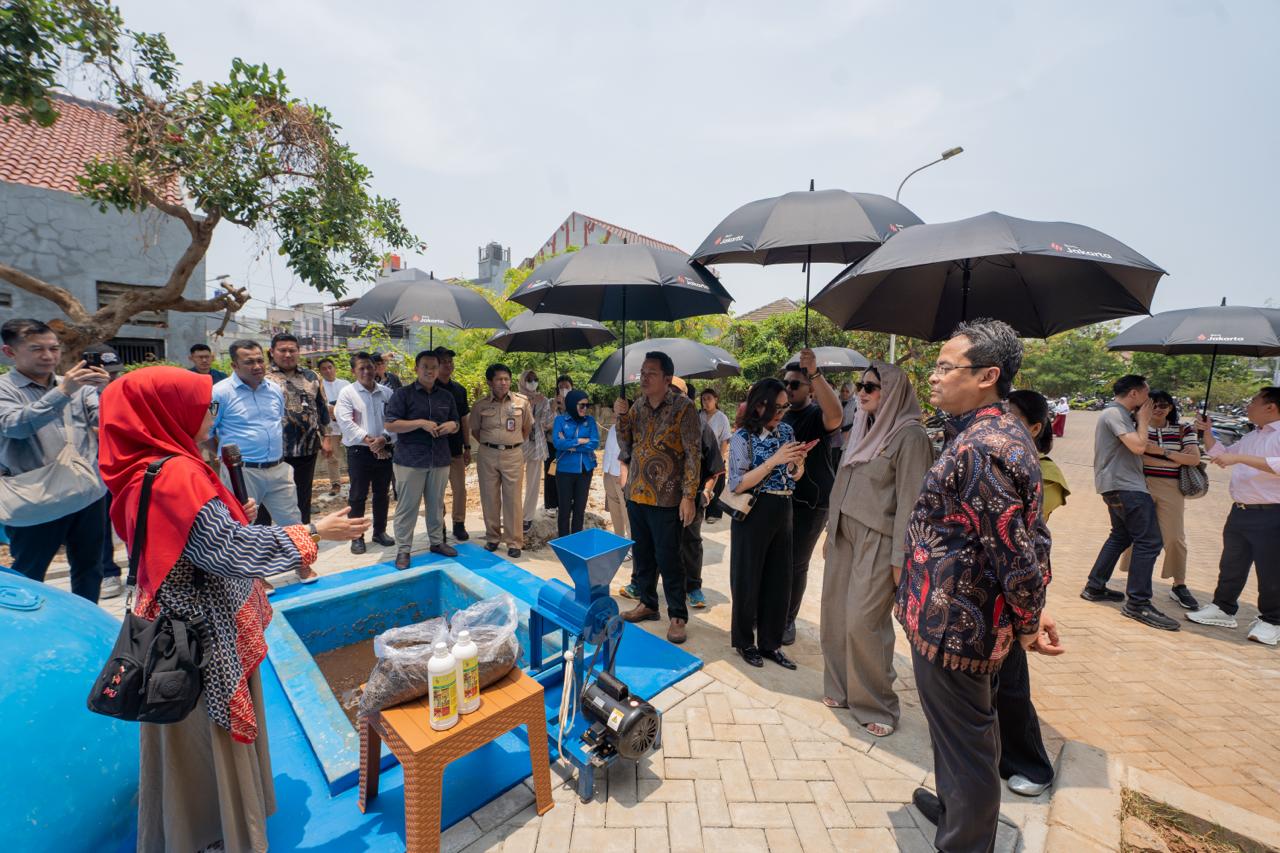
“Around 60 percent of our waste is kitchen organic matter that desperately requires specialized processing,” Ghozi Zulazmi, Chairman of the Special Committee on Corporate Social Responsibility at the Jakarta Regional House of Representatives (DPRD DKI Jakarta), said during an inspection on Monday, October 5, 2026.
“We hope this biodigester will allow organic waste to be processed right at the source, turning it into renewable biogas that residents can immediately use for cooking,” he added.
Ghozi inspected the facilities alongside officials from the Ministry of Environment and Forestry (KLHK) and the North Jakarta Environmental Sub-agency. He said corporate social programs should go beyond conventional philanthropy.
According to Ghozi, lawmakers are also drafting a local regulation (Perda) that would establish a legal framework for state-owned and private companies to support long-term environmental initiatives.
At the Rorotan facility, fiberglass biodigesters and specialized crushers can process up to 250 kilograms of organic waste per hour. The facility handles up to 1.2 tons of organic waste each day from around 400 households across four residential towers.
The system can replace conventional LPG for cooking while reducing greenhouse gas emissions by an estimated 154.4 tons of CO2 equivalent annually. It can also produce up to 450 liters of liquid fertilizer and 100 kilograms of solid compost each day.
“For Bank Jakarta, this environmental program is far more than just setting up installations. It is part of building a sustainable waste management ecosystem closer to the community with immediate benefits,” Bank Jakarta President Director Agus H Widodo said.
“Turning waste into renewable energy is no longer optional, but an absolute necessity for Jakarta,” he added.
The project has also changed waste-sorting habits among residents. Edy Mulyanto, Head of the North Jakarta Environmental Sub-agency, said the presence of local waste processing off-takers helped increase household waste sorting at the pilot site from around 5 percent to nearly 90 percent.
North Jakarta is currently serving as the primary pilot district for Indonesia’s national waste management roadmap. Regional lawmakers and city officials plan to replicate the model in densely populated residential areas across South and West Jakarta.
The initiative places waste management closer to where waste is produced. It also shows how corporate environmental programs can combine renewable energy, urban farming and community-level waste processing in one system.