Jakarta, ThedailyID — Jakarta is expanding cooperation between regional and national state-owned enterprises to become one of the world’s top 50 global cities by 2030. The latest agreements cover healthcare, housing finance, digital infrastructure, renewable energy, and public transportation.
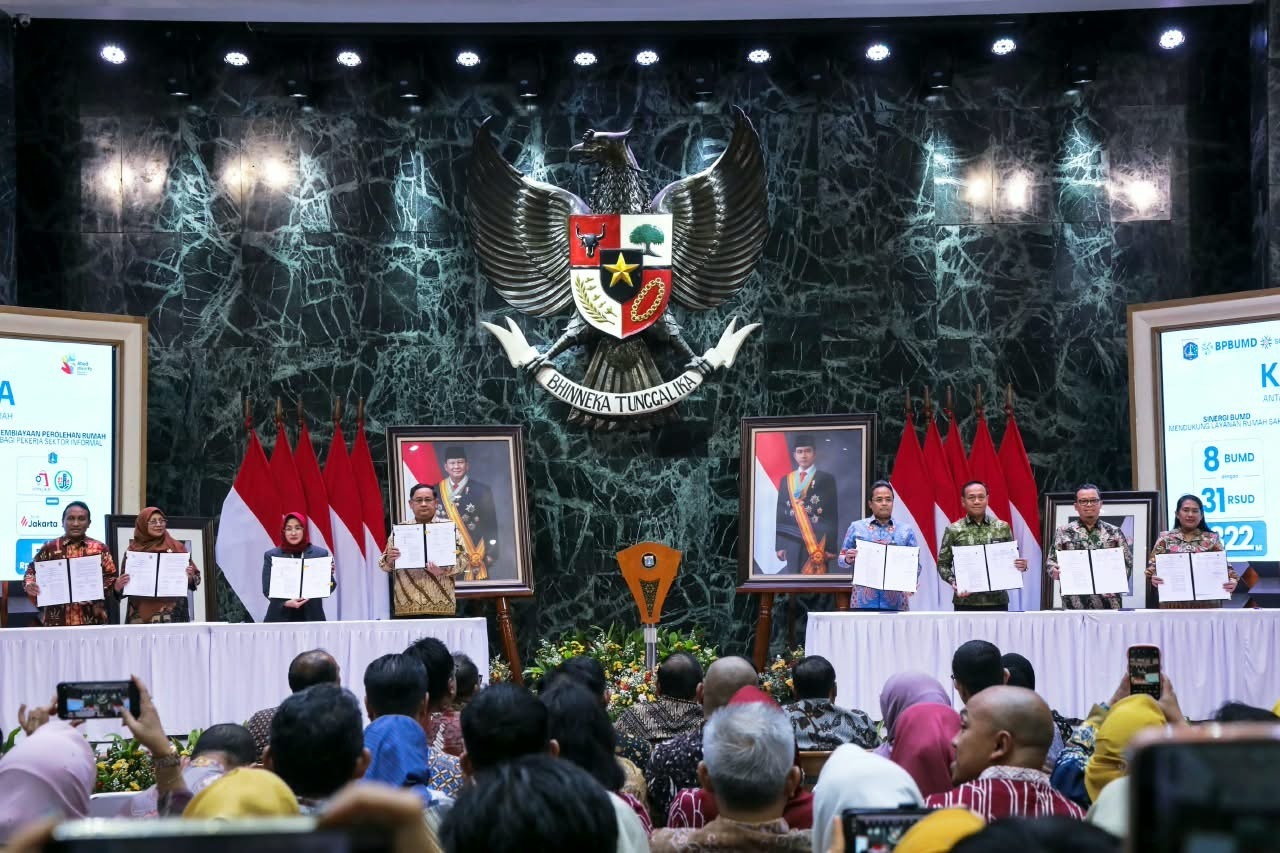
The Jakarta Provincial Government oversaw the signing of memorandums of understanding, joint agreements, and credit facilities at City Hall. Governor Pramono Anung said the city needs stronger coordination across multiple sectors to achieve its development goals.


“Jakarta’s development cannot be carried out in silos. It requires synergy across the city’s entire ecosystem,” Pramono said.
He also urged regional state-owned enterprises, known as BUMD, to turn agreements into practical programs that benefit residents. According to Pramono, success depends on the real impact of these partnerships, not the number of documents signed.
Meanwhile, Saefullah Hidayat, head of Jakarta’s Regional-Owned Enterprise Development Agency (BP BUMD), reported 52 strategic partnerships by the third quarter of 2026. These include 27 collaborations between regional and national state-owned enterprises, plus 25 agreements involving 14 regional companies.
The latest phase features 15 major agreements across several sectors. In healthcare, eight regional enterprises have partnered with the Indonesian Regional Hospital Association (ARSADA). Their plans cover supply chains, medical waste management, clean water access, and medical tourism across 31 regional hospitals.
In addition, Bank Jakarta and Jamkrida Jakarta are working with local housing and trade agencies to expand housing finance for informal-sector workers. PT Jakarta Tourisindo has also partnered with vocational school SMK 58 to develop youth skills through creative arts exhibitions.
Digital connectivity and cleaner energy are also priorities. PT Jakarta Infrastruktur Propertindo is expanding telecommunications and digital infrastructure with PT Infrastruktur Telekomunikasi Indonesia and PT Danareksa.
Meanwhile, Perumda Paljaya and Pertamina are exploring ways to convert fat, oil, and grease waste into biofuel. TransJakarta is also working with Pertamina to develop a hydrogen ecosystem for cleaner public transportation.
For urban mobility, PT Jakarta Industrial Estate Pulogadung and MRT Jakarta are pursuing transit-oriented development along the MRT East-West line. Bank Jakarta has also approved credit facilities for TransJakarta’s fleet electrification. Furthermore, the bank is financing a pedestrian deck at Dukuh Atas in collaboration with MRT Jakarta.
Beyond infrastructure, Jakarta is investing in workforce development. Regional enterprises are working with the Jakarta Manpower, Transmigration, and Energy Department to provide 16 vocational training classes for 320 residents by the end of 2026.
The courses will cover foreign languages, digital marketing, content creation, hospitality, and electrical engineering. As a result, the programs aim to strengthen workers’ skills and improve their access to employment opportunities.
Saefullah said cross-sector partnerships would remain central to Jakarta’s development strategy. Ultimately, the provincial government expects these agreements to improve enterprise performance, support regional economic growth, and deliver measurable benefits to residents.