

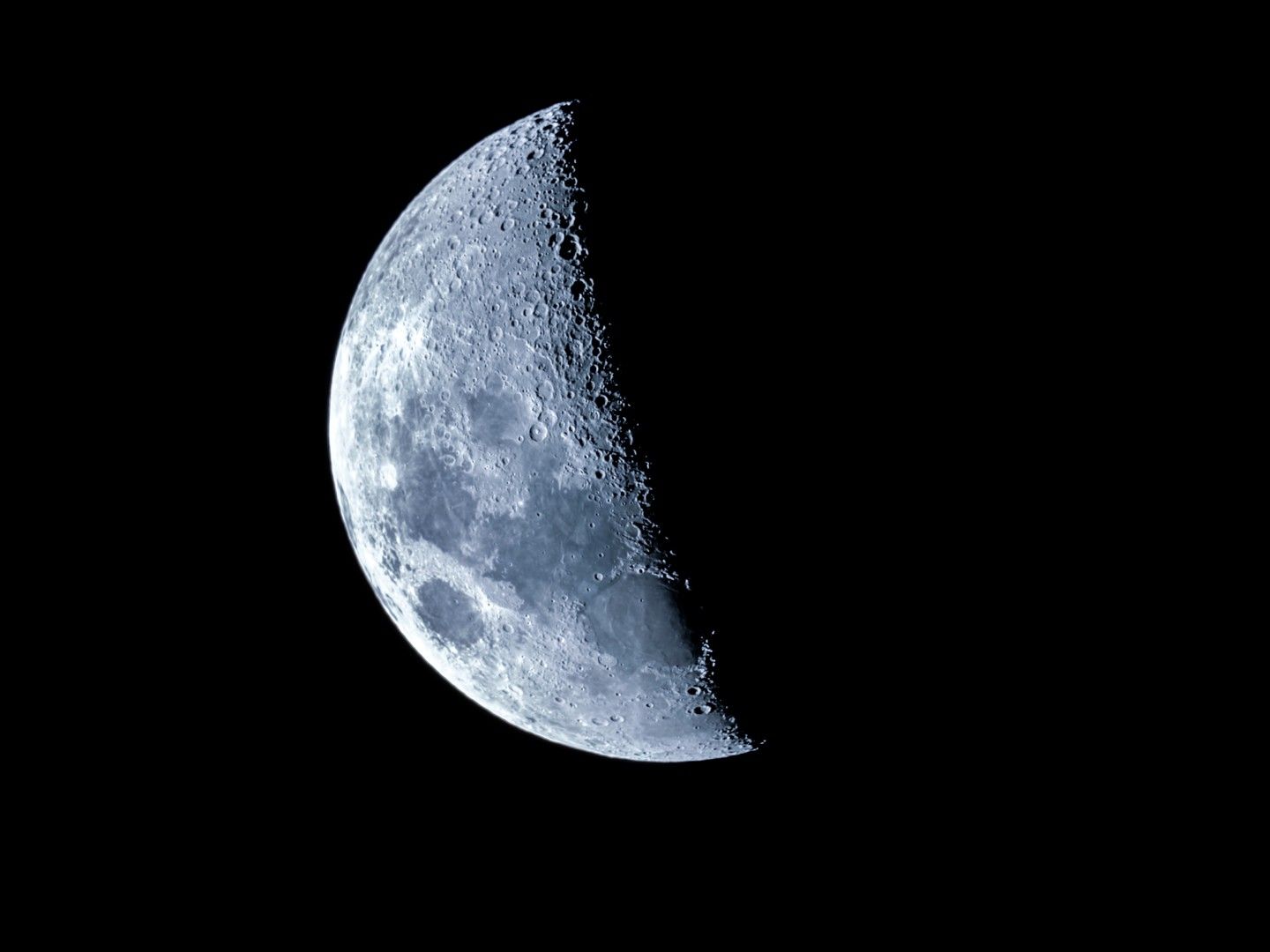


Jakarta, ThedailyID — The Moon is slowly moving away from Earth at an average rate of about 3.8 centimeters per year. Scientists say the movement results from a long-term gravitational interaction between Earth and its natural satellite.
Thomas Djamaluddin, a Research Professor of Astronomy and Astrophysics at Indonesia’s National Research and Innovation Agency (BRIN), explained that Earth and the Moon constantly interact through gravity.
The interaction affects both Earth’s rotation and the Moon’s orbit. On average, the Moon currently sits about 384,000 kilometers from Earth.
“Earth’s gravity causes tidal forces on the Moon, which slow the Moon’s rotation until it becomes tidally locked to its 27.3-day orbital period,” Thomas said in a statement on his YouTube channel, as reported Thursday, September 17.
The Moon also creates tidal forces on Earth. These forces gradually slow Earth’s rotation, causing the length of a day to increase over very long periods.
“Over 200 million years, Earth’s rotation is estimated to slow by one hour, making a day on Earth 25 hours long,” Thomas said.
The changing distance also relates to how tidal energy moves between Earth and the Moon. The Moon’s gravity pulls Earth’s oceans and creates tides.
Because Earth rotates faster than the Moon orbits, the movement of tidal waters transfers angular momentum to the Moon. This energy gradually pushes the Moon into a slightly more distant orbit.
Sonni Setiawan, a lecturer at IPB University’s Department of Geophysics and Meteorology, also explained that the Moon’s orbit is elliptical rather than perfectly circular.
As a result, the Moon’s distance from Earth changes during each orbit. It reaches its closest point at perigee and its farthest point at apogee.
Still, the Moon’s average distance from Earth increases over the long term. Sonni said the process is natural and does not pose a direct threat to humans.
A change of 3.8 centimeters per year is far too small to create noticeable effects in everyday life. The Moon will also not suddenly escape Earth’s gravity.
In an extremely distant future, Earth’s rotation could become tidally locked with the Moon. However, that scenario lies far beyond the timescale of human civilization.
Long before then, larger changes involving the Sun are expected to reshape Earth’s environment. According to the source, the Sun could become brighter over roughly one billion years, while several billion years later it is expected to expand into a red giant.