

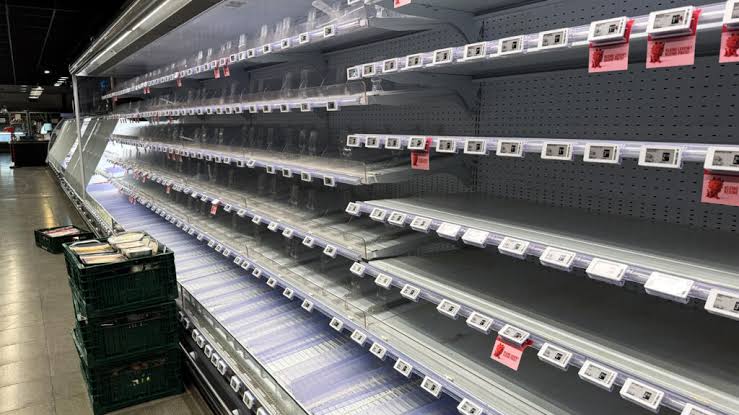
Jakarta, ThedailyID — Supermarket refrigerators and freezers across Europe have become targets of repeated cyberattacks. Cybersecurity experts say outdated systems and weak protection make these devices easy targets for hackers.
Marta Rybczynska, a cybersecurity expert at Ygreky, said attackers often target refrigerators and freezers because they are relatively easy to breach. Furthermore, information about exploiting these devices is widely available online.


Rybczynska also suspects that a state-backed group could be behind the attacks. However, she noted that the perpetrators may not gain any direct financial benefit from these operations.
Investigators have yet to identify those responsible. Nevertheless, Rybczynska believes the possibility of state involvement has increased following the latest incidents.
“After the attack in France, I initially thought the perpetrators were a group of young people. However, following this latest case, the possibility of state involvement has become much greater, unless they are deliberately copying the same methods,” she said, as quoted by Euronews on November 3.
Pavlina Pavlova, founder of the nonprofit organization Critical Cyber, pointed to another major weakness. Many affected devices still operate on outdated systems that no longer receive security updates or cannot be patched.
She said several refrigeration control units targeted in France were older models. Their security vulnerabilities had reportedly been known since 2025, yet the devices had not received necessary updates.
Pavlova identified three reasons why supermarket refrigerators and freezers are attractive targets: they are easy to access, offer opportunities for disruption, and often have fragile security systems.
Moreover, artificial intelligence could make the threat more serious. AI-powered tools can help attackers identify vulnerabilities and automate sophisticated cyberattacks at speeds beyond human capabilities.
“AI-driven vulnerability detection makes finding and exploiting weaknesses easier and faster than ever, including in critical functions that people heavily depend on,” Pavlova said. She added that slow security patching remains a major challenge for organizations defending their systems.
Supermarkets Often Underestimate Cyber Risks
Rybczynska said some affected retailers appeared not to have strengthened their security after earlier attacks in France. One possible reason is that many businesses do not consider their operational systems potential cyberattack targets.
She stressed that retailers must protect services they may consider unimportant but which still carry security risks.
“A major problem I see is that stores do not consider themselves potential targets. There is an urgent need to start protecting services that have traditionally been viewed as insufficiently important,” she said.
The latest incidents affected supermarkets in Belgium, Luxembourg, Estonia, the Netherlands, and Ireland on November 2. Sweden also reported an incident, with one retailer identifying a cyberattack as the cause.
These attacks followed a major incident in France several weeks earlier. Between 500 and 700 supermarkets reportedly experienced attacks that caused freezer temperatures to rise as high as 50 degrees Celsius.
No group has claimed responsibility for the latest incidents. French authorities believe the October 12 attack involved foreign actors, although they have not officially identified any perpetrators.
Why Are Supermarket Refrigerators Connected to the Internet?
According to Euronews Next, refrigerators, heating systems, and security equipment increasingly connect to the internet. These connections allow store owners to monitor and manage equipment remotely.
However, any device connected to the internet through applications or cloud networks can potentially become a target. Once inside a network, hackers may collect information or change device settings.
In more serious cases, attackers can lock legitimate users out of their accounts or shut down equipment entirely. Consequently, experts say retailers must treat connected appliances as part of their wider cybersecurity infrastructure.