

Jakarta, ThedailyID — Indonesia’s House of Representatives (DPR) has pledged to pass the Asset Forfeiture Bill into law by December 15, 2026.
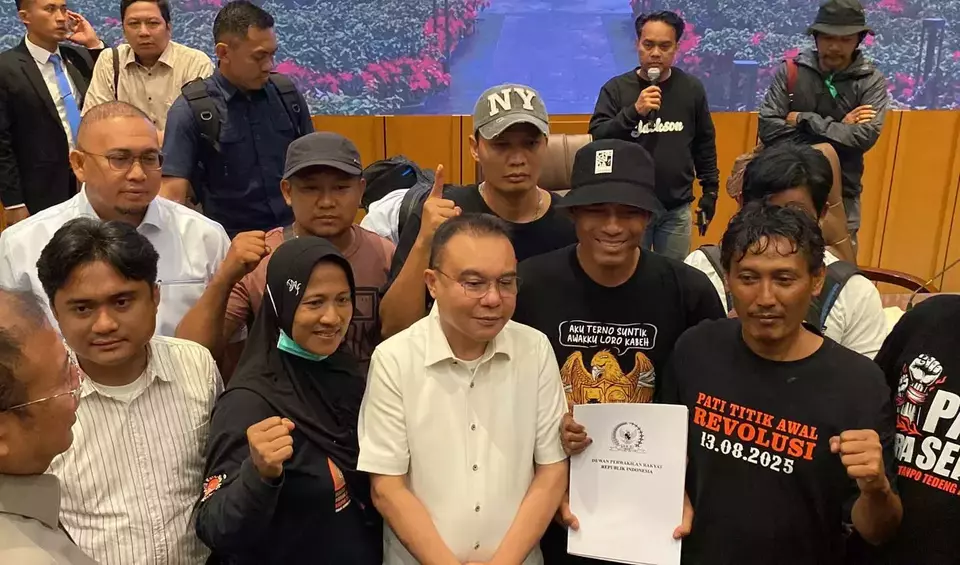
The commitment came during a meeting with the Pati United Community Alliance (AMPB) on Thursday (27/8). The group held a protest outside the Parliament building in Jakarta.


DPR leaders Sufmi Dasco Ahmad, Cucu Ahmad Syamsurizal, and Saan Mustopa met with AMPB representatives during a parliamentary session.
“We agreed that the deadline for passing the Asset Forfeiture Bill will be December 15, 2026,” Dasco said during the meeting, Friday (28/08)
The three DPR leaders also signed an agreement to reinforce their commitment. They pledged to resign from their leadership positions and parliamentary seats if the bill misses the deadline.
“Following the meeting, DPR leaders stated that the Asset Forfeiture Bill would pass no later than December 15. If it does not pass by then, they are prepared to resign from their leadership positions and as DPR members,” AMPB coordinator Supriyoni, also known as Botok Pati, said, Friday (28/08)
However, civil society groups have raised concerns about the bill’s current draft.
A coalition that includes Indonesia Corruption Watch, Auriga, Kaoem Telapak, PSHK, SAKSI, and Transparency International Indonesia has urged the DPR and government to publish the latest draft. They also want lawmakers to release its list of issues.
The coalition identified three major concerns in the DPR’s July 10, 2026 draft.
First, the coalition suspects that the draft removes provisions on illicit enrichment. The provision could target assets that do not match a public official’s legitimate income.
Second, the coalition believes the draft narrows the scope of non-conviction-based asset forfeiture (NCB). This could limit its use against assets whose owners cannot face prosecution or remain unidentified.
Third, the coalition says the draft leaves the institution responsible for managing confiscated assets unclear.
The coalition warned that these issues could weaken the bill as an anti-corruption tool.
The December 15 deadline now puts pressure on lawmakers to resolve the disputed provisions and finalize the bill.