

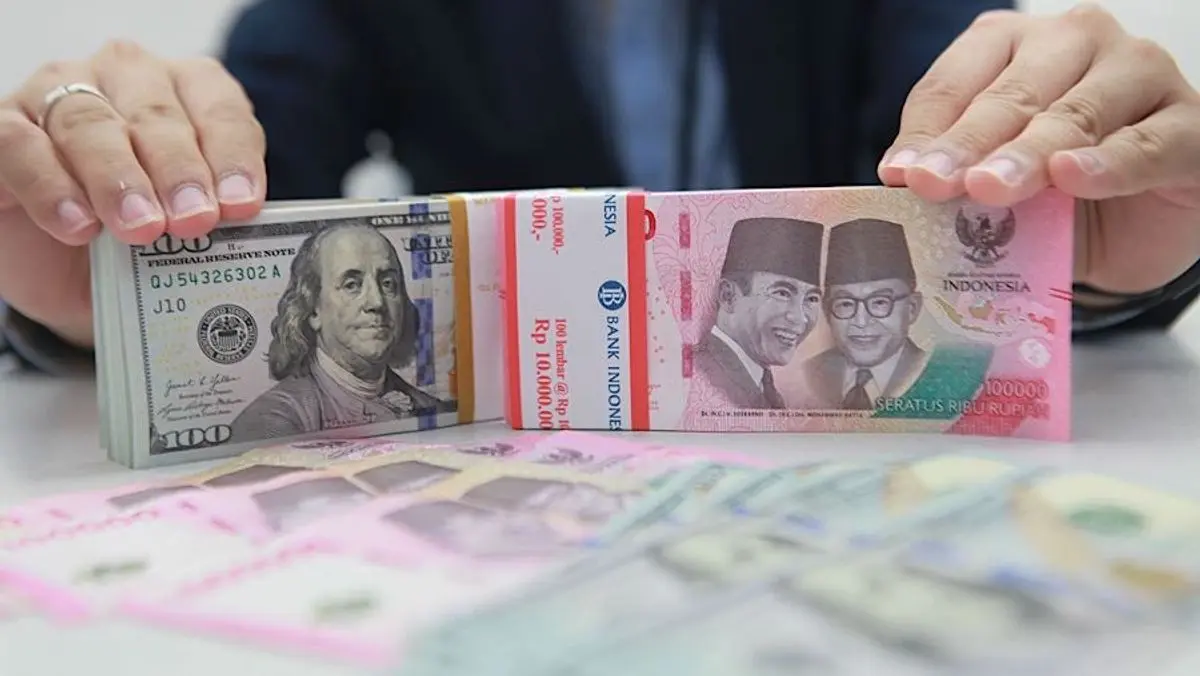
Jakarta, ThedailyID — The Indonesian rupiah weakened against the US dollar as global sentiment turned cautious, following threats by the United States to expand a blockade toward the Gulf of Oman. The move raised concerns over global trade disruption and energy supply risks.
The Gulf of Oman connects directly to the Strait of Hormuz. Around 20% of global oil supply passes through this route. Any escalation could disrupt shipments and push oil prices higher.


As a result, investors shifted funds into safe-haven assets like the US dollar. This movement pressured emerging market currencies, including the rupiah. The currency tends to weaken during periods of global uncertainty.
Analysts said the pressure came mainly from external factors. Domestic fundamentals remain relatively stable. However, global shocks can still affect capital flows and exchange rate stability.
In addition, rising oil prices could increase inflation risks. Indonesia relies on energy imports for part of its supply. Higher prices may reduce purchasing power and widen fiscal pressure.
Market volatility has also increased across regions. Traders are closely monitoring developments in the Middle East. Any escalation could trigger further risk-off sentiment in global markets.
Bank Indonesia is expected to stay alert. The central bank may intervene to stabilize the rupiah if needed. Policy coordination will remain key to managing volatility.
Overall, the rupiah reflects broader global uncertainty. Its movement will depend on geopolitical developments and energy market stability in the coming days.