

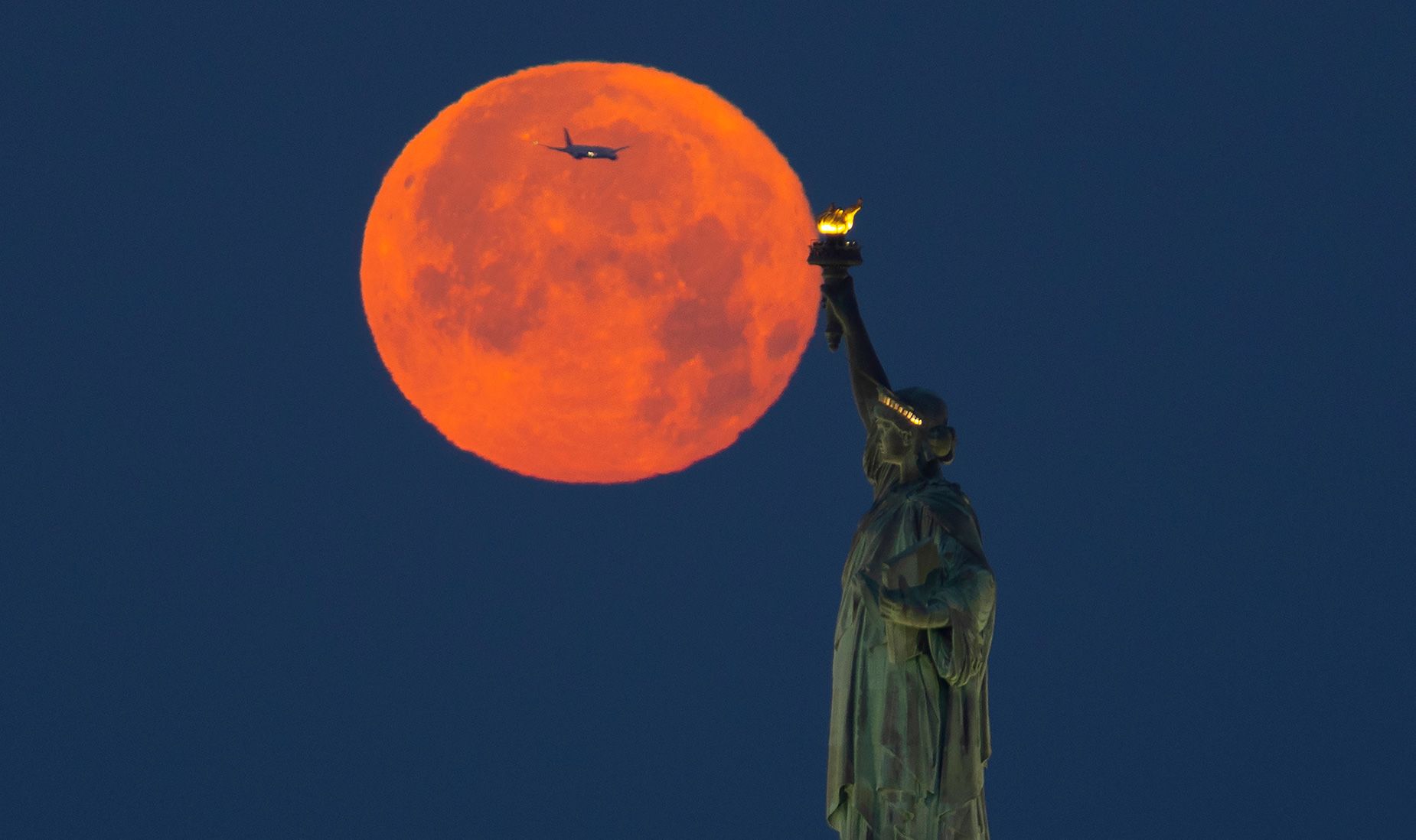
JAKARTA, ThedailyID — The annual Strawberry Moon will appear in the sky at the end of June, offering skywatchers a chance to observe one of the year’s most anticipated lunar events.
The June full moon, known as the Strawberry Moon, will reach its peak on June 29 at 23:57 UTC, or around 06:57 WIB on June 30.


This year’s event will also coincide with a micromoon. The phenomenon occurs when the Moon is near its farthest point from Earth in its orbit.
As a result, the Moon will appear slightly smaller and dimmer than a typical full moon.
The Strawberry Moon is the first full moon after the June solstice. For observers in the Northern Hemisphere, it will appear unusually low on the horizon.
Meanwhile, observers in the Southern Hemisphere will see the Moon higher in the sky than usual.
Despite its name, the Strawberry Moon will not appear pink or red. The term originated from Native American tribes that linked the June full moon to the strawberry harvest season.
Several cultures use different names for the same lunar event. These include Rose Moon, Hot Moon, and Mead Moon.
The June full moon is part of a long tradition of naming full moons throughout the year.
According to traditional Native American naming conventions, January features the Wolf Moon, while February is known for the Snow Moon.
March brings the Worm Moon, April the Pink Moon, and May the Flower Moon.
The remaining months include Buck Moon in July, Sturgeon Moon in August, Corn Moon in September, Hunter’s Moon in October, Beaver Moon in November, and Cold Moon in December.
June will also feature several other astronomical events.
On June 9, Venus and Jupiter will appear very close together in the western sky shortly after sunset.
From June 11 to June 15, Mercury will join Venus and Jupiter. The three planets will form a visible lineup above the western horizon.
Astronomers also expect a supermoon event in mid-June. However, it will occur during a new moon phase.
Because the Moon will align with the Sun, it will not be visible in the night sky.
The new moon period is often considered the best time to observe faint celestial objects. Darker skies make galaxies and star clusters easier to see.