

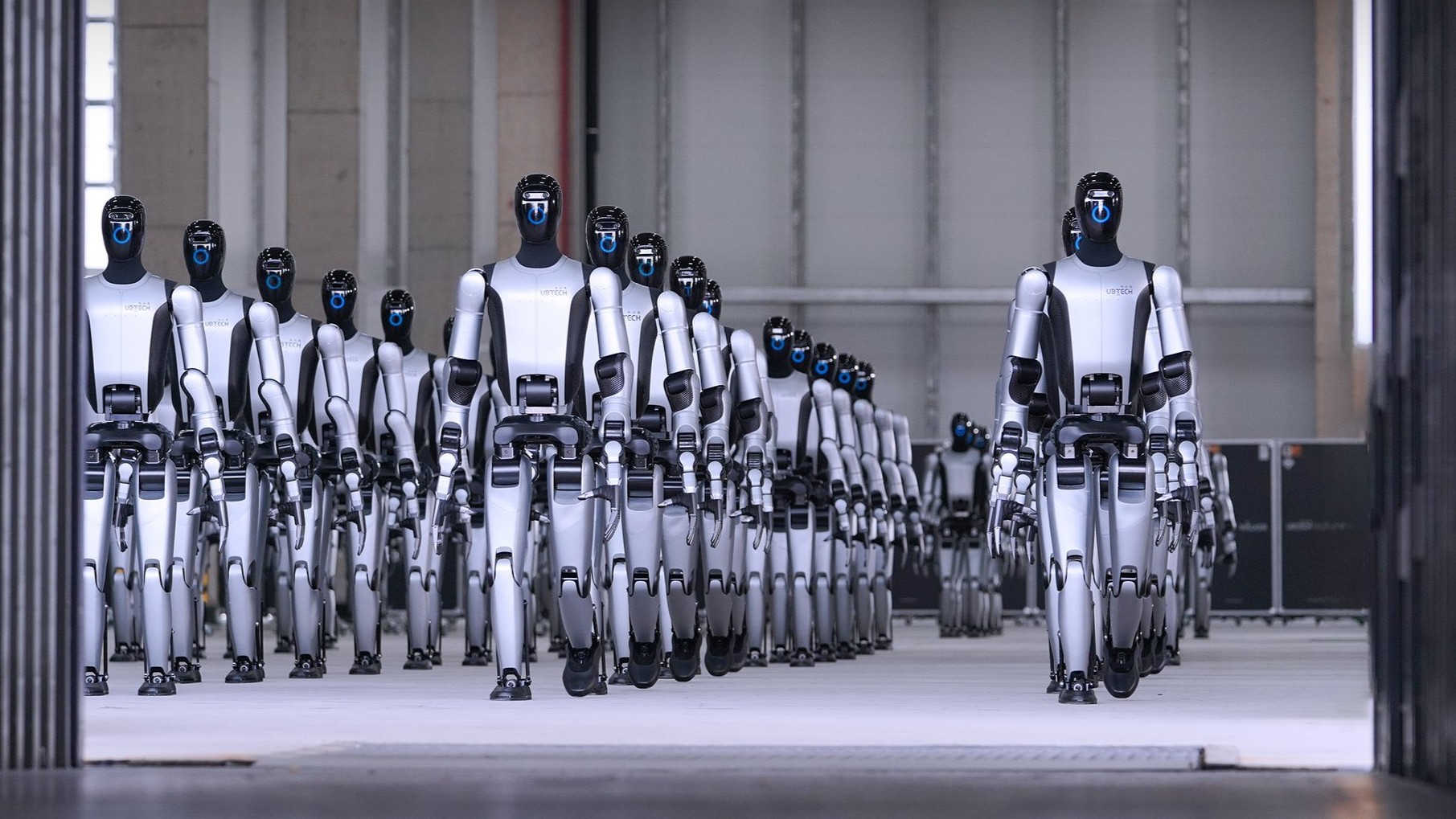
Jakarta, ThedailyID — New technology emerging from China could reshape the global landscape, as experts point to rapid advances in artificial intelligence and humanoid robotics.
The competition between China and the United States continues to intensify, especially in AI development. While the U.S. leads in high-end chips and advanced AI models, China focuses on practical innovations that directly impact everyday life.


One key example lies in humanoid robots. Recently, Chinese-developed robots demonstrated the ability to outperform humans in a half-marathon, highlighting major progress in mobility and endurance.
However, the latest developments go beyond performance. In a demonstration by X Square Robot in Beijing, humanoid robots successfully carried out tasks such as picking up trash and arranging flowers.
Although these tasks seem simple, they present deeper technical challenges. Unlike running or dancing, household activities require adaptability in unpredictable environments.
CEO Wang explained that precision remains a major hurdle. “If we miss by just 0.1 millimeters, the entire task can fail,” he said, emphasizing the complexity of physical interaction.
Therefore, repetitive movements like running rely on simpler training data. Meanwhile, everyday tasks demand more advanced AI systems that can interpret changing conditions in real time.
To address this, X Square Robot developed an AI model called Wall-B. The company trained it using data from more than 100 households to improve performance in real-world scenarios.
The company plans to roll out the technology through home-cleaning robots by the end of May 2026. In addition, it partnered with 58.com to offer combined human-and-robot cleaning services in Shenzhen. The service costs around 149 yuan, or roughly $20, for three hours. So far, the robots have operated in more than 50 homes, though feedback remains mixed.
Some users report that the robots still move slowly and make mistakes. For instance, machines may misplace objects or pause mid-task to process their surroundings.
Wang acknowledged these issues but emphasized that performance improves through continuous real-world use. In cases where robots fail to complete tasks, company staff can step in remotely to assist.
Looking ahead, the potential market remains significant. Domestic labor accounts for about 20 percent of GDP, suggesting strong demand for automation in household services.
The startup has raised billions of yuan in funding within just a few years. Major investors include Xiaomi and Alibaba, both of which actively expand their AI investments.
Overall, China’s latest technological push highlights a shift toward real-world applications. As these systems continue to evolve, they could transform industries and daily life on a global scale.