

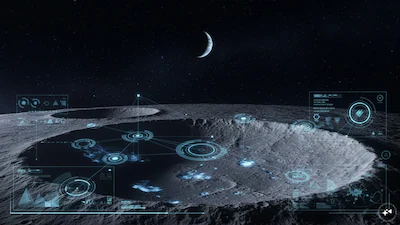
Jakarta, ThedailyID — NASA and IBM have released an open-source artificial intelligence model designed to help scientists analyze data from the Moon.
The NASA-IBM Lunar Foundation Model uses millions of lunar observations. It can help researchers study the Moon’s surface and support future plans for human activity there.


The model was trained mainly on high-resolution images and terrain data from NASA’s Lunar Reconnaissance Orbiter (LRO). The spacecraft has collected lunar observations for 17 years.
Researchers also trained the model with data from NASA’s GRAIL and Lunar Prospector missions. In addition, the model uses data from Japan’s JAXA SELENE/Kaguya mission.
NASA Chief Data Science Officer Kevin Murphy said the project aims to make the agency’s massive data collections easier to use.
“NASA has spent decades building an extraordinary scientific record of the Moon, but collecting data is only part of the work. We also need to make the data easier for scientists to explore and use,” Murphy said on July 10, according to NASA.
The AI model can help researchers map several lunar features. These include ice deposits, craters and volcanic areas.
Lunar ice has become a major research focus because it could indicate the presence of water. Researchers could potentially use water and oxygen as resources for future lunar bases and missions to Mars.
The model could also help scientists examine the Moon’s rough terrain and better understand its geological history. As a result, researchers could develop future lunar studies more efficiently.
NASA and IBM have also developed other AI models for space and Earth observation. Their Prithvi model uses Earth observation data for disaster monitoring, flood mapping, crop-yield forecasting and tropical storm prediction.
Meanwhile, the Surya model focuses on solar observations. It can help researchers study space weather events such as solar flares, which can disrupt power grids and satellite operations.
The Lunar Foundation Model also reflects NASA’s push for open science. Scientists from NASA, universities and research organizations contributed to the project.
The model is publicly available through Hugging Face. Its complete source code is also available on GitHub, allowing researchers and developers to test and experiment with it.