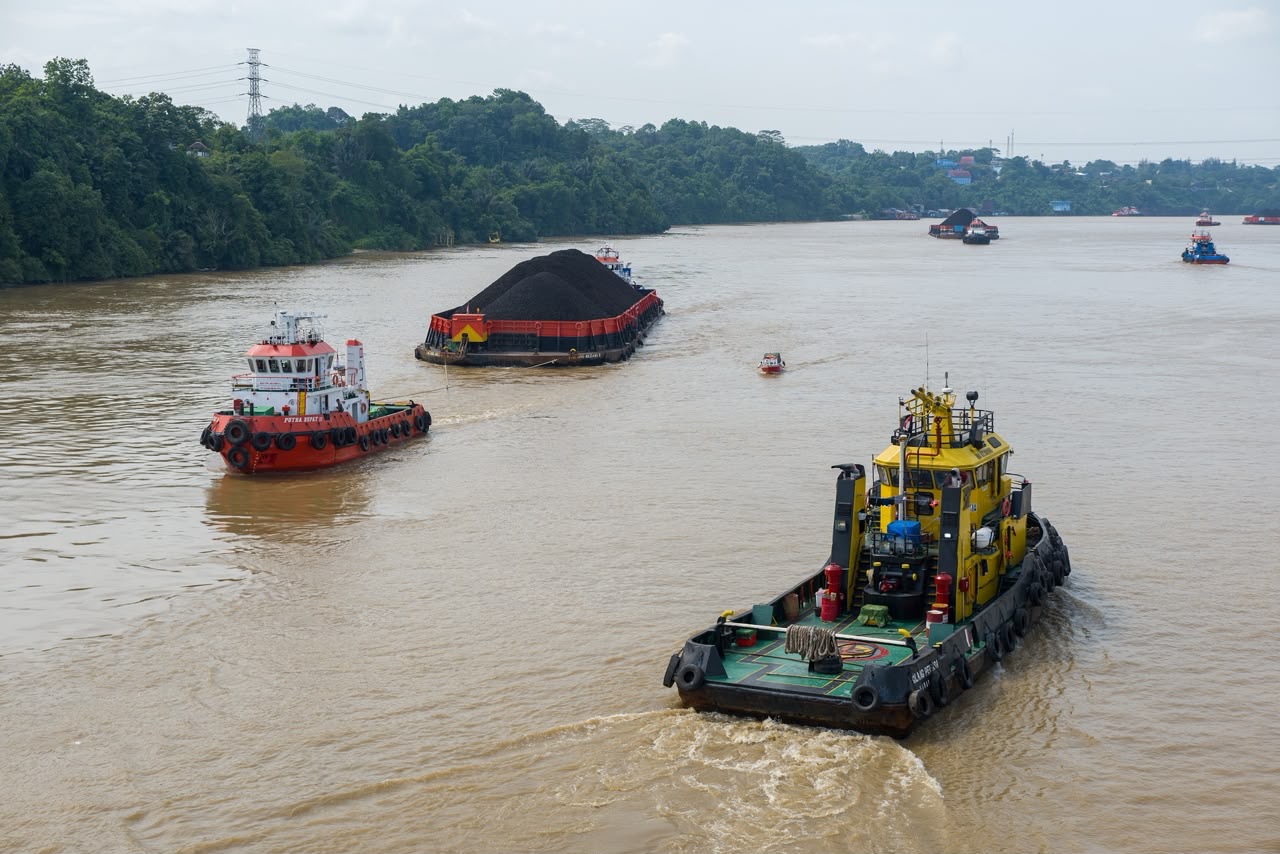
Jakarta, ThedailyID — Indonesia Resources Studies (IRESS) has urged the government to create a separate coal DMO quota for electricity from 2027.
The policy would permanently exclude coal supplied to private smelters from DMO calculations. IRESS said this could prevent smelter supplies from reducing coal allocations for power plants.

The proposal follows the current composition of Indonesia’s coal DMO. In 2025, smelters received around 70 million tons from the 239-million-ton DMO target.
That figure accounted for almost 30% of the total allocation. However, coal supplies to smelters do not follow the DMO benchmark price for power plants.
“DMO exists to guarantee basic needs that affect the public. The most fundamental need is electricity,” IRESS Executive Director Marwan Batubara said.
“Private smelters are businesses that buy coal at market prices. If their supplies count toward DMO, compliance may look high on paper while power plants may still lack coal,” he added.
Marwan said the government has already moved toward excluding smelters from DMO allocations. In March 2026, the Director General of Mineral and Coal at the Energy and Mineral Resources Ministry said smelters would no longer receive DMO coal that year.
IRESS now wants the Energy and Mineral Resources Ministry to formalize the policy through its 2027 DMO decision. The group said this would prevent the policy from changing from year to year.
IRESS also cited Article 157 of Government Regulation No. 39 of 2025. The provision requires holders of Mining Business Licenses (IUP) and Special Mining Business Licenses (IUPK) to prioritize state-owned enterprises in sectors serving public needs.
The regulation specifically includes electricity among those sectors. President Prabowo Subianto signed the regulation on Sept. 11, 2025.
According to IRESS, private smelters do not qualify as state-owned enterprises. Therefore, they should not receive priority under the provision.
The group highlighted rolling blackouts in Java in June 2026 as another reason for the policy change. Coal supply problems at power plants contributed to the disruptions.
Meanwhile, PLN’s coal demand is estimated to reach 154 million tons in 2026.
“We propose a separate electricity DMO quota for each company based on power plant demand,” Marwan said on Oct. 4.
“The quota should only count when the coal actually reaches the power plant. Domestic sales alone should not determine compliance,” he added.
IRESS recommended three measures for the 2027 DMO policy.
First, the Energy and Mineral Resources Ministry should state that private smelter sales do not count toward DMO compliance.
Second, the government should set an electricity DMO quota for each company in the 2027 RKAB. Authorities should verify the quota through actual deliveries to power plants.
Third, the government should regularly publish DMO realization data by sector. IRESS said this would allow the public to monitor compliance.
Marwan said an electricity-focused DMO would ensure that mandatory domestic coal supplies support power generation.
“Coal required for the domestic market must truly help keep electricity running as a driver of domestic economic growth,” Marwan said.