
Jakarta, ThedailyID — Indonesia’s geothermal sector is delivering benefits beyond clean energy generation, emerging as a key driver of community welfare, local economic growth, and regional development.
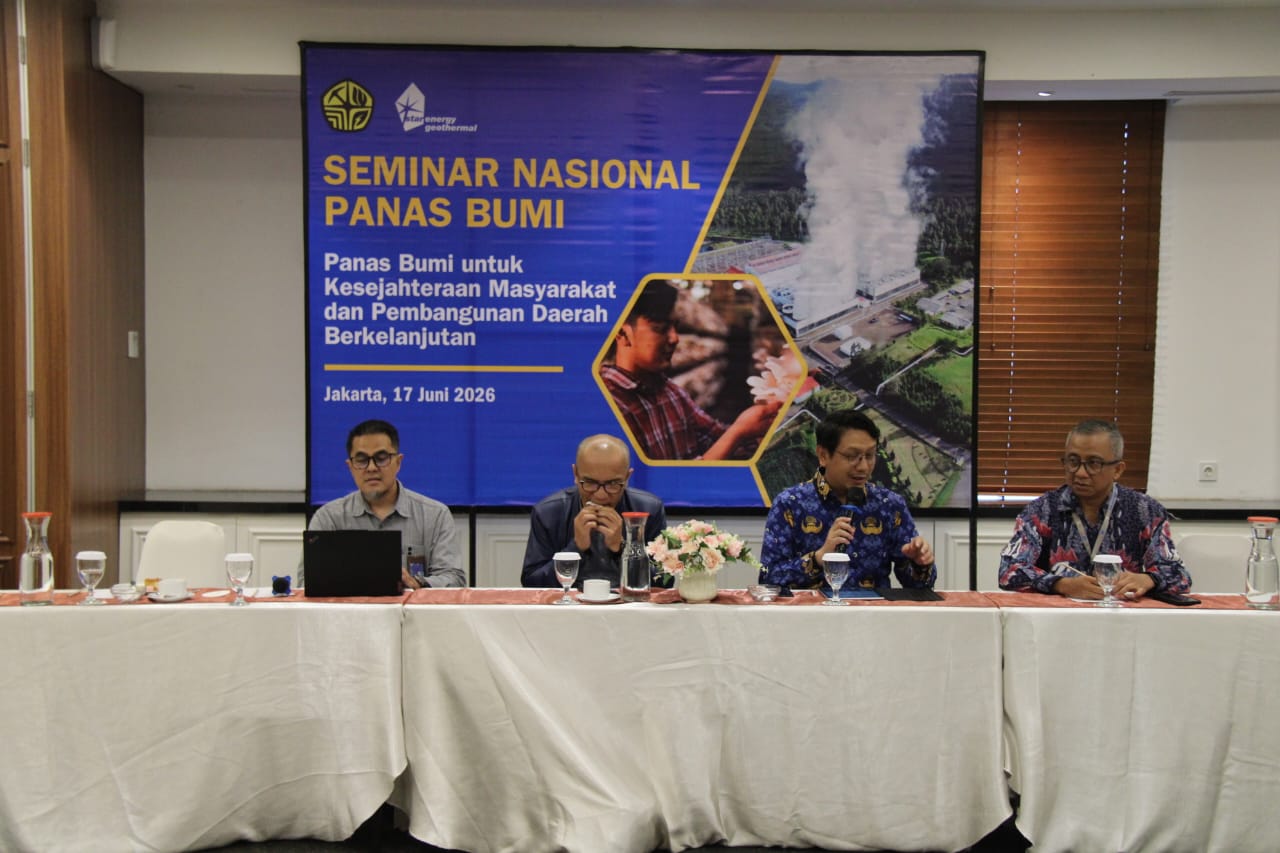
Officials and industry representatives highlighted the sector’s growing impact during the National Geothermal Seminar held in Jakarta on June 17.


The Ministry of Energy and Mineral Resources (ESDM) said geothermal development has supported various innovations that strengthen food security and local economies. In addition, direct geothermal utilization has helped communities create productive businesses and generate added value.
“Geothermal energy not only produces electricity but can also improve economic productivity, strengthen food security, and create value for local communities,” said Mustika Delimantoro, Coordinator for Geothermal Investment and Cooperation at the ministry.
Meanwhile, regional governments continue to benefit from geothermal production bonuses. According to Garut Regional Secretary Nurdin Yana, Garut Regency received Rp137.84 billion in geothermal production bonuses between 2015 and 2025.
He said the funds have become an important tool for accelerating development and improving living standards in communities located near geothermal projects.
In 2025 alone, Garut allocated Rp14.43 billion from the program. The local government distributed Rp7.21 billion to 36 villages and provided Rp2.89 billion in grants for 94 religious facilities.
Moreover, authorities used the funds to improve strategic road infrastructure, including the Cigadog, Palnunjuk–Pasirwangi, and Pasirwangi–Darajat routes.
For 2026, Garut allocated another Rp8.4 billion from geothermal production bonuses. The funding will support river embankments, irrigation rehabilitation, clean water systems, sanitation facilities, village roads, and school renovations.
Beyond economic contributions, geothermal projects are also generating environmental and social benefits.
Star Energy Geothermal currently operates the Wayang Windu, Darajat, and Salak geothermal fields with a combined installed capacity of 929.3 megawatts. The facilities provide enough clean energy to supply approximately 1.44 million Indonesian households annually.
“Successful geothermal development is measured not only by the energy produced but also by the positive and sustainable impact on communities and the environment,” said Ismail Hidayat, Head of Geothermal Engineering at Star Energy Geothermal Wayang Windu.
Furthermore, the company has launched community empowerment initiatives through its Tumbuh Bersama program. The project supports mushroom farming by local community groups and helped establish Genki Noko Farm.
The enterprise now produces up to 40,000 mushroom growing bags and has expanded its business capital from Rp1 million to Rp30 million. At the same time, the program supports food supply initiatives aimed at preventing stunting.
The project also delivers measurable environmental benefits. By utilizing rice straw and coffee husk waste as mushroom-growing media, the initiative prevents an estimated 3,787 kilograms of CO2 equivalent emissions each year.
Additionally, the program creates potential supplementary income of around Rp12.75 million annually for participating communities.
As Indonesia continues expanding its geothermal capacity, policymakers and industry leaders see significant opportunities to maximize its role not only as a source of renewable energy but also as a catalyst for economic, social, and environmental development.