

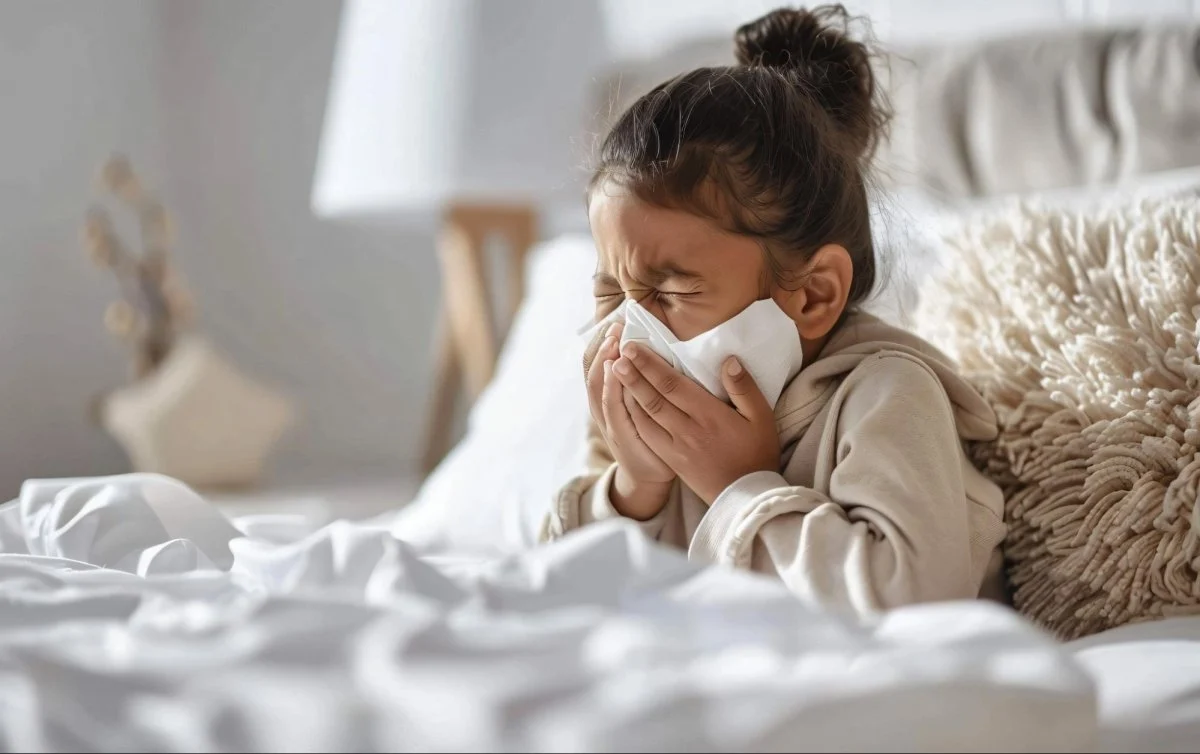
Jakarta, ThedailyID — A home that is cleaned regularly is not necessarily free from allergy triggers. Children may continue to experience repeated sneezing, nasal congestion, and itchy eyes even when floors are mopped and visible dust is removed.
One possible trigger is the house dust mite. These microscopic organisms can live in various places, particularly mattresses, pillows, sofas, carpets, and upholstered furniture.


However, killing dust mites does not automatically eliminate their allergens. Their body fragments and droppings can remain on surfaces and trigger allergic reactions in sensitive individuals.
Therefore, keeping a home clean involves more than sweeping and mopping regularly. Residents also need to pay attention to overlooked areas and use appropriate cleaning methods.
Here are five factors that people often miss when cleaning their homes and managing allergens.
1. Allergens Can Remain After Dust Mites Die
Killing dust mites is not the same as removing the allergens they leave behind. Allergic reactions can come from proteins found in their droppings and body fragments, not only from living mites.
These particles can remain trapped in fabric materials and trigger symptoms in sensitive people. Therefore, dust mite control also requires cleaning methods that remove dust and allergen particles.
2. Air Purifiers Cannot Remove Every Source of Allergens
According to the United States Environmental Protection Agency (EPA), air filters can help reduce certain airborne particles. However, many allergen-containing particles also settle on indoor surfaces.
Dust and allergens attached to mattresses, sofas, carpets, and other furniture do not disappear simply by turning on an air purifier.
This does not mean air purifiers are ineffective. They can still support better indoor air quality. However, residents should combine their use with regular cleaning of surfaces and furniture.
3. Changing Bed Sheets Is Not Enough
Mattresses and pillows provide suitable environments for house dust mites. Since people use them for several hours every night, these items require particular attention.
Mayo Clinic recommends washing bedding weekly in hot water of at least 54 degrees Celsius, if the materials allow it. Special allergen-resistant covers for mattresses and pillows may also help reduce exposure.
Meanwhile, mattresses still need proper care based on their materials and manufacturers’ instructions. Vacuuming with an appropriate filtration system can help remove dust, although it cannot guarantee the removal of every mite or allergen.
Therefore, changing bed sheets is important, but it is not the only step needed to maintain a cleaner sleeping environment.
4. A Cool Room Does Not Always Have Ideal Humidity
Many households use air conditioners to maintain comfortable indoor temperatures, especially in tropical countries such as Indonesia. However, a cool room does not necessarily have an ideal humidity level.
House dust mites tend to thrive in warm and humid conditions. Mayo Clinic recommends keeping indoor relative humidity below 50 percent as one way to help control them.
Residents can use a hygrometer to measure humidity more accurately. This helps them monitor indoor conditions instead of relying only on room temperature or how cool the air feels.
In addition to using air conditioning, households should also address leaks, water seepage, and other sources of excessive moisture.
5. Some Cleaning Methods Can Spread Dust Back Into the Air
Regular cleaning is important, but the method also determines whether dust is removed or simply redistributed.
Using feather dusters and dry cloths, for example, can cause settled dust particles to become airborne again before landing on other surfaces.
The EPA recommends using damp cloths to clean dust from hard surfaces. Meanwhile, carpets and upholstered furniture can be cleaned with vacuum cleaners equipped with effective filtration systems, such as HEPA filters.
However, vacuuming also has limitations. No single cleaning method can remove every allergen particle.
For this reason, controlling dust mites and allergens requires a combination of habits. These include washing bedding, managing indoor humidity, and cleaning furniture regularly.
Beyond visible surfaces, residents should also pay attention to mattresses, sofas, carpets, and upholstered furniture. These areas are frequently used but may not receive the same cleaning attention as floors and other surfaces.
HydroClean founder Pratiwi Halim said understanding appropriate cleaning methods is particularly important for furniture used every day.
“Sometimes we feel that our homes are clean because we regularly mop the floors or change the bed sheets. However, furniture such as mattresses and sofas is used every day and may not receive the same level of care. I believe it is important to understand what actually needs cleaning and which methods are appropriate to make maintenance more effective,” Pratiwi said.
Professional cleaning services are one option for maintaining upholstered furniture. HydroClean, for example, provides dry vacuum cleaning services for mattresses, sofas, carpets, and other furniture to help remove dust and dirt.
However, if children continue to experience allergy symptoms despite regular home cleaning, parents should not immediately assume that dust mites are the cause. Medical evaluation is necessary to help identify the actual trigger.