

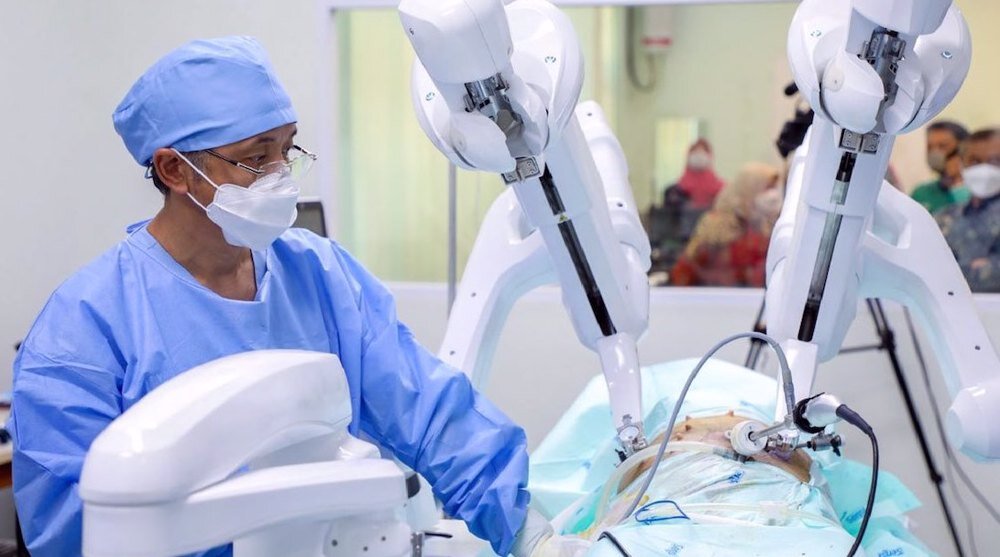
Jakarta, ThedailyID — Indonesia’s Health Ministry plans to expand the use of artificial intelligence (AI) and robotic surgery to improve healthcare services, while stressing that doctors will remain responsible for making medical decisions.
Health Minister Budi Gunadi Sadikin said AI should function as an “augmented intelligence” system that assists physicians rather than replacing them.


“This is augmented intelligence that helps doctors make much better decisions, not simply artificial intelligence,” Budi said.
He said AI technology has advanced rapidly, but surgical applications remain more challenging because of the limited availability of clinical data.
Alongside AI development, the ministry plans to procure 40 surgical robots for government hospitals. The programme will also include physician training and technology transfer to strengthen Indonesia’s domestic medical device industry.
Budi announced the initiative during an event marking nearly 1,000 robotic surgery procedures at Bunda Hospital Jakarta. The ceremony also launched a strategic partnership involving the Health Ministry, Bunda Hospital, and the Bandung Institute of Technology (ITB).
According to Budi, Indonesia still trails regional neighbours such as Singapore, Thailand, Malaysia, and Vietnam in adopting robotic surgery.
To accelerate development, the ministry has established a Robotics Committee to formulate national standards, expand access to robotic surgery, and guide long-term policy.
The government is also reviewing whether BPJS Kesehatan, Indonesia’s national health insurance programme, can cover robotic surgical procedures in the future.
In addition, the ministry is expanding minimally invasive surgery training across 514 regencies and cities as part of its broader strategy to prepare healthcare professionals for robotic-assisted procedures.
PT Bundamedik Tbk President Commissioner Ivan Rizal Sini said Bunda Hospital remains committed to supporting the government’s programme through training centres and knowledge sharing with doctors nationwide.
ITB Rector Tatacipta Dirgantara said Indonesia has strong research capabilities in biomedical engineering, robotics, biomechanics, and AI. However, he noted that closer collaboration between researchers and healthcare professionals is essential to develop technologies that meet the country’s healthcare needs.
The Health Ministry aims to position Indonesia as one of Southeast Asia’s leading centres for robotic surgery development while improving access to advanced medical care.