

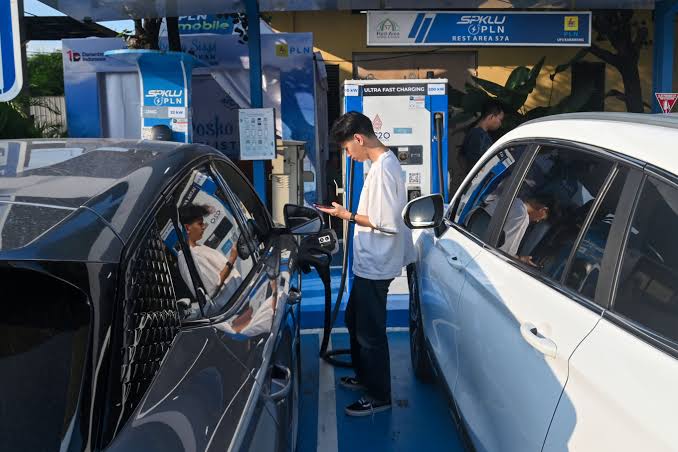
Jakarta, ThedailyID — Electric vehicles continue to gain popularity in Indonesia, especially in Jakarta, as drivers seek cleaner and more cost-efficient transportation. Alongside quieter operation and lower running costs, government incentives have further encouraged the shift toward battery-powered vehicles.
To support the transition, the Jakarta Provincial Government exempts battery electric vehicles from the annual Motor Vehicle Tax (PKB). The policy sets the tax rate for eligible electric vehicles at 0%.


The incentive allows EV owners to reduce annual ownership costs while supporting national efforts to cut fuel consumption and lower vehicle emissions.
Electric vehicles have evolved beyond an automotive trend. They now play an important role in Indonesia’s push for a cleaner and more sustainable transportation system.
Unlike gasoline or diesel-powered vehicles, battery electric vehicles produce no tailpipe emissions. That makes them a practical option for improving air quality in densely populated cities such as Jakarta.
A wider adoption of EVs could also reduce Indonesia’s dependence on fossil fuels by lowering daily fuel consumption across the transportation sector.
Besides fuel savings, Jakarta residents who own electric vehicles benefit from the city’s 0% annual vehicle tax incentive.
Progressive Tax Rules Still Apply
Although EV owners pay no annual vehicle tax, electric vehicles still count toward the order of vehicle ownership under Jakarta’s progressive tax system.
For example, if a household owns a gasoline-powered car first, an electric car second, and another gasoline-powered car third, authorities still classify the EV as the second vehicle.
Under the progressive system, the first vehicle carries a 2% tax rate, the second 3%, and the third 4%. However, the government applies a 0% incentive to battery electric vehicles, reducing their payable vehicle tax to zero regardless of ownership order.
As a result, the third non-electric vehicle would still fall under the higher progressive tax bracket because the electric vehicle occupies the second ownership position.
Benefits Beyond Tax Savings
The tax exemption adds to several advantages of owning an electric vehicle.
EVs produce no direct exhaust emissions, helping improve urban air quality. They also reduce reliance on gasoline and diesel while lowering daily operating expenses.
The incentive also strengthens government efforts to accelerate the adoption of cleaner transportation and improve energy efficiency.
With more electric vehicle models entering the Indonesian market, consumers now have greater flexibility to choose vehicles that match their budgets and mobility needs.
For many Jakarta residents, the combination of lower operating costs, tax incentives, and environmental benefits makes electric vehicles an increasingly attractive option.