

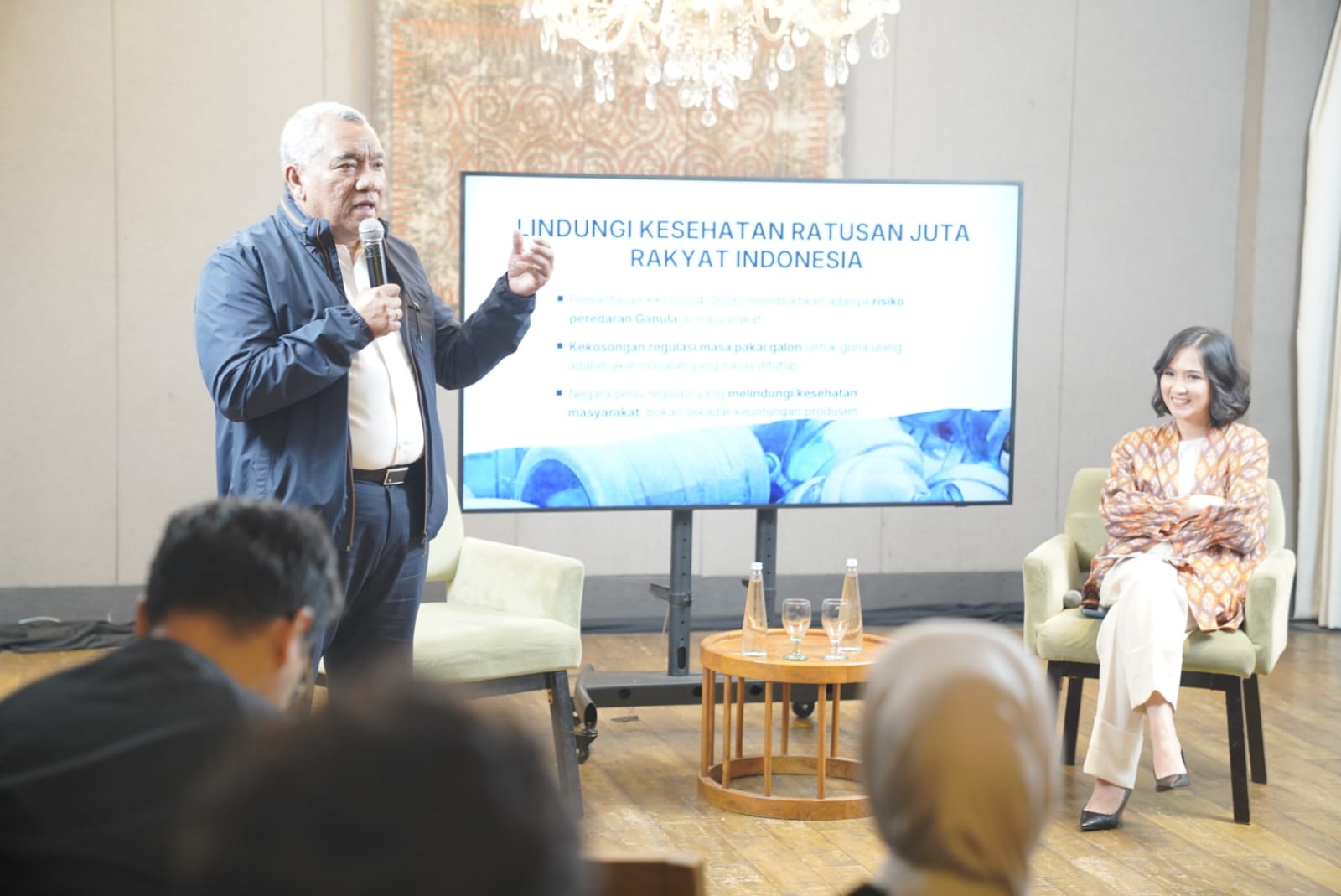
Jakarta, ThedailyID — Komunitas Konsumen Indonesia (Indonesian Consumers Community) reported that 92% of consumers have complained about aging reusable water gallons, known as “Ganula,” which still circulate in the market. The findings come from 250 public complaints collected between March and April 2026 across seven major cities, including Jakarta, Surabaya, and Bekasi.
KKI Chairman David Tobing said the complaints reflect growing concern over both safety and product quality. Some of the oldest gallons consumers reported were produced in 2015, making them up to 11 years old. In addition, consumers noted visible damage such as discoloration, dirt, mold, and cracks, which worsen over time.


At the same time, KKI highlighted a lack of transparency from producers regarding the lifespan of reusable gallons. Although production codes exist, producers often place them at the bottom, making them difficult to check. As a result, many consumers remain unaware that plastic containers have a limited usage cycle.
According to KKI data, 92% of consumers said they never received information about gallon lifespan. However, after learning about the issue, 83% said they deserve better-quality products. Meanwhile, 78% demanded replacements for old gallons.
Experts have also raised health concerns. A polymer specialist from Universitas Indonesia recommends a maximum usage period of one year or around 40 refill cycles. Beyond that limit, polycarbonate gallons may release Bisphenol A, which links to obesity, diabetes, and reproductive disorders.
KKI estimates the impact could be significant, as more than 100 million Indonesians rely on gallon water. Data from Badan Pusat Statistik shows that 34% of households use gallon-based drinking water, equal to around 26 million households nationwide.
Over the past three years, KKI has conducted national surveys, field investigations, and opened public complaint channels. The organization has also raised the issue with Badan Perlindungan Konsumen Nasional and Badan Pengawas Obat dan Makanan.
In response, KKI is urging the government to introduce clear regulations on the lifespan of reusable gallons. The group warns that without such rules, aging containers will continue to circulate and pose health risks.
By comparison, the European Food Safety Authority has already moved to ban polycarbonate plastics containing BPA in food packaging, with full implementation set for July 2026. Meanwhile, Indonesia requires BPA labeling under BPOM Regulation No. 6/2024, although authorities will begin enforcement in 2028.
KKI emphasized that the absence of lifespan regulation creates a gap that allows unsafe products to remain in circulation. The group called for immediate policy action to better protect consumers.