
Jakarta, ThedailyID — Indonesia has passed a new Employment Law with several provisions aimed at strengthening worker protection and legal certainty.
Manpower Minister Yassierli highlighted the key provisions after the DPR approved the bill on Tuesday, October 6.
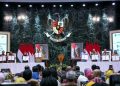

The approval came during the ninth plenary meeting of the first session of the 2026-2027 parliamentary year.
“This bill does more than bring together scattered rules that often create uncertainty. It fundamentally strengthens employment protection in a much fairer way,” Yassierli said at the Parliament Complex in Senayan, Jakarta.
Here are the key provisions highlighted by the minister:
- Stronger Protection Against Discrimination
The law strengthens workers’ rights to equal treatment in recruitment, wages, career development and employment relations.
As a result, workers should receive fair and equal treatment in the workplace.
- Better Protection for Job Seekers
The government will provide more open labor market information. Employers must also report job vacancies.
This system aims to provide equal access to jobs. It also seeks to prevent illegal brokerage, fraud and fake job vacancies.
- Clearer Rules for Apprentices
The law provides clearer rules on apprenticeship status and duration. It also requires allowances, occupational safety protection, social security coverage and apprenticeship certificates.
- Fairer Worker Placement
Worker placement must follow the principles of objectivity, fairness, transparency and non-discrimination.
In particular, the law highlights vulnerable groups, people with disabilities and residents of disadvantaged areas.
- Balanced Industrial Relations
The law seeks to balance the rights and obligations of workers and employers.
At the same time, it protects workers’ rights to organize, voice concerns and participate in industrial relations.
- Stronger Workplace Safety
Occupational safety and health become fundamental worker rights under the new law.
Therefore, employers must implement integrated safety systems. These systems should prevent risks, control workplace hazards and create safer working environments.
- Stronger Labor Inspections
The law gives labor inspectors stronger powers to examine workplaces and collect data.
Inspectors can also order employers to make improvements. This approach aims to make labor enforcement more professional, independent and responsive.
- Stricter Legal Sanctions
Employers who violate worker protection rules can face administrative and criminal sanctions.
The government will apply these sanctions in a firm and proportional manner. Meanwhile, the rules aim to provide legal certainty and support sustainable business activity.
The new law also introduces several other provisions.
- Stronger Professional Certification
The law strengthens the role of the National Professional Certification Agency, or BNSP.
It also establishes BNSP as an independent non-structural institution that reports directly to the president.
- Improved Labor Oversight
The government will strengthen labor inspector resources based on the number of workers and companies in each region.
In addition, the law provides for a Labor Oversight Committee and DPR oversight.
- Integrated Employment Data
Central and regional governments will integrate employment data and information.
This integration aims to improve employment policies and synchronize workforce planning between central and regional governments.
- Severance and Job-Loss Protection
The law regulates reserve funds for severance pay and job-loss guarantees for workers who lose their jobs.
- Protection for Female Workers
The law strengthens protection for female workers.
This includes maternity leave and miscarriage leave, along with related wage rights.
- Protection for Workers With Disabilities
The law provides clearer protection for workers with disabilities.
- Ban on Withholding Personal Documents
Employers cannot withhold diplomas or other personal documents during recruitment and worker placement.
- Higher Labor Productivity
Employers, workers, labor unions and the government will collaborate to improve labor productivity.
- Protection for Flexible Work
The law expands protection for flexible employment arrangements.
It also aims to respond to new forms of work that may emerge in the future.
- Living-Cost Surveys
Statistics Indonesia, or BPS, will conduct surveys on decent living needs.
BPS will coordinate with the National Wage Council. Meanwhile, the law strengthens the role of regional wage councils.
- Protection for Job Seekers and Trainees
The law strengthens protection for job seekers, training participants and apprentices.
- Rules for Certain Foreign Workers
The law regulates foreign workers who have a legal marriage with Indonesian citizens.
It also covers children born from such legal marriages.
- Protection for Outsourced Workers at State-Owned Companies
The law strengthens protection for outsourced workers at state-owned enterprises.
It requires outsourcing arrangements to take place through subsidiaries.
Overall, the new law seeks to strengthen worker protection while providing greater certainty for employers and other parties in Indonesia’s employment system.