

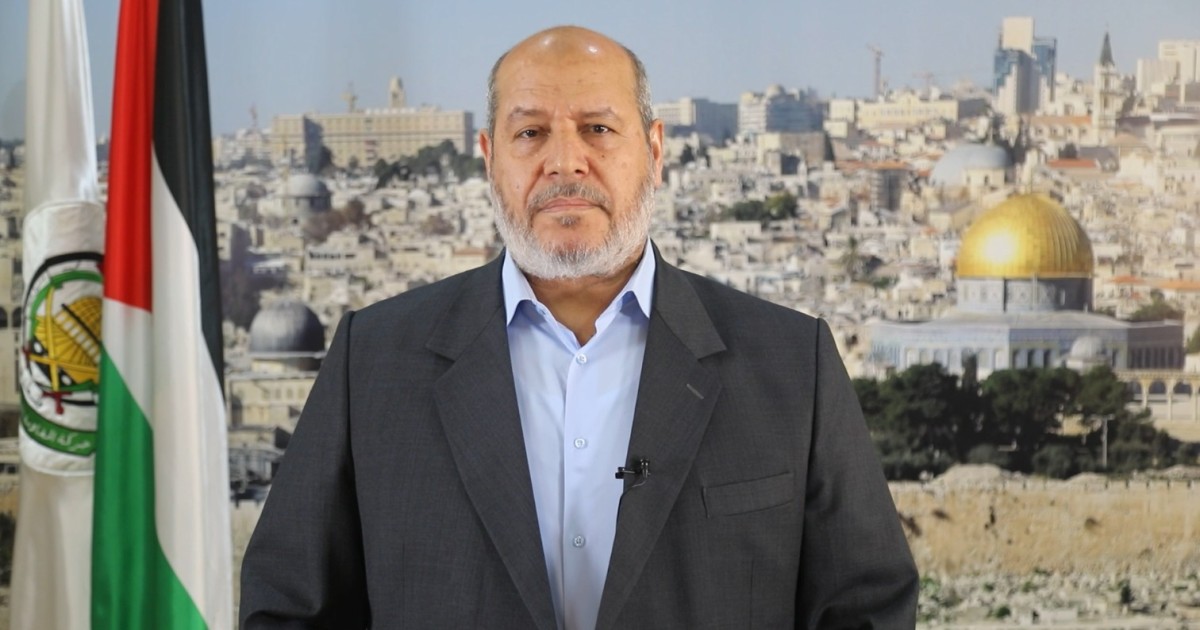
Jakarta, ThedailyID — Hamas has elected Khalil Al Hayya as its new leader, nearly two years after Israeli forces killed former chief Yahya Sinwar in October 2024.
Al Hayya won the leadership vote by a single ballot over Khaled Meshaal, the former head of Hamas’ political bureau. After Sinwar’s death, a five-member leadership council managed the group. Al Hayya served as one of its members.

The appointment places a familiar figure at the top of Hamas as the group continues to navigate the war in Gaza and international ceasefire efforts.
Analysts describe Al Hayya as a pragmatic political figure despite his close ties to Iran. He has played a central role in ceasefire negotiations and prisoner exchange talks involving Israel.
According to analysts cited by Al Jazeera, Al Hayya previously took part in discussions on Gaza with Steve Witkoff, U.S. President Donald Trump’s special envoy, and Jared Kushner, Trump’s son-in-law.
Muhammad Shehada, a researcher at the European Council on Foreign Relations (ECFR), said Al Hayya combines support for Iran’s regional alliance with a willingness to pursue diplomacy when opportunities arise.
Shehada also noted that two of Al Hayya’s sons died in Israeli attacks. One was killed while Hamas discussed a ceasefire proposal in Doha. Witkoff later expressed sympathy, saying he had also lost a son and understood the personal tragedy.
Born and raised in Gaza, Al Hayya now leads Hamas from exile. His influence within the group increased after Israel killed both Sinwar and former political bureau chief Ismail Haniyeh in 2024.
Hugh Lovatt, a senior policy fellow at ECFR, said Al Hayya’s election signals continuity rather than a major strategic shift. He described the new leader as a hardliner in some areas but also a pragmatic negotiator during ceasefire talks with Israel.
Lovatt added that Hamas has traditionally balanced its relationships with Iran and several Arab states. He said there is no clear indication that the group’s leadership will fall under Tehran’s direct control.
Despite heavy military losses during the war, Hamas continues to maintain parts of its civilian administration across Gaza. The group still oversees basic public services, including healthcare coordination and emergency rescue operations.
Khaled Al Hroub, a professor at Northwestern University in Qatar, said the leadership transition demonstrates that Hamas has preserved its internal decision-making structure despite losing many senior political and military figures.