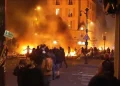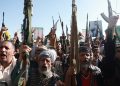

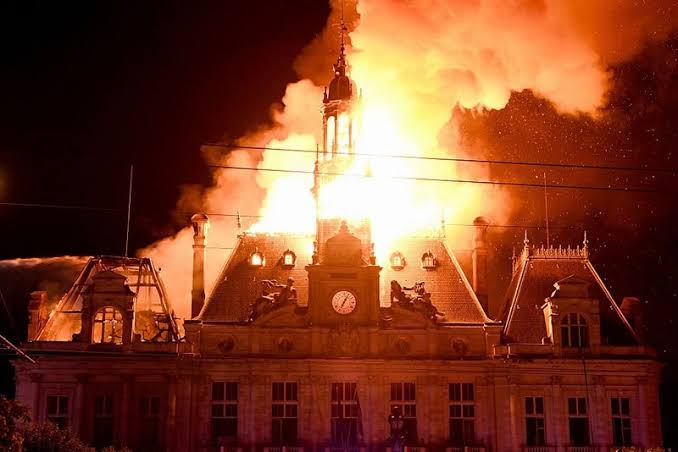
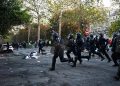
Jakarta, ThedailyID — France faces a deepening political crisis as protests continue across the country. No single leader or dominant group has emerged to direct the demonstrations, leaving President Emmanuel Macron under growing pressure.
Prime Minister Sébastien Lecornu acknowledged the public’s frustration on Thursday, October 15. “This is a moment of exhaustion in the country,” he said.
“We are in a constant state of crisis: war, inflation and issues surrounding purchasing power,” Lecornu added.
According to CNN, the demonstrations bring together diverse groups. They include Yellow Vest supporters protesting living costs and fuel prices, students demanding better school conditions, teachers, parents, workers, farmers, trade unions and pensioners.
The unrest has deepened divisions across French society. Anger, uncertainty and pessimism continue to grow. A recent Ipsos-BVA poll found that 85 percent of respondents believed France was in decline, while 98 percent expressed dissatisfaction with the country’s current situation.
France’s economic problems have added to the pressure. Economic stagnation, a hot and dry summer that hurt farmers, and rising global energy prices have fueled concerns about inflation.
Tourism remains a major source of income for France. However, violent scenes circulating worldwide could discourage some visitors from traveling to the country.
Businesses also face growing uncertainty. Investment fell by around 1 percent in the first half of the year as interest rates rose.
“France has one of the highest government debt burdens in Europe, and the political deadlock means we expect debt levels to continue rising,” Oxford Economics researchers said in July, according to CNN.
Analysts expect France to issue €340 billion in medium- and long-term bonds next year, a record amount. The country’s debt-to-GDP ratio reached 119 percent in the second quarter, twice the European Union’s target. On Monday, nervous investors pushed yields on French 10-year government bonds to 4.9 percent.
Political divisions have also complicated the government’s response. Officials accused the far-left France Unbowed party, known as LFI, of fueling the protests. The party rejected the allegation.
In a televised address on Sunday, Macron condemned the violence but offered no specific plan to resolve the unrest. He also warned politicians against exploiting the turmoil for political gain before leaving for a three-day visit to Gulf countries.
Lecornu then clashed with left-wing presidential candidate Jean-Luc Mélenchon. Mélenchon accused the government of “opening the door to chaos” through its policing tactics.
“You cannot call for an end to violence while giving those who commit it a reason to act. This is your political responsibility,” Lecornu said.
Marine Le Pen, the far-right National Rally politician, brought immigration into the debate. She blamed the violence on criminal offenders from France’s banlieues, often disadvantaged urban areas with large migrant populations.
“Our country is trapped between violence and helplessness,” Le Pen said. She presented herself as a leader capable of restoring order amid what she described as chaos under Macron.
National Rally leader Jordan Bardella escalated the rhetoric. He demanded that Antifa militias, far-left extremist groups and Black Bloc groups receive terrorist organization designations. Black Bloc participants typically wear similar black clothing and face coverings to conceal their identities during demonstrations.
Analysts say political fragmentation has paralyzed parliament since Macron called a snap election in 2024. The left-wing New Popular Front won the most seats, followed by Macron’s centrist alliance and the National Rally.
The election left parliament without a clear governing majority. The deadlock has fueled political instability and several changes in prime minister.
Whoever leads France next will face limited room to maneuver, even if they manage to build a stable coalition.