

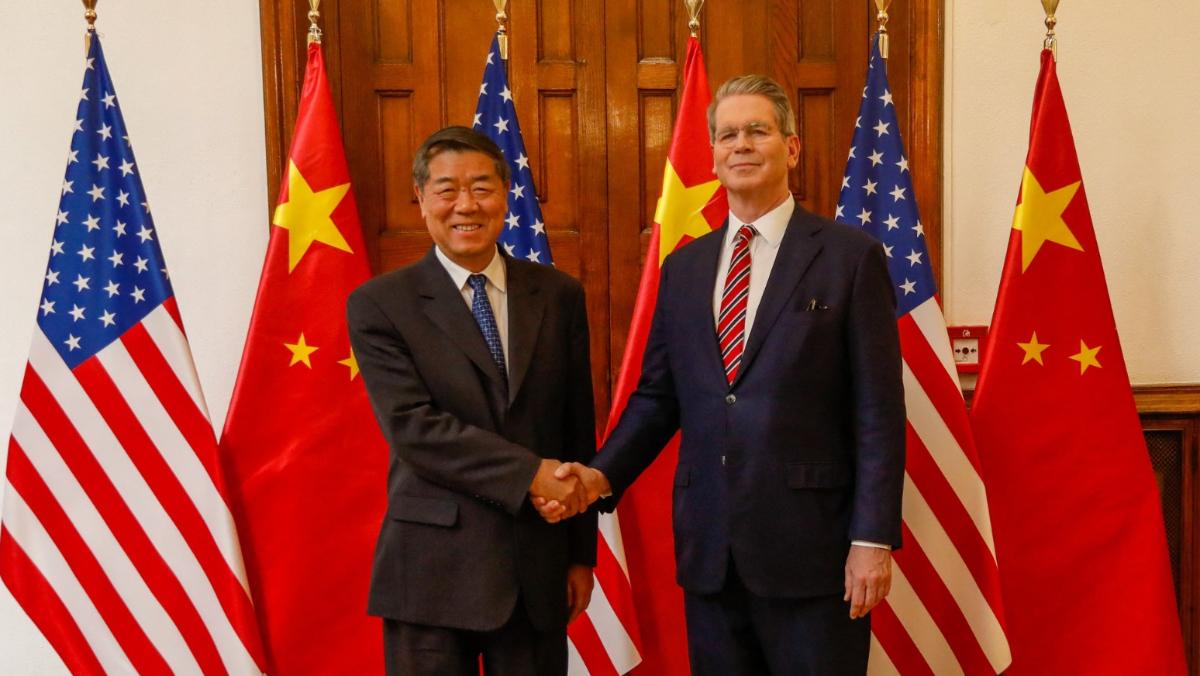

Jakarta, ThedailyID — US Treasury Secretary Scott Bessent is urging G20 countries to reconsider their trade relationships with China, arguing that Beijing’s massive trade surplus is worsening global economic imbalances.
Bessent said China’s trade surplus has reached around $1.2 trillion, a level he described as unsustainable. He argued that China needs to reduce its dependence on exports and strengthen domestic consumption.
“The world economy cannot have China with a $1.2 trillion trade surplus,” Bessent said in an interview ahead of the G20 finance ministers’ meeting, as quoted by Reuters, Monday, 931/08).
Bessent said other countries should put pressure on Beijing to change its economic model. He also warned that US tariffs on Chinese products could push Chinese goods into other markets, particularly Europe and Latin America.
“The whole world needs to look at their trade terms with China,” he said.
US Trade Deficit With China Falls
The push comes as the US has imposed higher tariffs and restrictions on various Chinese products, including vehicles.
US Census Bureau data showed that the measures introduced after Donald Trump returned to the presidency in 2025 have helped reduce the US trade deficit with China.
During the first six months of 2026, the US trade deficit with China fell by about one-third year-on-year to $73.9 billion.
However, Bessent argued that currency adjustments alone would not solve the broader trade imbalance. He rejected proposals similar to the 1985 Plaza Accord, which sought to strengthen certain currencies against the US dollar.
Instead, he pointed to China’s industrial subsidies and weak domestic consumption as deeper issues.
“That is an easy way to avoid dealing with the real trade problem,” Bessent said.
US-China Talks to Continue
Despite the tensions, Bessent said Washington and Beijing would continue discussions over potential tariff reductions for non-strategic goods and rules surrounding artificial intelligence technology.
He estimated that around $30 billion worth of non-strategic and non-critical goods from each country could potentially be exempted from tariffs.
Meanwhile, US President Donald Trump and Chinese President Xi Jinping are expected to meet in late September. Officials from both countries are scheduled to continue discussions on trade and AI regulations ahead of the meeting.