
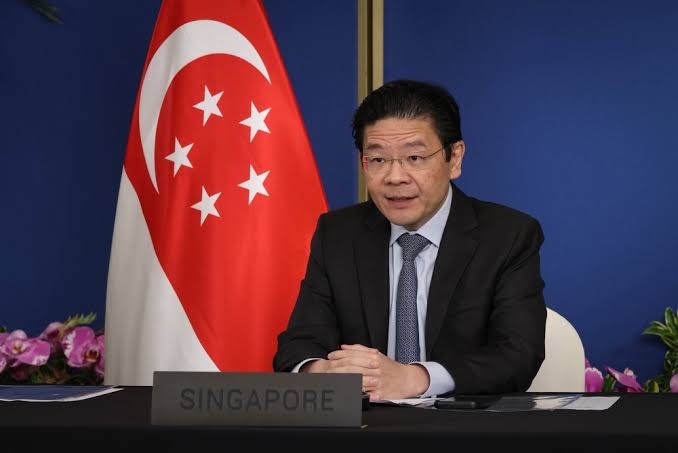
Jakarta, ThedailyID — Singapore is investigating companies suspected of contributing to forest and land fires in Indonesia. Prime Minister Lawrence Wong said the government could take firm action if investigations establish that companies were responsible.
In a statement on Instagram on Friday, October 16, 2026, Wong said Singapore could act under its Transboundary Haze Pollution Act (THPA). The country is also exploring joint action with other nations.


“If necessary, we will take action under Singapore’s Transboundary Haze Pollution Act and explore joint action with other countries,” Wong said.
He acknowledged that Singapore cannot control the weather, wind or events beyond its borders. However, he stressed that the government would do everything possible to protect residents and work with neighboring countries.
Under the THPA, companies found guilty can face fines ranging from S$100,000 to S$2 million, equivalent to approximately Rp1.1 billion to Rp23 billion. The law also allows individuals and organizations in Singapore to pursue civil claims against companies responsible for transboundary haze.
These claims can seek financial compensation for economic disruption, personal injury or health impacts, and property damage.
Wong also highlighted measures to support residents affected by worsening air quality. Authorities have distributed masks to vulnerable groups and prepared shelters at community clubs and selected residential centers.
“We will ensure that support is available for those who need it,” he said.
According to Wong, haze affecting Singapore originates from forest and land fires in Indonesia, with prolonged dry weather worsening the situation. Singapore has offered assistance to Indonesia and is discussing the issue with fellow ASEAN members.
Air quality in Singapore has deteriorated sharply. On Wednesday, October 14, the Pollutant Standards Index (PSI) reached 288 at 3 p.m., marking its highest level since 2015.
On Thursday, October 15, the PSI in western Singapore reached 212, the highest reading recorded there in 2026.
Singapore’s investigation could lead to legal consequences for companies found responsible for the fires. However, any enforcement action will depend on the findings and the application of the country’s transboundary pollution law.