

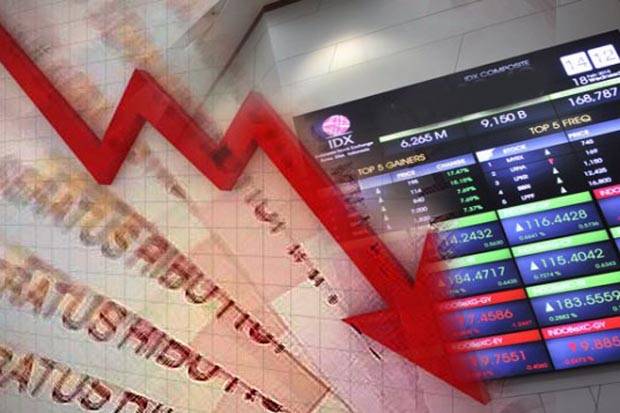
Jakarta, ThedailyID — Indonesia’s financial markets came under pressure on Thursday as the benchmark Jakarta Composite Index (IHSG) and the rupiah both weakened, fueling concerns over investor confidence in Southeast Asia’s largest economy.
The IHSG extended its losses during trading, while the rupiah also depreciated against the US dollar. The simultaneous decline drew attention from market participants, who often view the movement as a signal of capital outflows and weakening sentiment.


Analysts said several factors contributed to the downturn. These included global economic uncertainty, persistent geopolitical tensions, and concerns surrounding domestic policy direction.
Moreover, investors have become increasingly cautious as they assess Indonesia’s fiscal outlook and broader economic prospects. As a result, many have shifted toward safer assets amid growing market volatility.
Market observers noted that a weakening rupiah can increase import costs and place additional pressure on inflation. At the same time, a falling stock market may reflect reduced investor appetite for risk.
The combined decline in equities and the currency has led some analysts to describe the situation as an early warning sign of weakening investor confidence. However, they stressed that current conditions do not necessarily indicate an economic crisis.
Meanwhile, investors continue to monitor government policies and economic indicators for signs of stability. Confidence could improve if authorities provide clear policy direction and maintain macroeconomic fundamentals.
Indonesia’s economy remains supported by domestic consumption, relatively stable growth, and ongoing investment activity. Nevertheless, analysts warned that policymakers must respond carefully to market concerns to prevent further volatility.
For now, market participants will closely watch upcoming economic data, central bank decisions, and global developments that could influence capital flows into emerging markets.