

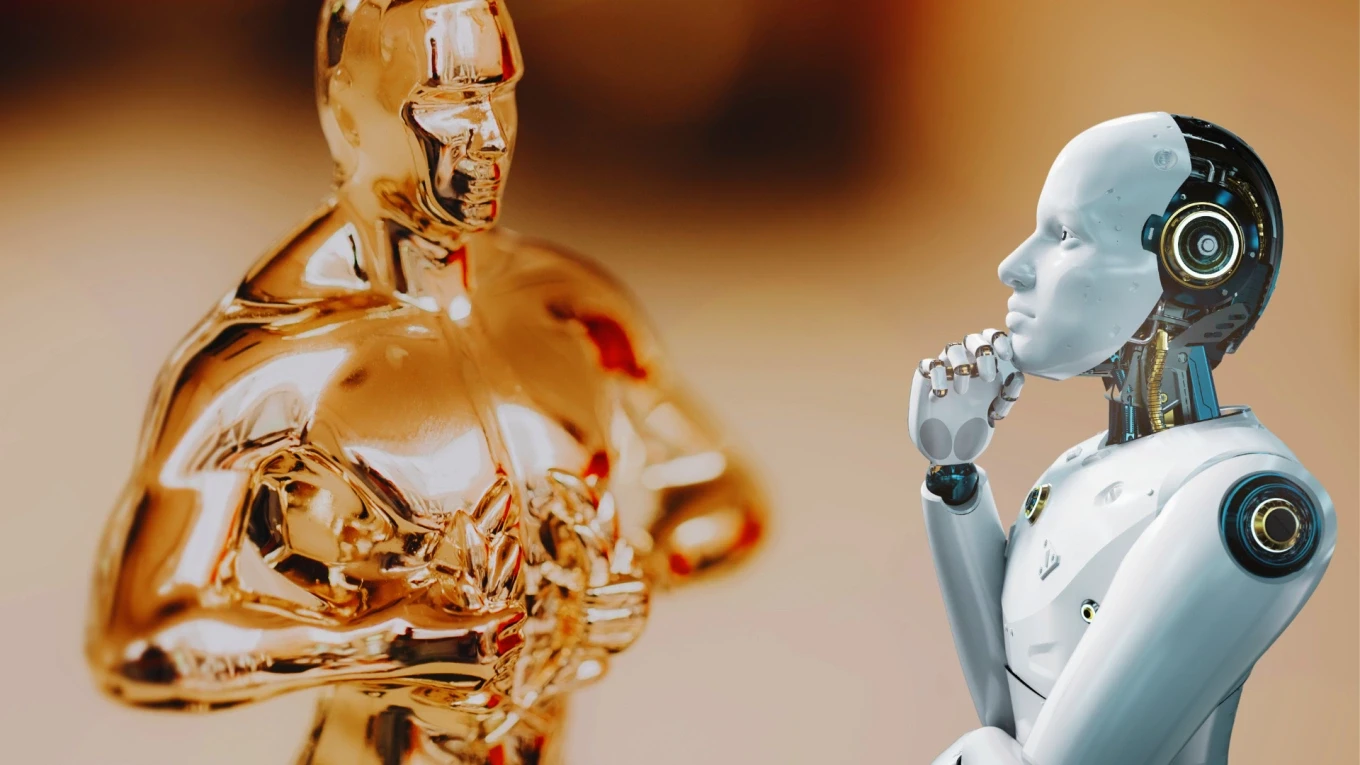
Jakarta, ThedailyID — The Academy of Motion Picture Arts and Sciences has confirmed that only acting and writing performed by humans will qualify for Oscar awards.
The Academy released updated eligibility rules as the use of artificial intelligence continues to expand across the film industry.

Under the new guidelines, acting must be “demonstrably performed by humans,” while writing must be fully human-authored to qualify for nominations.
The Academy described the update as a substantive change, marking the first time it explicitly required human involvement in these categories.
The move follows growing concerns over AI replacing or replicating creative work in film production.
In recent months, several projects have explored AI-generated performances. One example includes efforts to recreate late actor Val Kilmer using AI technology for a future film role.
At the same time, industry professionals have raised concerns about AI’s impact on jobs. Writers, in particular, made AI use a central issue during recent labor strikes in Hollywood.
Meanwhile, lawsuits between creators and AI companies continue to emerge. Many actors, authors, and studios argue that AI systems rely on copyrighted material without proper permission.
Despite the stricter rules, the Academy did not ban AI tools entirely.
Filmmakers can still use AI in production. However, the Academy stated that such tools will neither improve nor reduce a film’s chances of receiving a nomination.
Instead, voters will assess how much human creativity drives the final work.
“The Academy and each branch will judge the achievement, taking into account the degree to which a human was at the heart of the creative authorship,” the organization said.
If needed, the Academy may also request further details about how filmmakers used AI in their projects.
Technology has long played a role in filmmaking. Since the 1990s, studios have widely used computer-generated imagery to enhance visual storytelling.
However, unlike CGI, AI tools can automate parts of the creative process. This shift has raised new questions about authorship, originality, and the future of creative industries.