
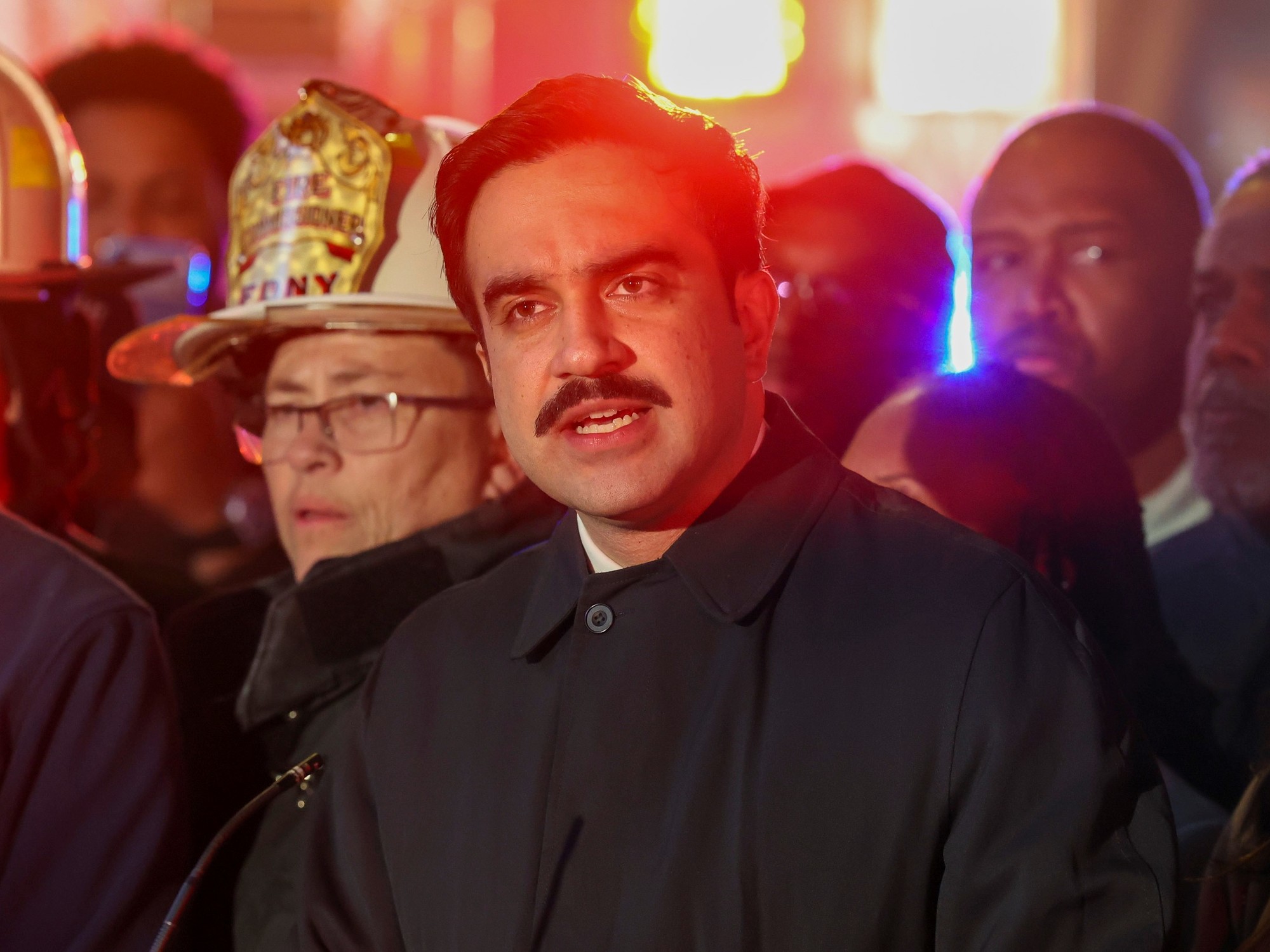
Jakarta, ThedailyID — New York City Mayor Zohran Mamdani has announced the dissolution of the New York Police Department’s (NYPD) Strategic Response Group (SRG), a specialized unit criticized for its alleged use of excessive force against protesters.
Mamdani made the announcement on Monday, November 16. He also backed a New York City Council bill designed to prevent future mayors from establishing a similar unit.
The decision marks one of Mamdani’s biggest police reforms since taking office. It also fulfills a campaign promise he made in 2025, when he pledged to make the SRG’s dissolution a top priority.
Mamdani said the unit’s operations needed review because its officers had repeatedly faced allegations of misconduct, particularly over the use of force against demonstrators.
“During our campaign for mayor, I promised to disband the NYPD’s Strategic Response Group. Today, we are delivering on that promise,” Mamdani said in an announcement video posted on Monday.
New Units to Replace the SRG
Mamdani plans to establish several new units to handle demonstrations.
One is the Community Dialogue and De-escalation Division (CDDD), a civilian unit under the Office of Community Safety established by Mamdani.
Its personnel will not carry weapons or have arrest powers. However, the division is not expected to begin operating before 2028.
In the meantime, the NYPD will establish the First Amendment Support Team (FAST), consisting of 30 armed officers. They will receive training in de-escalation and communication with protesters.
FAST will operate under the NYPD’s Community Affairs Bureau. It will continue operating even after the civilian division begins taking over some responsibilities for engaging with demonstrators.
Mamdani also plans to establish a Patrol Support Division (PSD) within the NYPD. The unit will support FAST officers during demonstrations and operate around protest sites.
Its officers will conduct patrols and receive crowd-control training. They will also retain the authority to make arrests when necessary.
Mamdani has proposed several restrictions on police tactics during demonstrations. The NYPD would be prohibited from using tear gas, pepper spray for crowd control, and sound devices exceeding 90 decibels to disperse protesters.
Officers would also be barred from using bicycles to strike or push crowds. The proposal would additionally prohibit “kettling,” a tactic in which police surround protesters to make mass arrests.
Meanwhile, the SRG’s counterterrorism responsibilities will move to the NYPD’s Intelligence and Counterterrorism Bureau.
NYPD Commissioner Backs the Changes
NYPD Commissioner Jessica Tisch has supported Mamdani’s proposed changes. Tisch has previously defended the SRG’s role in maintaining public safety.
“I strongly believe that the NYPD must always be willing to review how we operate and make improvements,” Tisch said in a statement.
However, she stressed that the changes must not weaken the department’s ability to protect the public or leave officers without the resources needed to address serious threats.
Tisch also said the reforms could make the NYPD a “stronger and more effective” police force.
Nevertheless, Mamdani’s plan has not received full support from criminal justice reform advocates. The proposed Patrol Support Division has raised concerns because its officers would still have arrest powers during demonstrations.
A source familiar with a briefing by Mamdani’s team to advocacy groups told Politico that officials had not initially disclosed the creation of the unit.
The omission reportedly caused confusion and concerns that the SRG’s dissolution could simply lead to another unit with similar functions.
“The biggest point of contention among the mayor’s base, the DSA, and other supporters is the creation of the Patrol Support Unit to conduct mass arrests,” the source told Politico.
Criticism has also come from the Police Benevolent Association (PBA), the union representing rank-and-file police officers.
PBA President Patrick Hendry argued that disbanding the SRG could undermine the safety of officers and the public.
“Forcing police officers to stand by until protests turn violent will put both officers and the public at greater risk,” Hendry said.
He also argued that the policy would fail to satisfy Mamdani’s supporters who want broader changes to the NYPD.