

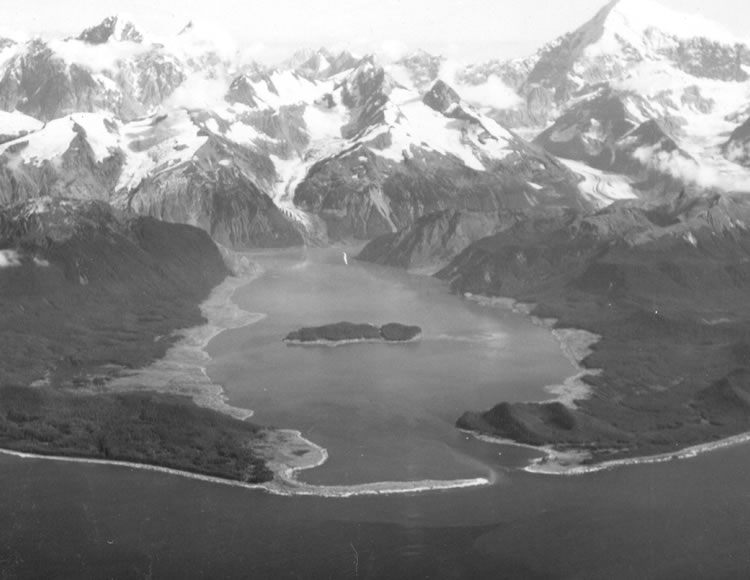
Jakarta, ThedailyID — NASA revealed the potential impact of a giant tsunami that could reach up to 500 meters in Alaska. Scientists warned the event could happen if a massive landslide collapses into water following glacier instability and earthquakes.
Researchers linked the threat to climate change and melting glaciers in Alaska’s mountainous regions. As glaciers continue shrinking, slopes that were once stable have become increasingly vulnerable to collapse.


According to scientists, a large rockslide entering narrow fjords could generate an extremely high tsunami wave. In some scenarios, the wave height could surpass 500 meters near the impact area.
Although the wave would likely decrease as it traveled farther, experts warned it could still cause severe destruction to nearby coastal regions.
NASA used satellite monitoring and geological analysis to study ground movement and instability in Alaska. The agency identified several high-risk zones where landslides could potentially occur.
Researchers also pointed to previous incidents as warnings. In 1958, a giant megatsunami struck Lituya Bay in Alaska after a massive landslide crashed into the water. The wave reportedly reached around 524 meters, making it one of the tallest tsunamis ever recorded.
Scientists explained that megatsunamis differ from ordinary tsunamis triggered by undersea earthquakes. Instead, they usually occur after landslides, volcanic collapses, or glacier-related events in confined waterways.
Experts stressed that such disasters remain rare. However, warming temperatures and rapid environmental changes may increase future risks in vulnerable regions.
Despite the findings, researchers said the current threat does not indicate an imminent disaster. Nevertheless, monitoring efforts continue as scientists study long-term geological changes in Alaska.