
Jakarta, ThedailyID — Malaysian lawmaker Lim Guan Eng has urged the government to take a tougher stance toward Indonesia over haze caused by forest and land fires. He has also called on Kuala Lumpur to consider legal action against Jakarta to seek compensation for the recurring pollution crisis.
“If the Indonesian government rejects an ASEAN task force on the grounds of national sovereignty, the Malaysian government will have no choice but to initiate legal action to seek compensation,” Lim said during a debate on the 2027 Budget in Malaysia’s Dewan Rakyat on Thursday, October 15, as quoted by Malay Mail.
“Malaysians can no longer remain silent and do nothing in the face of this recurring haze crisis,” he added.
Lim proposed establishing a permanent ASEAN task force involving Malaysia, Indonesia, Singapore and the Philippines. The team would respond quickly to forest and land fires before smoke spreads across national borders.


He also urged the Malaysian government to provide financial assistance to people affected by the haze, particularly gig economy workers and ride-hailing drivers who work outdoors.
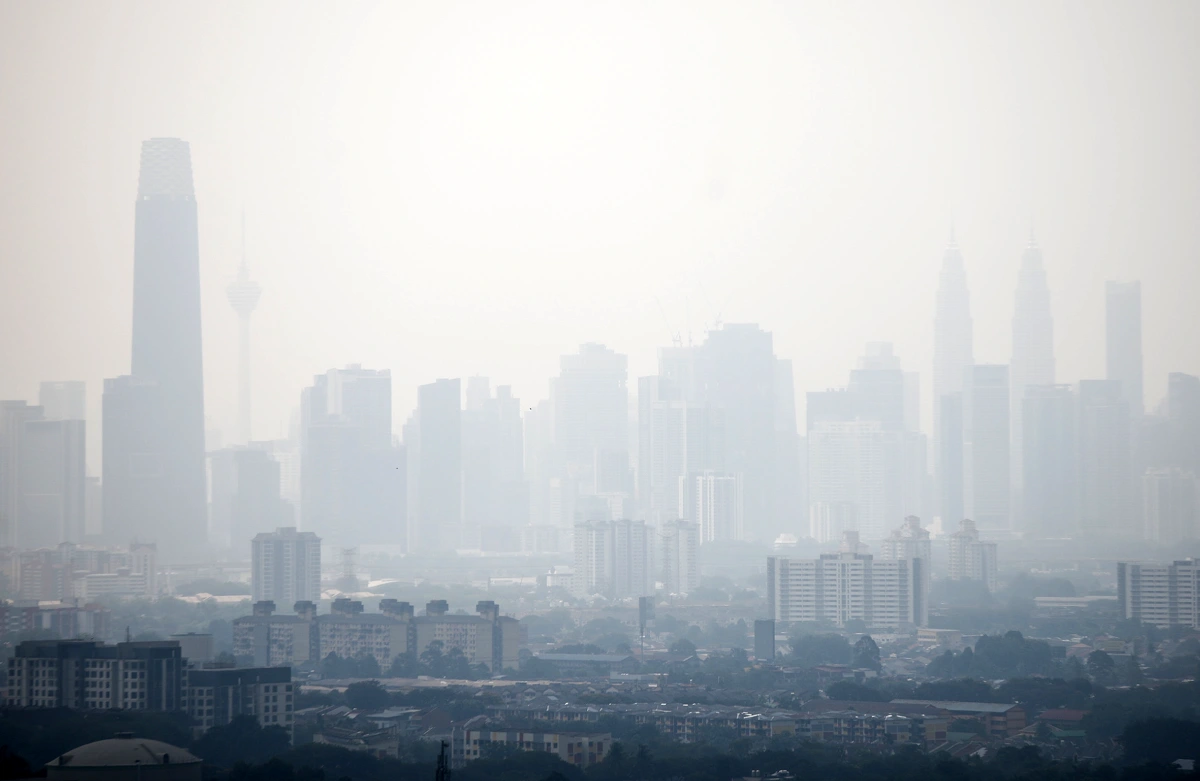
The call comes as Malaysia faces worsening air quality linked to fires in Indonesia. At 10 a.m. on Thursday, 34 of Malaysia’s 68 air-quality monitoring stations recorded unhealthy Air Pollution Index (API) levels.
Authorities have also closed schools in Kuala Lumpur and several Malaysian states in recent weeks. Lim said the closures and deteriorating air quality have disrupted daily life and forced some informal-sector workers, including Grab drivers, to stop working.
“The long-term health impacts remain uncertain. In short, the government must provide financial assistance to those affected,” he said.
Meanwhile, fires have affected several parts of Indonesia since last month, sending haze across neighboring countries, including Malaysia, the Philippines and Thailand.
Indonesian authorities have deployed firefighters, disaster management agencies, military personnel and police to tackle the fires. They have also conducted water-bombing operations and weather modification efforts to help suppress hotspots.
However, the recurring cross-border haze has renewed calls for regional cooperation and stronger measures to prevent forest fires from affecting neighboring countries.