
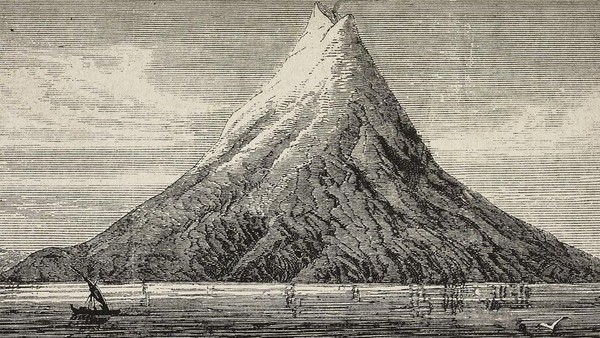
Jakarta, ThedailyID — Nearly 140 years ago, Krakatau in the Sunda Strait erupted in one of the most powerful volcanic events in recorded history. The 1883 eruption destroyed much of the island, triggered massive tsunamis and killed more than 36,000 people.
The eruption began showing signs of increased activity on May 20, 1883. Loud explosions reportedly sounded like distant cannon fire and could be heard as far as 160 kilometers away, including in Jakarta, Bogor and Teluk Betung.


In the following months, volcanic activity intensified. Large columns of steam and ash rose into the atmosphere, while ships passing through the Sunda Strait reported heavy ashfall, reduced visibility and glowing skies.
The climax came on August 27, 1883. A series of massive explosions struck Krakatau, with the largest occurring at around 10:02 a.m. Much of the island collapsed as the volcanic structure lost its support following the eruption.
The collapse displaced seawater and generated enormous tsunamis. Some waves reached around 40 meters in parts of the Sunda Strait and swept across coastal areas of Java and Sumatra.
More than 36,000 people died in the disaster, with the vast majority killed by the resulting tsunamis rather than the volcanic explosions themselves.
The eruption also gained global attention because its sound traveled extraordinary distances. Reports suggested the explosions could be heard as far as 4,800 kilometers away.
News of the disaster spread rapidly through the telegraph, allowing information about Krakatau to reach different parts of the world far faster than before.
The disaster, however, did not mark the end of volcanic activity in the area. In 1927, fishermen reported gas bubbles and a reddish glow emerging from the sea between the remnants of Krakatau’s former volcanic cones.
A new volcanic island eventually emerged from the sea. It became known as Anak Krakatau, or “Child of Krakatau.”
The younger volcano later became the site of another deadly disaster. On December 22, 2018, part of its slope collapsed into the sea during an eruption, triggering a tsunami that struck coastal areas of Java and Sumatra. At least 437 people died.
The history of Krakatau shows why volcanic islands can pose a particular tsunami risk. When unstable volcanic material collapses into the sea, it can displace water suddenly without the large tectonic earthquake that usually triggers tsunami warnings.
Today, the volcanic system remains active. The history of Krakatau continues to serve as a reminder that eruptions and volcanic landslides can create hazards far beyond the volcano itself.
Source: Bagaimana Letusan Gunung Krakatau Mengguncang Dunia? | #BelajarDuniaPurba, YouTube.