

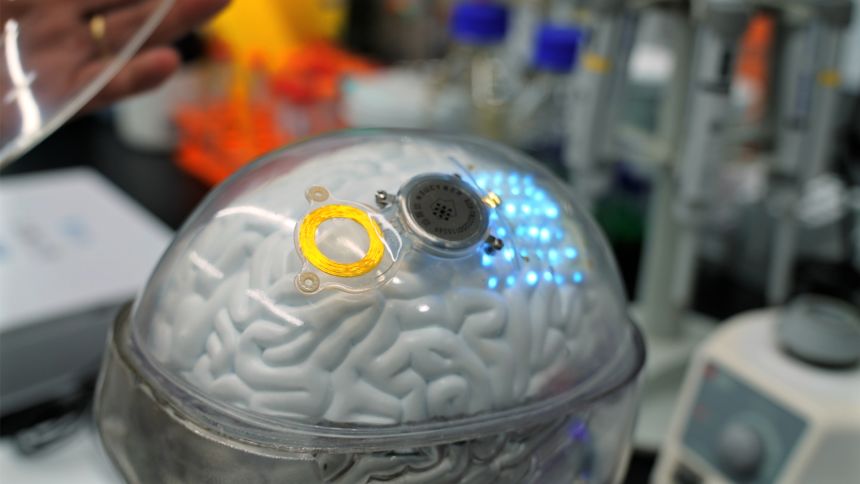
Jakarta, ThedailyID — China has completed the world’s first commercial brain-computer interface (BCI) implant using an invasive brain chip. The milestone strengthens the country’s bid to compete with Elon Musk’s Neuralink.
Doctors at Huashan Hospital in Shanghai implanted the coin-sized device into a patient who lost hand mobility after a spinal cord injury in a car accident a decade ago. The surgery took place on Monday, July 13, after the device received commercial approval in March.


The Shanghai Municipal Science and Technology Commission said the procedure successfully captured stable, high-quality epidural brain signals. Meanwhile, the patient is recovering well with stable vital signs, according to the South China Morning Post.
The device, called NEO, was developed by Shanghai-based startup Neuracle Medical Technology. It sits on the brain’s outer surface instead of penetrating brain tissue. It then reads neural signals and translates them into hand movements.
China’s National Medical Products Administration (NMPA) approved NEO for commercial use on March 13. As a result, it became the world’s first BCI device to receive full medical commercialization approval.
Within four months, Neuracle started mass production and introduced the device to hospitals. The company also began patient screening and secured coverage under commercial health insurance.
The achievement highlights China’s ambition to lead the global BCI industry. Beijing has identified brain-computer interfaces as a strategic future sector. It aims to build two or three globally competitive companies by 2030. In addition, the government plans to establish an advanced technology ecosystem by 2027.
To support that goal, Neuracle has begun an initial public offering (IPO) process on Shanghai’s STAR Market.
The breakthrough also intensifies competition with Neuralink.
Neuralink implanted its first brain chip into patient Noland Arbaugh in 2024. By January 2026, the company had implanted chips in 21 patients. However, all procedures remain part of clinical trials.
Unlike NEO, Neuralink has not received full commercial approval from the U.S. Food and Drug Administration (FDA).
Both technologies aim to help people with paralysis control computers, smartphones, and robotic limbs using brain signals. Meanwhile, Musk has said Neuralink plans to begin mass production in 2026 alongside a more automated surgical procedure.