

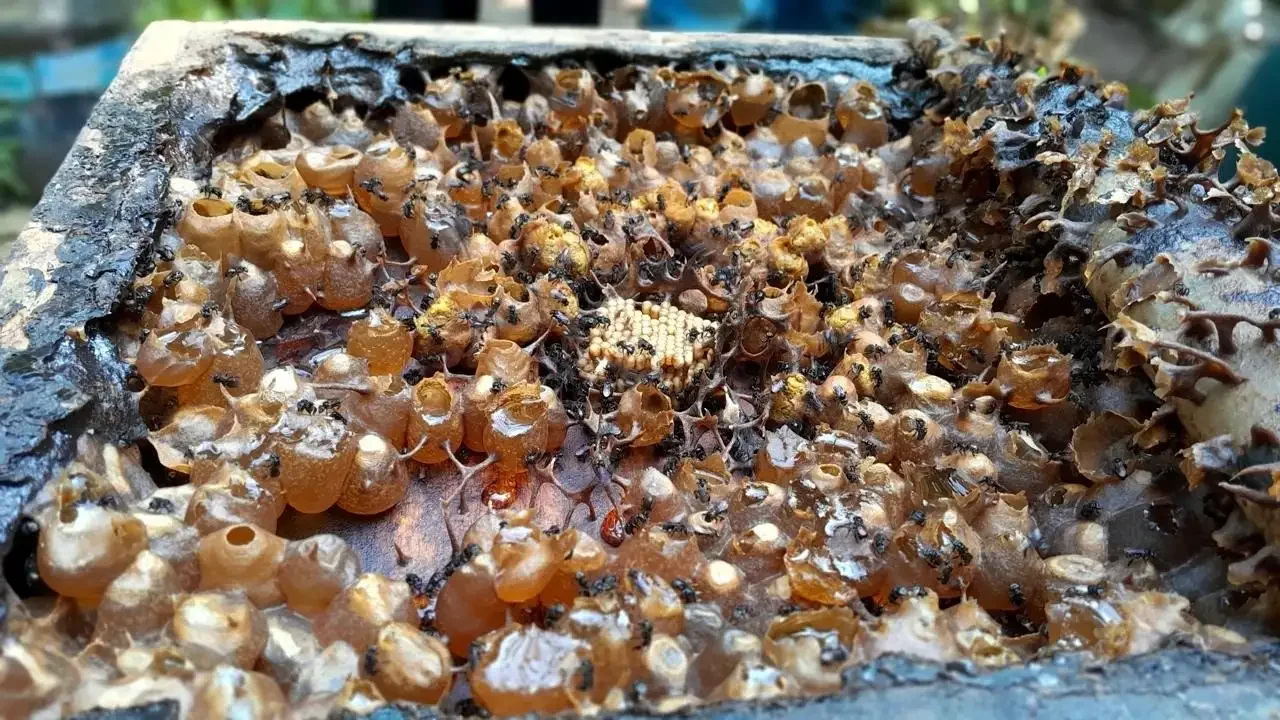
Jakarta, ThedailyID — Researchers from Indonesia’s National Research and Innovation Agency (BRIN) and Gadjah Mada University (UGM) have discovered probiotic lactic acid bacteria in honey and bee pollen produced by stingless bees native to Indonesia.
The research found that the bacteria possess several promising health properties. Laboratory tests showed antibacterial, antibiofilm, antioxidant, and potential anticancer activities, opening new opportunities for future health and food innovations.


Scientists isolated the bacteria from honey and bee pollen collected from stingless bee colonies. Unlike conventional honey bees, stingless bees produce honey with unique microbial communities and bioactive compounds influenced by local biodiversity.
According to the researchers, several bacterial strains demonstrated strong antibacterial activity against harmful microorganisms. The bacteria also showed the ability to disrupt biofilms, protective layers that allow bacteria to survive and resist treatment.
In addition, the study revealed antioxidant properties that may help protect cells from oxidative stress. Researchers also observed indications of anticancer activity during laboratory testing, although further studies remain necessary before clinical applications become possible.
One of the most notable findings involved the bacteria’s ability to inhibit α-amylase, an enzyme responsible for breaking down carbohydrates into glucose. By slowing this process, the bacteria could potentially help regulate blood sugar levels and support diabetes management.
The discovery highlights the growing potential of stingless bee honey as a functional food. Functional foods provide nutritional value while offering additional health benefits beyond basic nutrition.
Indonesia hosts a rich diversity of stingless bee species. Researchers believe these local bee products may contain unique microorganisms that remain largely unexplored by science.
However, the team emphasized that the findings are still at the laboratory stage. Scientists must conduct further research to evaluate safety, effectiveness, and stability before the bacteria can be used in commercial food, supplement, or pharmaceutical products.
The study also supports efforts to increase the value of Indonesia’s biodiversity through scientific innovation. Researchers hope future developments can create new health products while strengthening the country’s biotechnology and functional food sectors.