
Jakarta, ThedailyID — Bank Jakarta is turning household organic waste into renewable energy through a new environmental initiative in North Jakarta.
Through its Corporate Social Responsibility (CSR) program, the bank has begun construction of communal anaerobic digesters, also known as biodigesters, at two locations.


The facilities will serve the Rorotan Public Housing (Rusunawa) complex and the Rawa Badak Utara Waste Treatment Site (TPS 3R).
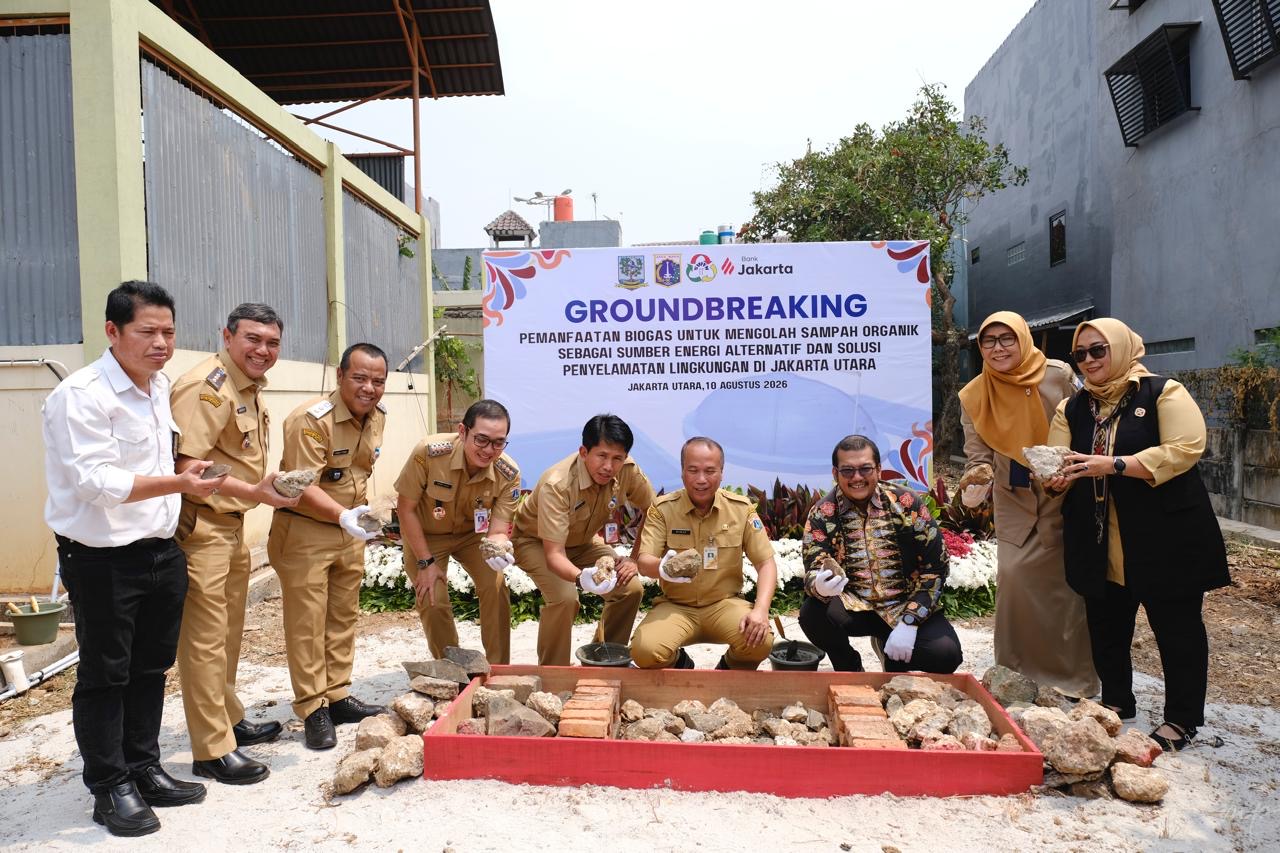
Bank Jakarta launched the project with a groundbreaking ceremony at Rusunawa Rorotan in Cilincing on Aug. 10, 2026. The event brought together Bank Jakarta officials and representatives from the North Jakarta administration.
Bank Jakarta President Director Agus H. Widodo said the project offers a practical solution to Jakarta’s growing organic waste challenge.
The biodigesters will process household organic waste into biogas, a renewable energy source. The remaining waste will also produce organic fertilizer for further use.
“The construction of the biodigester in Rorotan is Bank Jakarta’s tangible contribution to addressing Jakarta’s waste management challenges,” Agus said in an official statement.
“We want our CSR programs to deliver real benefits to the community while supporting efforts to preserve Jakarta’s environment,” he added.
The project forms part of Bank Jakarta’s 2026 Sustainable Finance Action Plan (RAKB). It focuses on increasing clean energy use, reducing greenhouse gas emissions, and improving organic waste management.
Each biodigester can process up to 250 kilograms of organic waste per day. With two units operating together, the facilities can handle up to 500 kilograms daily.
Bank Jakarta estimates that the facilities will generate around 37.5 cubic meters of biogas each day. They are also expected to reduce greenhouse gas emissions by 423 kilograms of carbon dioxide equivalent (CO2e) per day.
That figure translates to an estimated reduction of around 154.4 tons of CO2e annually.
Bank Jakarta Corporate Secretary Arie Rinaldi said processing waste at its source can create both environmental and economic benefits for local communities.
“Through this biodigester project, Bank Jakarta plays an active role in managing organic waste at the source while ensuring waste brings added value to the community,” Arie said.
He also stressed the importance of collaboration with the Jakarta Provincial Government to develop an integrated waste management system.
The North Jakarta project follows a similar biodigester installation in Pekayon, Pasar Rebo, East Jakarta, in November 2025.
Following the earlier project, Bank Jakarta decided to expand the use of green technology to other areas across the capital.
According to Arie, the initiative also supports several United Nations Sustainable Development Goals (SDGs). These include clean energy, sustainable cities, responsible consumption, climate action, and partnerships.
As one of Jakarta’s key financial institutions, Bank Jakarta said it will continue connecting urban development with sustainable financial solutions.
Through initiatives such as the biodigester project, the bank aims to support inclusive growth while creating long-term environmental and social benefits for Jakarta’s communities.