

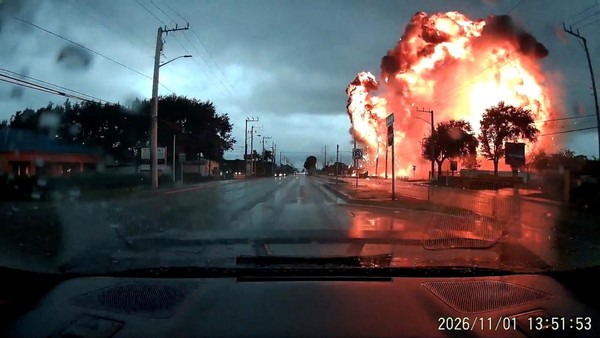
Jakarta, ThedailyID — Several possible causes have emerged following the crash of a Learjet 60 in Greenacres, Florida, on Sunday, November 1. The aircraft reportedly lost altitude rapidly before hitting the ground at high speed and breaking apart.
Florida Governor Ron DeSantis described the incident as a devastating aviation accident. He compared the falling aircraft to a missile.


“It was a very catastrophic plane crash. The plane looked like a missile falling out of the sky,” DeSantis said.
DeWitt Ingram, a licensed Learjet captain and founder of Par-Avion Group Aviation Consulting, reviewed flight-tracking data and footage showing the aircraft’s final moments.
“This is a very sad day for aviation,” Ingram said, as reported by CBS.
The Learjet 60 crashed near Military Trail and 10th Avenue North. FlightRadar24 data showed that the aircraft had departed Austin, Texas, and was heading to North Eleuthera in the Bahamas.
The plane crossed the Gulf of Mexico before entering Florida near Naples. It then flew northeast across the state before turning south over Palm Beach County.
Ingram said the aircraft’s rapid descent raised serious questions. According to the flight data he reviewed, the plane was initially flying at around 41,000 feet before descending to approximately 35,000 feet.
However, its descent then became much faster. The aircraft reportedly reached the ground in about one minute after descending from that altitude.
“What we saw today was a jet coming down from altitude extremely fast,” Ingram said.
Severe Weather Could Have Played a Role
Ingram suggested that severe weather, particularly thunderstorms, may have contributed to the crash. Such storms can produce powerful air currents and extreme turbulence. These conditions can potentially destabilize an aircraft.
He questioned whether the Learjet had crossed the top of a thunderstorm before losing altitude.
“If the pilot flew through the top of one of those thunderstorms, in extremely turbulent air, he could have damaged the aircraft to the point of losing control,” Ingram said.
He explained that an uncontrolled descent can increase an aircraft’s speed. This may place excessive pressure on its structure.
However, investigators have not confirmed whether weather caused structural damage. They have also not established whether the aircraft broke apart in midair before hitting the ground.
Footage from the crash site also raised questions about the absence of large, recognizable sections of the aircraft. Ingram said a high-speed impact could break an aircraft into much smaller fragments.
“That transfer of energy causes the fuselage to break apart,” he said.
This could explain why the tail and cabin were not visible as intact sections. However, heavy components such as engines and landing gear may still be recoverable at the crash site.
Ingram also revealed that the crash happened near his home. He learned about the incident after his nephew called to report a loud explosion and a power outage.
When Ingram looked toward the crash site, he saw dark smoke rising from the area. The incident left him with both personal grief and professional questions about what had happened.