
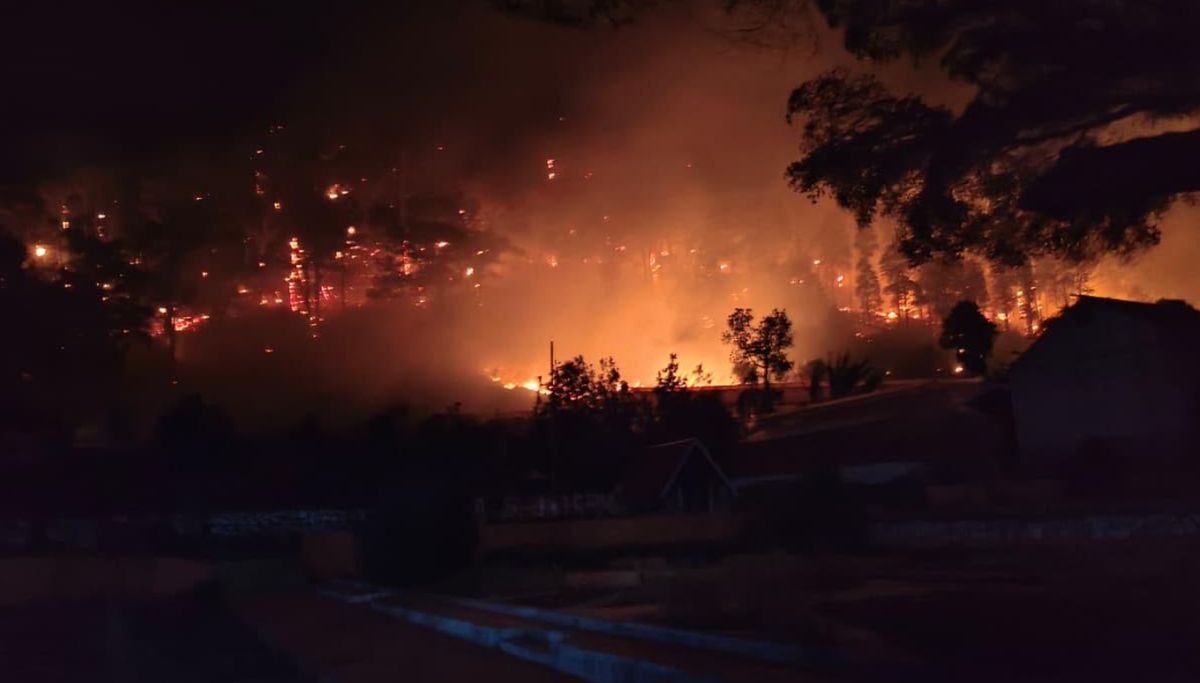
Jakarta, ThedailyID — Indonesia still has 742 hectares of land affected by forest and land fires as of Monday, November 2, according to the National Disaster Mitigation Agency (BNPB).
BNPB Head of Disaster Data, Information, and Communication Berton SP Panjaitan said the burned areas spread across several provinces. Central Kalimantan and South Papua recorded the largest affected areas.


“Nationally, we can report that 742 hectares of land have burned,” Berton said, as quoted by CNNIndonesia on Tuesday, November 3.
Central Kalimantan recorded the largest burned area at 351 hectares, down 42 percent from the previous day. South Papua followed with 253 hectares, a 56 percent decline. Southeast Sulawesi recorded 95 hectares, down 63 percent.
Other affected provinces included East Nusa Tenggara, with 16 hectares, down 36 percent. West Kalimantan recorded 19 hectares, while Bangka Belitung reported eight hectares.
Berton noted that authorities had not previously reported hotspots in West Kalimantan and Bangka Belitung. However, fires emerged in both areas on Monday.
He warned that rainfall does not completely eliminate the risk of new fires. Some underground embers may remain active despite recent rain.
“Even during the rainy season, new hotspots can still emerge because underground fires and embers have not been completely extinguished,” Berton said.
He added that BNPB continues to urge communities and relevant agencies to prevent existing hotspots from spreading into larger fires.
BNPB has also kept aerial resources on standby to support firefighting operations. Berton said 54 aircraft were available for forest and land fire response.
Of that total, 22 aircraft were assigned to patrols and weather modification operations. Another 30 helicopters were prepared for water-bombing missions.
The aircraft remain on standby in several areas, including South Kalimantan, Central Kalimantan, South Sumatra, West Kalimantan, Jambi, and Riau. BNPB has also prepared aerial support in East Java, East Kalimantan, South Papua, and Southwest Papua.
Berton stressed that authorities would maintain their readiness, including in regions that have started experiencing rainfall, to anticipate the emergence of new hotspots.