

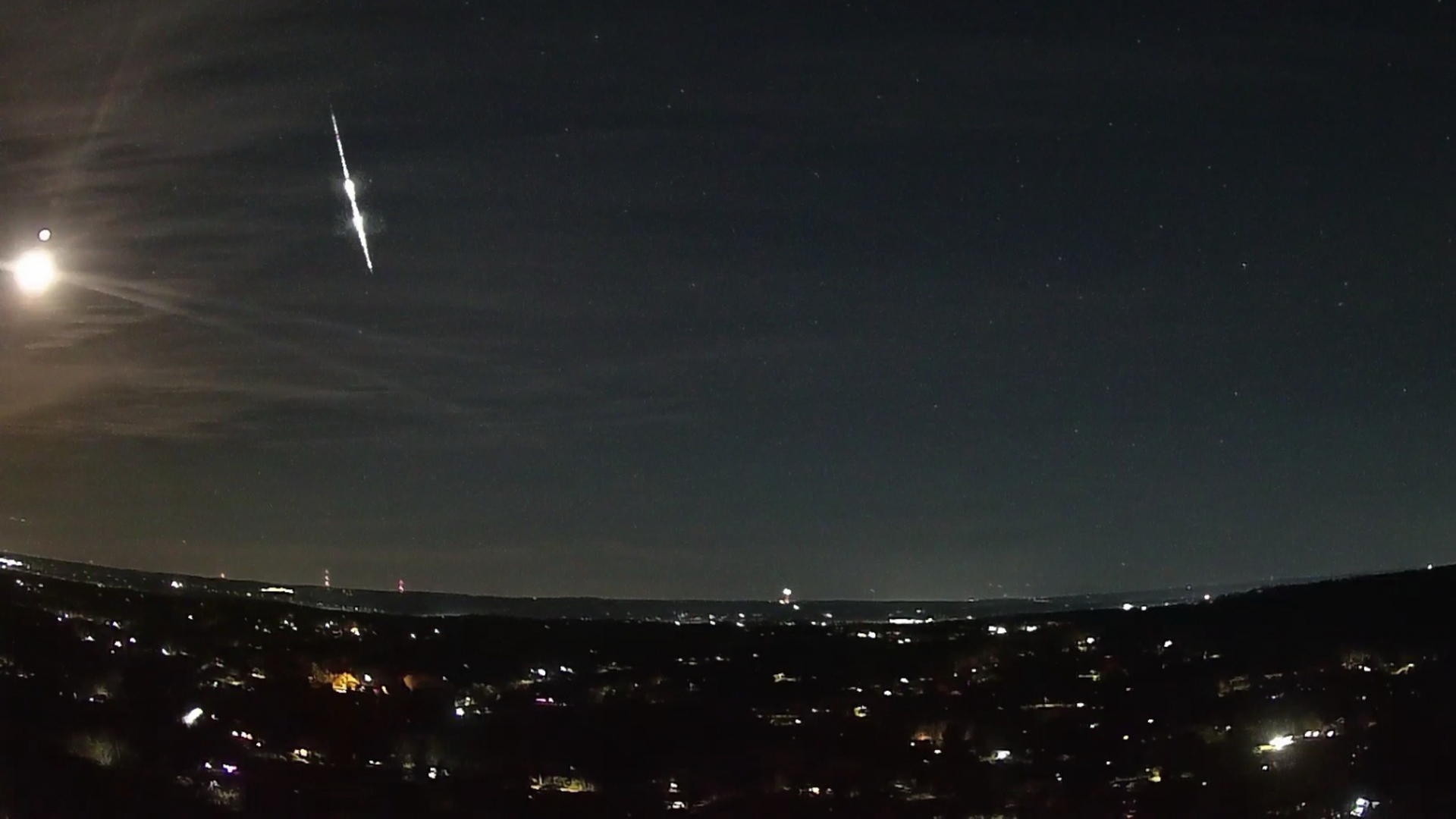
Jakarta, ThedailyID — November 2026 will bring several celestial events for skywatchers, including two meteor showers, a New Moon and a Supermoon.
Many of these events can be observed without special equipment. A dark location away from city lights can offer the best viewing conditions.


Here are four sky events to watch throughout November.
Taurids Meteor Shower
The Taurids meteor shower will reach its peak on November 4 and 5. Observers may see between five and 10 meteors per hour under favorable conditions.
The Taurids are active from around September through December each year. The shower comes from two separate streams of debris.
One stream contains material linked to Asteroid 2004 TG10. The other comes from debris left behind by Comet 2P/Encke.
The best time to watch the meteor shower is after midnight. Observers should choose a dark location with minimal light pollution.
The meteors appear to radiate from the Taurus constellation. However, they can appear across different parts of the night sky.
New Moon
November’s New Moon will occur on November 9 at 2:03 p.m. Western Indonesian Time, or WIB.
During a New Moon, the Moon sits on the same side of Earth as the Sun. As a result, it does not appear in the night sky.
The darker skies can create ideal conditions for observing faint objects. Stargazers with telescopes may have a better chance of seeing distant galaxies and star clusters.
Leonids Meteor Shower
The Leonids meteor shower will peak on November 17 and 18. The event can produce up to 15 meteors per hour at its peak.
The Leonids remain active from November 6 through November 30. The meteor shower comes from dust left behind by Comet Tempel-Tuttle.
The Leonids have also produced spectacular meteor storms in the past. During rare cycles that occur roughly every 33 years, observers can see hundreds of meteors in a single hour.
The last major Leonids meteor storm occurred in 2001.
This year could offer favorable viewing conditions. The Moon will set shortly after midnight, leaving darker skies for meteor watching.
The meteors appear to radiate from the Leo constellation. However, they may appear anywhere across the sky.
November Supermoon
A Full Moon Supermoon will occur on November 24 at 9:55 p.m. WIB.
The event will mark the second of three Supermoons expected in 2026.
A Supermoon occurs when a Full Moon coincides with the Moon’s closest approach to Earth. This position can make the Moon appear slightly larger and brighter than usual.
The November Full Moon is also known in several traditions as the Beaver Moon. The name comes from the time of year when people historically prepared for the coming winter.
November offers several opportunities for astronomy enthusiasts and casual observers. Clear skies and a location away from bright city lights can help provide the best experience.