

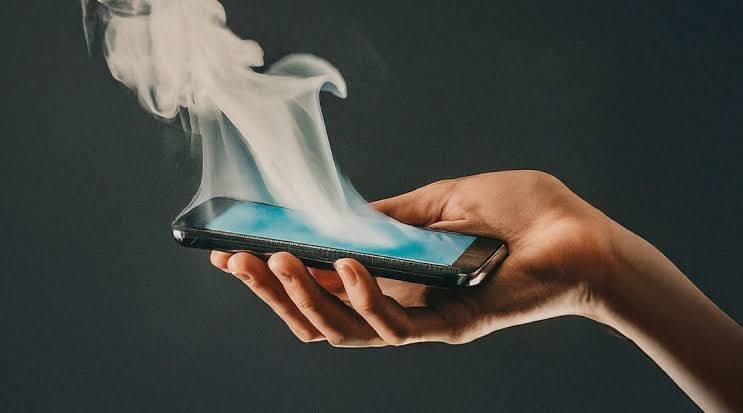
Jakarta, ThedailyID — A smartphone can suddenly overheat and produce smoke due to several factors. Physical damage, excessive heat and battery problems are among the possible causes.
The issue recently caused panic inside a women-only KRL carriage at Rawa Buntu Station, South Tangerang, on Thursday morning, September 17, 2026.


Police said there was no explosion. Instead, smoke came from two phones inside a passenger’s bag. The devices reportedly rubbed against each other before catching fire.
“There was no explosion. Smoke simply came from the female passenger’s bag,” Rawa Buntu Police community affairs officer Aipda Herry said, reported on Friday, September 18.
According to PCMag, smartphone fires are almost always linked to their batteries. Modern phones use lithium-ion batteries that rely on a balance between positive and negative electrodes.
When something disrupts that balance, the battery can generate excessive heat. In some cases, this can trigger a chain reaction known as thermal runaway.
Thermal runaway occurs when a battery continues generating heat after its temperature rises sharply. The process can eventually cause the battery to catch fire or, in some cases, explode.
Several factors can trigger battery overheating:
- Physical damage
A phone that falls or bends excessively can damage components inside its battery. This damage can potentially lead to an internal short circuit.
- Excessive heat
Leaving a phone in direct sunlight for too long can raise its temperature significantly. Heavy processor use can also increase heat, especially while the device is charging.
- Charging problems
Damaged cables, unsuitable chargers or other charging issues can contribute to battery problems. Users should avoid charging phones with damaged or exposed cables.
- Aging batteries
Phone batteries degrade over time. After years of use, their internal components can lose performance and potentially cause swelling or overheating.
- Manufacturing defects
In some cases, problems can originate during the manufacturing process. Such defects can affect the battery and increase the risk of overheating.
iFixit explains that lithium-polymer batteries contain a cathode, separator and anode. The separator prevents the cathode and anode from directly touching.
If the separator becomes damaged, an internal short circuit can occur. The stored energy can then flow through the damaged area and generate intense heat.
That heat can cause the electrolyte’s flammable solvents to turn into gas. If the temperature reaches an ignition point, the gas can catch fire and trigger thermal runaway.
Users should watch for warning signs. These include hissing sounds, small popping noises, unusual chemical or burning-plastic smells and abnormal heat.
A swollen battery is another important warning sign. A lifted screen, widening gaps in the phone body or a bulging back panel can indicate battery damage.
If a phone becomes extremely hot while charging, PCMag recommends unplugging the charger immediately. If the device shows signs of battery damage, users should turn it off and take it to an authorized service center.
To reduce the risk, avoid extreme temperatures and do not cover a phone while it is charging. Place it on a hard, flat surface instead.
Users should also use compatible chargers and cables. When possible, PCMag recommends keeping the battery level between 30 and 80 percent during everyday use.