

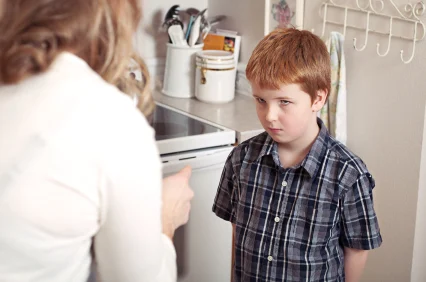
Jakarta, ThedailyID — Discovering that a child has lied can frustrate parents, especially when the lie covers up something they should not have done. However, the way parents respond can become an important opportunity to teach children about honesty.
Responding too harshly may make children afraid to admit their mistakes. A calmer approach, meanwhile, can encourage them to explain what really happened.


Here are six things parents can do when they catch their child lying.
1. Don’t scold the child immediately
When parents discover a lie, they should avoid immediately shouting or intimidating the child. Instead, give them an opportunity to explain what happened.
A study of children aged 4 to 9, published in the Journal of Experimental Child Psychology, found that children who expected more positive reactions from their parents when confessing were more likely to report admitting mistakes in daily life.
Therefore, parents can start the conversation without immediately judging the child. This helps children understand that lying is wrong without making them feel that telling the truth will automatically lead to punishment.
2. Find out why the child lied
Children do not always lie because they want to deceive their parents. They may lie because they fear punishment, want to avoid consequences, hope to get something, or simply want to see what happens.
After the child admits the truth, parents can ask questions such as, “Why did you say that?” or “What were you afraid of?”
These questions can help parents understand the reason behind the lie while teaching children to recognize their own emotions.
3. Explain why honesty matters
Honesty should be taught rather than simply demanded. Research suggests that children who discuss the difference between truth and lies can provide more honest reports than children who do not have such discussions.
Parents can use moments like these to explain why telling the truth matters. Over time, children can learn that honesty is not simply a rule but also a way to solve problems.
4. Still give appropriate consequences
Encouraging honesty does not mean ignoring the original mistake.
Parents can still give consequences that match what the child did. However, the consequence should address the action itself rather than punish the child for choosing to tell the truth.
This approach teaches children two lessons: honesty is valued, while mistakes still require accountability.
5. Set an example
Children learn not only from what their parents say but also from what they see. When parents tell children not to lie but behave differently themselves, children may pay more attention to their parents’ actions.
Therefore, the message “don’t lie” becomes stronger when parents also practice honesty. They can demonstrate this by openly acknowledging their own mistakes.
6. Avoid lying to make children obey
Parents sometimes use small lies to make children follow instructions. For example, they might say, “If you don’t eat your vegetables, the doctor will come,” or “If you don’t go to sleep, the police will come and arrest you.”
This habit also deserves attention. A study involving 564 parent-child pairs in Singapore found that children’s exposure to instrumental lies, or lies used by parents to influence their behavior, was associated with a tendency to lie more to their parents.
Therefore, parents should replace these statements with simple explanations that children can understand according to their age.
A child caught lying needs guidance to understand the importance of honesty. At the same time, the parent’s response can play an important role in helping the child learn how to tell the truth.