

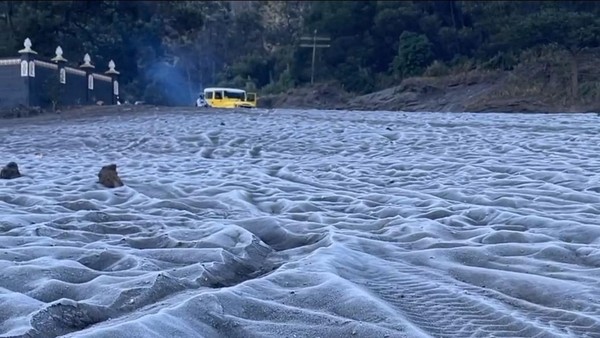
Jakarta, ThedailyID — Mount Bromo has once again drawn attention after frost covered parts of the popular tourist destination, creating scenery that resembled snowfall.
The phenomenon occurred as temperatures around the Bromo area dropped to 0 degrees Celsius during the dry season. Local residents often refer to the frost as embun upas, or poisonous dew.


Photos and videos circulating on social media showed grasslands and open fields around Bromo turning white. As a result, many visitors compared the landscape to a snow-covered region.
Despite its appearance, the white layer is not snow. Instead, it forms when water vapor freezes on surfaces during extremely cold temperatures before sunrise.
The phenomenon commonly occurs between June and August. During this period, dry air and clear skies allow temperatures in the Bromo Tengger Semeru area to fall sharply at night.
According to local authorities, frost often appears in several locations around Bromo. These include the Savannah area, Jemplang, Ranupani, and parts of the Sea of Sand.
While the icy scenery attracts tourists, it can also affect local vegetation. Frost may damage crops and grass because frozen water crystals can harm plant tissue.
Tourists planning to visit Bromo during the dry season should prepare for the cold weather. Temperatures before sunrise can approach freezing levels, especially in higher areas.
Visitors are advised to wear thick jackets, gloves, hats, and other warm clothing. In addition, they should remain cautious when walking on frosty surfaces, which can become slippery.
The rare frost season has become one of Bromo’s unique attractions. Every year, many travelers visit the area hoping to witness the stunning white landscape created by Indonesia’s coldest mornings.