
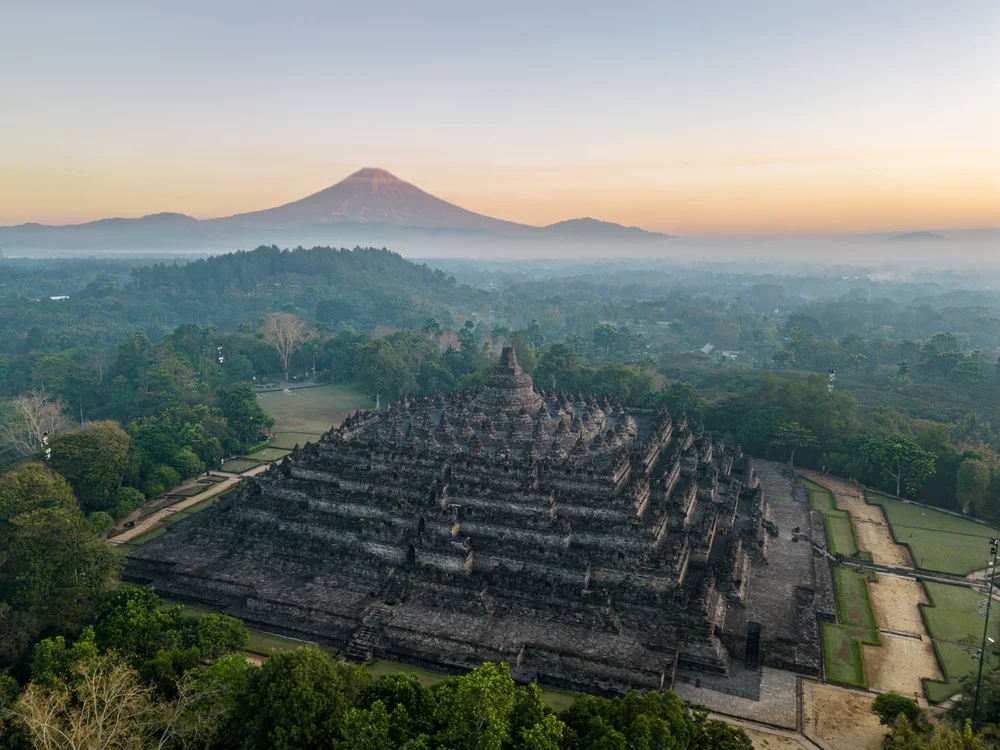
Jakarta, ThedailyID — Borobudur Temple is widely recognized as the world’s largest Buddhist monument. However, few people know that a Chinese merchant played an important role in its rediscovery during the early 19th century.
The figure was Tan Jin Sing, a wealthy Chinese merchant and government official who lived during the Dutch colonial era.


For decades, Borobudur remained hidden beneath thick vegetation and layers of volcanic ash. The monument had largely disappeared from public attention after centuries of abandonment.
In 1814, British Governor-General Thomas Stamford Raffles received reports about a large ancient structure buried in the Kedu region of Central Java.
Interested in the findings, Raffles ordered an investigation. He then assigned Dutch engineer Herman Cornelius to lead the excavation effort.
However, historical records indicate that information about the existence of the ancient monument first reached colonial authorities through Tan Jin Sing. His local knowledge helped direct attention toward the site that would later be identified as Borobudur.
Following the reports, Cornelius and hundreds of workers cleared dense forest, shrubs, and soil that had covered the structure for centuries.
As a result, large sections of Borobudur gradually emerged from beneath the landscape. The discovery later attracted international attention and sparked further archaeological research.
Moreover, the rediscovery marked the beginning of major restoration efforts that continued throughout the colonial period and after Indonesia’s independence.
Today, Borobudur stands as one of Indonesia’s most important cultural landmarks. The monument attracts millions of visitors and holds recognition as a UNESCO World Heritage Site.
While figures such as Raffles and Cornelius often receive credit for uncovering Borobudur, the contribution of Tan Jin Sing remains an important part of the temple’s history and rediscovery.