

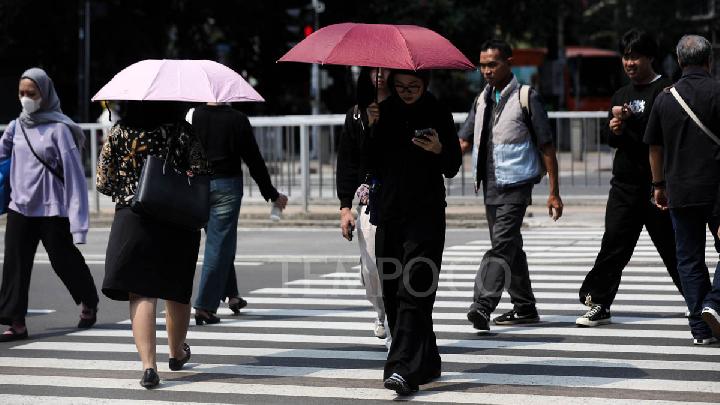
Jakarta, ThedailyID — The World Meteorological Organization warned that global temperatures will likely stay near record highs over the next five years.
Scientists said climate change continues intensifying worldwide. As a result, extreme heat trends may continue throughout the rest of the decade.


According to WMO projections, average global temperatures between 2026 and 2030 could remain around 1.3 to 1.9 degrees Celsius above pre-industrial levels.
Researchers also warned that El Niño conditions could trigger new temperature records by 2027. The United Nations report estimated a 91 percent chance that at least one year between 2026 and 2030 will exceed the 1.5-degree Celsius warming threshold.
Meanwhile, scientists predicted an 86 percent chance that future temperatures will surpass the previous global record set in 2024.
Global temperatures in 2024 reached around 1.55 degrees Celsius above pre-industrial levels. Climate change effects have already become increasingly visible in many parts of the world.
Meanwhile, the BBC reported that temperatures in London reached 35.1 degrees Celsius on Tuesday. The figure marked the hottest May day ever recorded in the United Kingdom.
The Paris Agreement established a global target to limit warming to 1.5 degrees Celsius above pre-industrial levels.
Scientists stressed that crossing the threshold in one year does not automatically mean the target has permanently failed.
However, experts warned that record-breaking heat events are becoming more frequent worldwide.
The report also highlighted faster warming in Arctic regions compared to the global average. Researchers predicted continued sea ice decline in the Barents Sea, Bering Sea, and Sea of Okhotsk. The study was prepared by the UK Met Office using climate forecast data from institutions worldwide.
Scientists use the 1850–1900 period as the pre-industrial baseline before large-scale fossil fuel burning changed the climate dramatically.
Climate experts emphasized that limiting warming remains important to reduce risks from heatwaves, rising sea levels, droughts, stronger storms, crop failures, and ecosystem damage.