

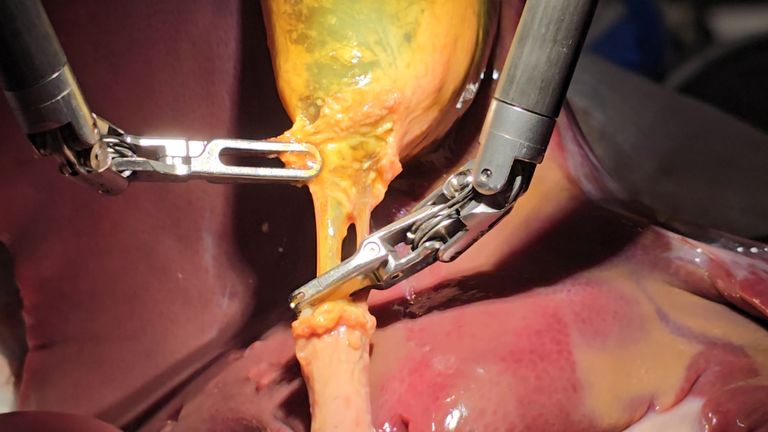
Jakarta, ThedailyID — Surgical robots may sound like machines that can perform operations independently. However, doctors remain in control throughout robotic-assisted surgery.
Obstetrician and gynecologist Sita Ayu Arumi from RS Bunda Jakarta explained that the robot does not make medical decisions. Instead, it translates the doctor’s movements through a console into movements by surgical instruments inside the patient’s body.


“The robot is a tool, not a decision-maker. The doctor controls every movement inside the patient’s body, from the beginning to the end of the procedure,” Sita said, according to CNN Indonesia, Tuesday, September 22.
Sita became the first female doctor to join an Indonesian gynecological robotic surgery team in 2013. At that time, robotic surgery technology had only been introduced at RSU Bunda Jakarta about a year earlier.
Unlike conventional surgery, doctors performing robotic procedures do not have to stand directly beside the operating table. They sit at a console and control the instruments using their hands and fingers.
The system also features a tremor filter that reduces small hand movements. This helps the instruments move more steadily and precisely.
“If my hand stays still, the instrument also stays still. The robot helps me move more precisely than with my bare hand. However, deciding which tissue to remove and how far to go is purely the doctor’s decision,” Sita said.
In gynecology, robotic surgery can be used for certain complex cases when patients meet the appropriate indications. Sita said her team has treated cases involving large multiple fibroids, cysts with extensive adhesions, and severe endometriosis affecting several surrounding organs.
Robotic-assisted procedures can allow doctors to operate through smaller incisions than open surgery. For some patients, this approach may also support a relatively shorter recovery period.
However, not every patient is suitable for robotic surgery. Doctors still need to select the surgical approach based on the patient’s condition and medical considerations.
For patients with fibroids, one potential benefit is the possibility of preserving the uterus. This can be particularly relevant for patients of reproductive age who meet the necessary indications.
“Robotic technology can help doctors remove fibroids while preserving the uterus in eligible patients. This is important, especially for patients of reproductive age who might otherwise face much more difficult choices,” Sita said.
Technology alone, however, does not determine the outcome of robotic surgery. Doctor expertise and team readiness also play important roles, particularly when treating complex cases.
Agus Heru Darjono, President Director of PT Bundamedik, said doctors performing robotic procedures across the BMHS hospital network undergo specialized training and certification.
“Every doctor handling robotic surgery cases across the BMHS hospital network undergoes specialized training and certification. Complex cases also involve multidisciplinary teams,” Agus said.
Sita added that robotic surgery skills take years to develop. Doctors need experience with the technology and with different conditions that can arise during procedures.
“Competence in handling robotic cases does not develop instantly. It takes years before I become truly comfortable handling complex cases, and that process continues to develop,” she said.
For patients considering robotic surgery, Sita advised them not to focus only on the sophistication of the equipment. The doctor’s experience and the readiness of the medical team are also important considerations.
“The technology may be the same, but the doctor’s experience and the team’s readiness still play a very important role in the procedure,” Sita said.
In other words, robotic surgery does not mean a robot takes over the operation. The robot serves as an assistive tool, while the doctor makes the medical decisions and controls the surgical instruments.