
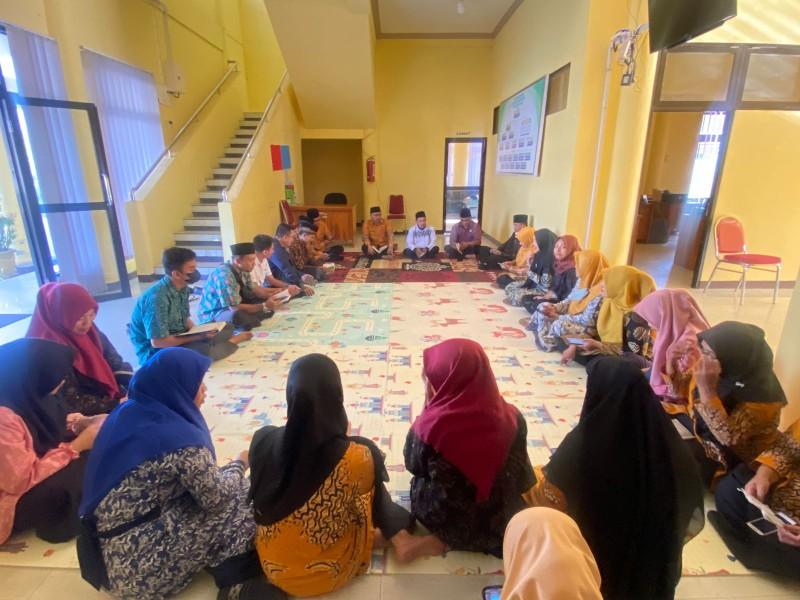
Jakarta, ThedailyID — Residents in Sumbawa have rejected a claim by a group calling itself Cek Bocek to 20,000 hectares of customary land. Community leader M. Yasin A.D. said the claim has no historical basis and even includes ancestral graves belonging to local residents.
Yasin, head of the Lar Leba Dodo Lampui community, spoke to reporters on Thursday, July 30, 2026. He said neither the name Cek Bocek nor the group’s claimed ancestry appears in the history passed down by previous generations.


According to Yasin, local communities have never recognized the name Cek Bocek. He also rejected the group’s claim that it descended from a historical datu, or traditional ruler.
“We don’t belong to any customary community. When they claim there was a datu, to us that’s just a village head,” he said.
Yasin also disputed the group’s claim to a distinct Berco dialect. He said local people have used the speech pattern for generations. According to him, the Cek Bocek group only recently gave it the name “Berco.”
He questioned why the group, which originated from Lawin, has failed to gain broad recognition despite presenting itself as one of the region’s oldest customary communities. He said many Lawin residents themselves regard the identity as unfamiliar.
“Not many people from Lawin make that claim. In fact, they see it as something new because they’ve never heard of it before,” he said.
Yasin said the Dodo and Leba communities have never claimed ownership of the disputed land. They recognize it as state property.
“We’ve never claimed the land because it belongs to the government. It’s enough for us to be recognized as the people who live there,” he said.
He also argued that Cek Bocek’s claim lacks historical evidence. He said any claim of customary authority should rely on authentic records, including artifacts, inscriptions, or palm-leaf manuscripts.
“Unless there’s historical evidence such as artifacts, inscriptions, or palm-leaf manuscripts. But there are no written sources for this,” he said.
Yasin described the claim as an unfounded story rather than documented history.
“This is just imagination. They imagine these things because there’s never been any authentic data or official source, such as an inscription or records from an old sultanate. If it’s only passed from ear to ear, I could just as easily imagine that I once went to the moon or that my grandfather was the King of Makassar,” he said.
He also referred to the local meaning of the term Cek Bocek. According to him, it roughly describes someone insignificant or barely noticed. He questioned how a group with that name could claim ownership of 20,000 hectares of land.
“‘Cek Bocek’ refers to someone we can barely hear. How can they claim 20,000 hectares when we can barely hear them?” he said.
Despite rejecting the claim, Yasin said he does not hold any personal resentment. He noted that many residents across the region remain related through family ties.
“We see it as a joke. We’re not angry because we’re still family. The problem is this claim creates a new customary identity that our ancestors never knew,” he said.
Yasin added that residents object to the newly introduced customary identity, not to their shared family connections.
He also argued that the Cek Bocek group copied the governance structure of the former Sumbawa Sultanate without historical evidence.
“We see that Cek Bocek is imitating the governance structure of the Sumbawa Sultanate. But it never existed. There is no such lineage. Ask them, and I’m sure they don’t understand the history,” he said.
Yasin concluded by raising concerns about access to his community’s ancestral graves inside AMMAN Mineral’s concession area. He expressed hope the company would allow residents to continue their annual grave-visiting tradition.