
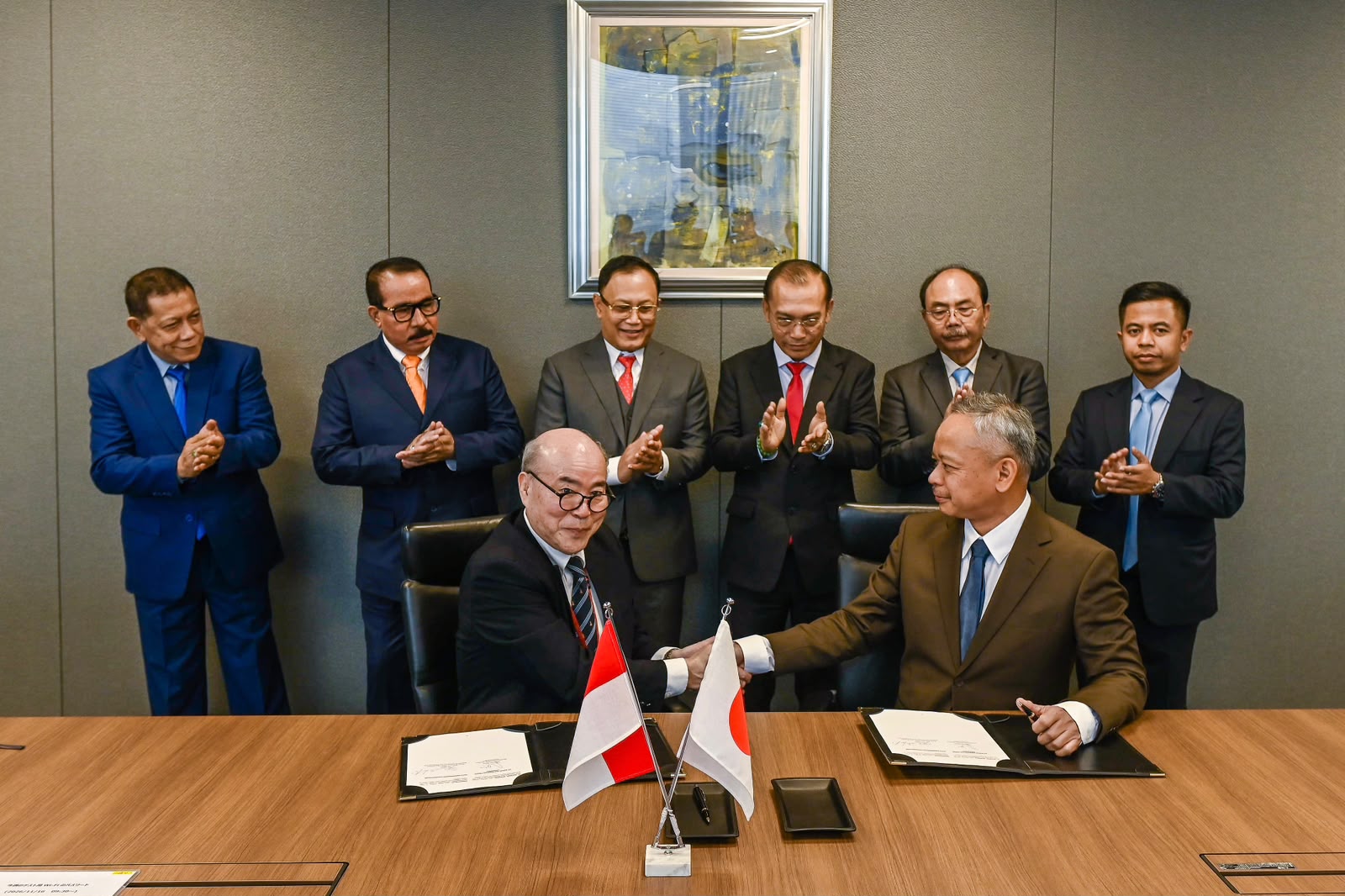
Jakarta, ThedailyID — PT Pupuk Kalimantan Timur (PKT) has signed contracts with two leading global technology companies, Topsoe and Toyo Engineering Corporation (Toyo), to prepare the Basic Engineering Design (BED) for its planned Ammonia-Urea Plant in the Fakfak Fertilizer Industrial Estate (KIPF), West Papua.
PKT President Director Rafli Yandra said the partnership marks a strategic step in preparing the plant’s technical foundation. It also aims to ensure the project uses efficient, reliable, and sustainable technologies.


PKT selected Topsoe and Toyo following technical and commercial evaluations, as well as negotiations under Pupuk Indonesia Group’s procurement rules and company procedures. According to Rafli, both companies bring extensive experience, proven track records, and established technologies in the global fertilizer industry.
The collaboration aims to produce a plant design that meets technical standards and improves long-term operational efficiency. As a result, PKT expects the facility to strengthen its competitiveness over time.
“We want to ensure that every technological and operational reliability aspect receives comprehensive consideration from the planning stage. With experienced technology partners, we are confident this project can move forward on a strong foundation,” Rafli said on Thursday, November 19, 2026.
He explained that the BED process represents a fundamental stage before the Engineering, Procurement, and Construction (EPC) tender. The document will also support the application for in-principle investment approval. Furthermore, it will serve as a technical reference for subsequent engineering, procurement, and construction activities.
The Fakfak Ammonia-Urea Plant is a National Strategic Project (PSN) under close government supervision. Therefore, PKT considers design quality and timely completion essential. The company will focus on aligning the project scope, implementation schedule, milestones, and coordination among all parties involved in the BED process.
“Design quality must remain our priority, alongside schedule discipline, safety, and facility reliability. Success at this stage will provide an important foundation for smooth construction until the plant is ready to operate,” Rafli said.
The planned Fakfak facility will have an ammonia production capacity of 2,500 tons per day, equivalent to 825,000 tons annually. Meanwhile, its urea production capacity will reach 3,500 tons per day, or approximately 1.15 million tons annually.
The development forms part of an assignment from PT Pupuk Indonesia (Persero), which appointed PKT to implement and manage the KIPF National Strategic Project.
For its ammonia facility, the project will adopt Topsoe’s SynCOR Ammonia technology. The technology uses an Oxygen-Fired Autothermal Reforming process, with a steam-to-carbon ratio approaching 0.6.
According to PKT, this ratio can reduce natural gas feedstock requirements by 10%. Consequently, the technology could help lower ammonia production costs.
The plant will also follow a ready-to-blue concept. This approach prepares the facility for integration with Carbon Capture and Storage (CCS) or Carbon Capture, Utilization, and Storage (CCUS) technologies.
Through this design, PKT aims to prepare the facility for future low-carbon ammonia production. The approach also considers energy efficiency, operational reliability, and lower carbon emission intensity.
Meanwhile, the urea facility will use Toyo Engineering Corporation’s ACES21 technology. The technology aims to optimize energy and ammonia consumption while producing high-quality granular urea. It is also designed to support more efficient and environmentally friendly production.
“We see the Fakfak Ammonia-Urea Plant as a strategic long-term investment. Therefore, the selected technologies must offer more than increased production capacity. They must also provide competitive advantages and readiness to face global industry challenges,” Rafli added.
Pupuk Indonesia President Director Rahmad Pribadi expressed full support for PKT’s efforts to accelerate the project. He said the development would strengthen the company’s contribution to national food sovereignty and self-sufficiency, in line with the government’s Asta Cita priorities.
In addition, the project aims to strengthen the petrochemical sector and create greater value from Indonesia’s natural resources.
“Through this project, we want to maximize the potential of natural gas to create greater added value. At the same time, we aim to support industrial growth and more balanced development across eastern Indonesia,” Rahmad said.
He added that adopting technologies from Topsoe and Toyo represents a strategic move to strengthen industrial sovereignty through technology, innovation, and sustainable value creation. The project will also support the industry’s transition toward more efficient and lower-carbon production.
“Therefore, we are working to introduce more efficient and sustainable industrial technologies, in line with Pupuk Indonesia’s decarbonization strategy through 2050,” Rahmad concluded.