

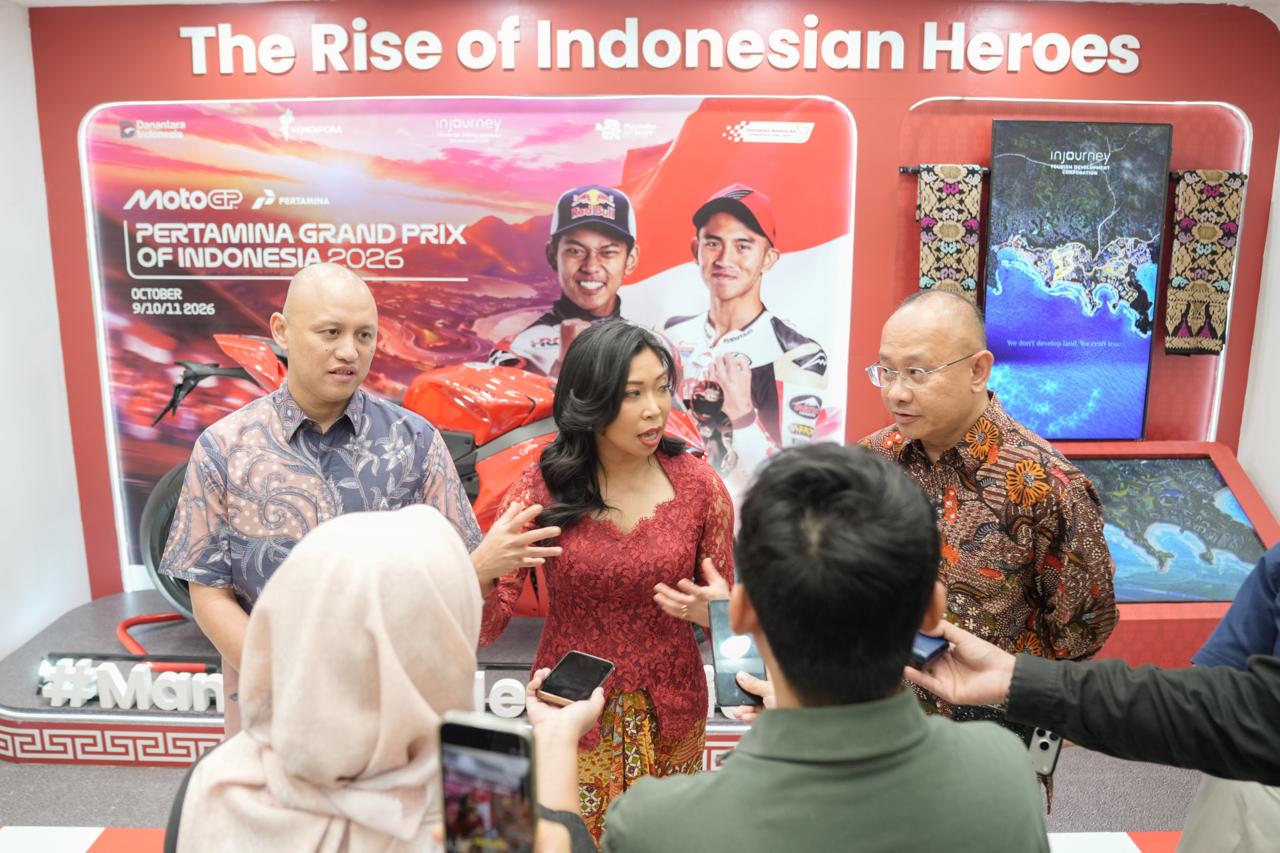
Jakarta, ThedailyID — Indonesia’s National Development Planning Ministry (Bappenas) has launched a study on the 2025 MotoGP Mandalika and started drafting a national blueprint for the sports industry.
The MotoGP Mandalika 2025 study estimates the event generated an economic impact of around Rp2.7 trillion to Rp4.7 trillion.

Bappenas presented the findings at its Jakarta headquarters on Wednesday, September 30. The study will support future policies for sport tourism and Indonesia’s sports industry.
The study involved Bappenas, PT Pengembangan Pariwisata Indonesia (ITDC), and Mandalika Grand Prix Association (MGPA). Several government ministries and agencies also contributed to the research.
Bappenas Minister Rachmat Pambudy said the event highlighted the need for an integrated sports industry ecosystem.
“The MotoGP Mandalika experience shows the importance of developing an integrated sports industry ecosystem,” Rachmat said on Wednesday, September 30.
He noted that Indonesia has yet to fully convert its sports industry potential into domestic value, investment, and jobs. He also pointed to gaps in data, products, industry, human resources, and sports infrastructure.
The estimated economic impact includes direct, indirect, and induced effects. The event also created tens of thousands of work opportunities during its preparation and implementation.
Tourism, MSMEs, transportation, accommodation, the creative economy, and communities in West Nusa Tenggara (NTB) benefited from the event.
The event also generated significant international exposure. Global media coverage produced an estimated advertising value equivalent of 361.6 million euros, or around Rp6.9 trillion.
Bappenas and ITDC surveyed more than 1,800 people during the 2025 MotoGP. The respondents included domestic spectators, foreign tourists, MSMEs, workers, and sponsors.
The event recorded a spectator experience score of 5.07 out of 6. The study also found potential for higher tourist arrivals with stronger destination promotion.
Bappenas estimates Mandalika’s increased exposure could raise tourist visits by around 11%. The projection assumes the destination receives integrated promotional support.
Tourism Minister Widiyanti Putri Wardhana said MotoGP Mandalika has strengthened the destination’s appeal.
“The MotoGP Mandalika has shown how a world-class sporting event can strengthen a destination, increase tourist visits, extend stays, and drive the local economy,” Widiyanti said.
The study also recorded positive feedback from workers and local businesses. Workers and volunteers gave the event a satisfaction score of 5.51 out of 6.
Meanwhile, MSMEs and tenants recorded an overall satisfaction score of 5.23.
The NTB provincial government and local governments also supported the event. Their support covered tourism promotion, healthcare, security, infrastructure, and other activities.
Bappenas said the lessons from Mandalika will support the development of a National Sports Industry Development Blueprint.
The blueprint will establish national priorities, targets, and roles for different sectors. It will also strengthen coordination between central and local governments.
Youth and Sports Minister Erick Thohir said cooperation across ministries will remain important for developing Indonesia’s sports industry.
“Sports development must become a joint movement. Sports achievements, the sports industry, and international events can strengthen one another,” Erick said.
Bappenas expects the study and blueprint to support Indonesia’s 2025–2029 National Medium-Term Development Plan. The government also aims to build a sports industry ecosystem that creates greater economic value and benefits for communities.