

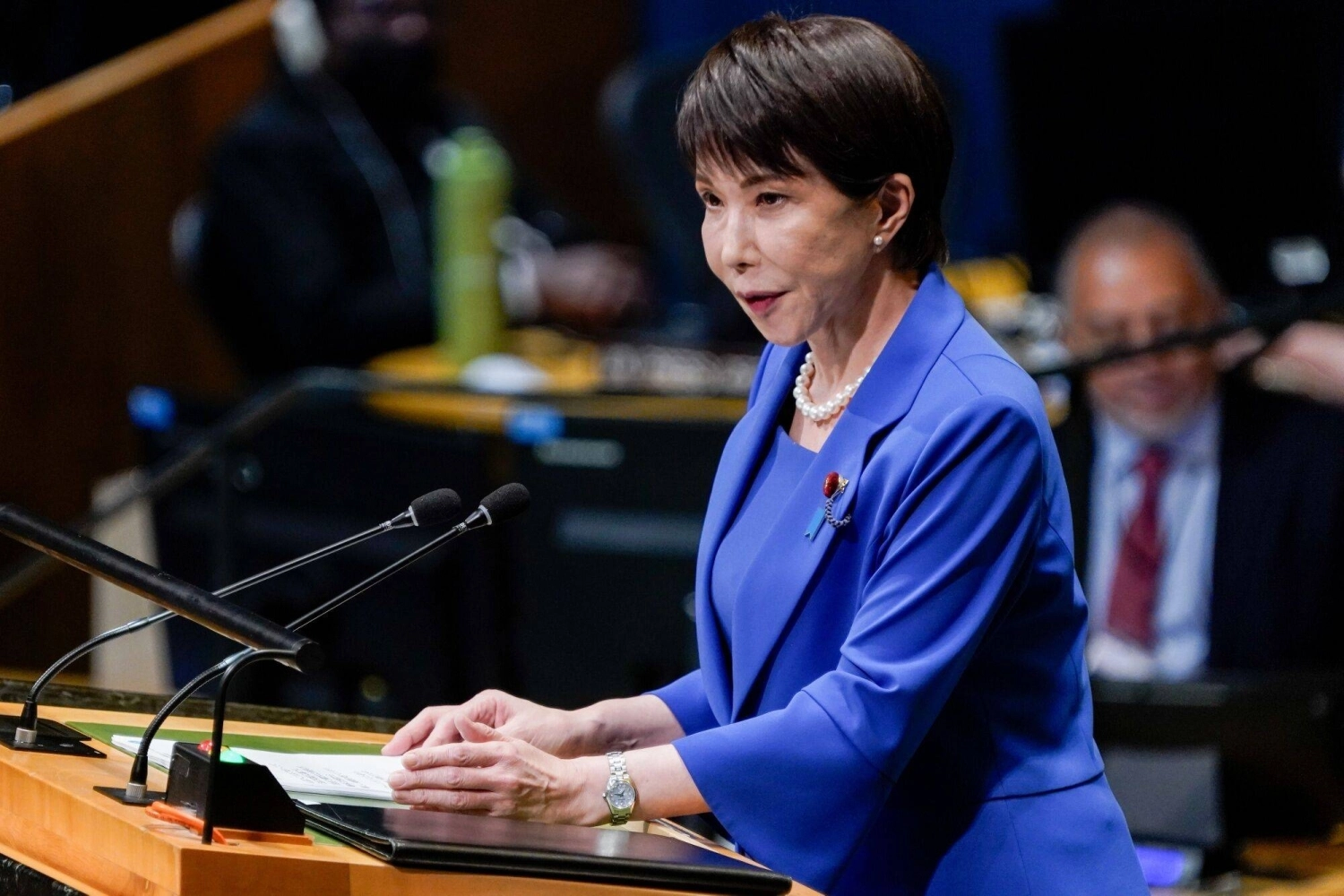
Jakarta, ThedailyID — Japanese Prime Minister Sanae Takaichi said she is ready to engage in dialogue with North Korea and pursue closer relations.
Takaichi made the statement during her address to the 81st United Nations General Assembly in New York on Tuesday, September 22. She referred to the 2002 Japan-DPRK Pyongyang Declaration as a framework for future engagement.

“For the sake of the future of both Japan and North Korea, I am prepared to engage in dialogue and take concrete action to establish a mutually fruitful relationship in accordance with the Japan-DPRK Pyongyang Declaration,” Takaichi said, as reported on Wednesday, September 23.
The declaration was signed in September 2002 by then-Japanese Prime Minister Junichiro Koizumi and North Korean leader Kim Jong Il. It called for efforts toward normalizing relations and included discussions on economic cooperation after normalization.
However, Takaichi also raised security concerns involving North Korea. She described Pyongyang’s nuclear and missile programs as a serious threat to international peace and security.
She also pointed to growing military cooperation between Russia and North Korea. In addition, she cited North Korea’s malicious cyber activities, including cryptocurrency thefts, as another concern.
The abduction of Japanese citizens also remains a major issue for Tokyo. Takaichi said the abductees and their families continue to face the consequences of the unresolved cases.
“The abductees are still denied their freedoms, and their families continue to suffer,” Takaichi said. She added that the issue requires an immediate resolution as the abductees and their families grow older.
Japan and North Korea do not have diplomatic relations. Previous efforts to normalize ties have faced obstacles, particularly over the abduction issue.
In 2002, North Korea acknowledged abducting Japanese citizens. Five abductees later returned to Japan, while disagreements remained over the fate and whereabouts of others.
The 2002 Pyongyang Declaration also addressed security concerns. Both sides agreed on the importance of dialogue to resolve nuclear and missile issues on the Korean Peninsula.
Takaichi’s latest remarks therefore combine a willingness to reopen dialogue with continued demands over security and the abduction issue. Japan’s government has also continued coordinating with the United States and South Korea on North Korea’s nuclear, missile, cyber, and abduction issues.