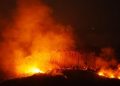

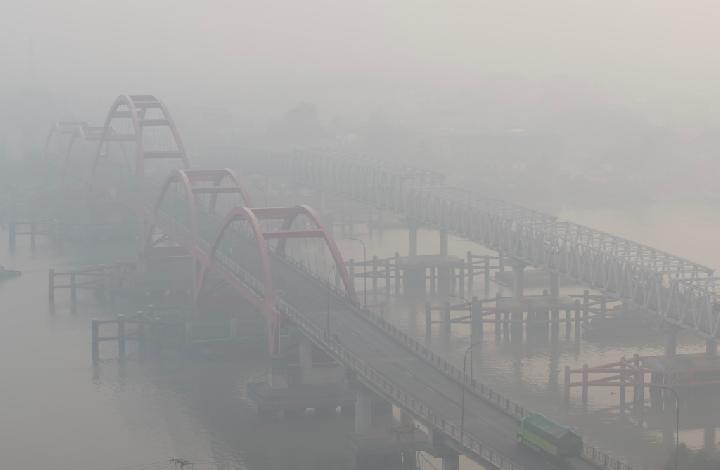
Jakarta, ThedailyID — Indonesia’s disaster agency reported improved visibility in South Sumatra after a dry ice seeding trial on October 15, 2026. The operation aims to reduce haze from forest and land fires.
The National Disaster Management Agency (BNPB) recorded an increase in visibility from around 650 meters to 2.8 kilometers near the seeding area. However, the agency described the results as preliminary.

Berton Suar Pelita Panjaitan, acting head of BNPB’s Disaster Data, Information, and Communication Center, explained the purpose of the operation. The agency hopes dry ice can help disperse smoke trapped near the ground.
During a temperature inversion, atmospheric conditions can trap smoke close to the surface. Dry ice seeding aims to destabilize this layer, allowing smoke to rise and spread.
Unlike conventional weather modification methods that use sodium chloride to encourage rainfall, dry ice seeding does not require rain clouds. The material consists of solid carbon dioxide at temperatures of around minus 75 degrees Celsius.
BNPB deployed a Cessna Caravan aircraft, registered as PK-SNP, for the trial. The aircraft completed two flights, each carrying 800 kilograms of dry ice. Both flights released the material at an altitude of about 4,500 feet.
The aircraft departed from Raden Inten II Airport in Lampung. Crews focused their seeding efforts near Sultan Mahmud Badaruddin II International Airport in Palembang. The operation aims to improve visibility and support aviation safety.
The trial followed an instruction from President Prabowo Subianto to find solutions to South Sumatra’s haze problem. Coordinating Minister for Political and Security Affairs Dudung Abdurachman announced the trial on October 14.
The government prepared 1.5 tonnes of dry ice for the operation around Palembang. Meanwhile, authorities continue other wildfire response efforts, including weather modification operations.
BNPB plans to continue the trial through October 18, 2026. Afterward, officials will evaluate the results and discuss whether to extend the method to other affected regions, including Central Kalimantan.
Further assessment will determine whether dry ice seeding can deliver consistent results. For now, BNPB’s reported visibility improvement remains preliminary.