
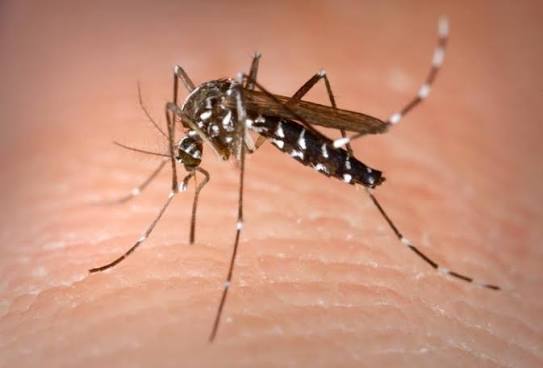


Jakarta, ThedailyID — El Niño can threaten many wildlife species worldwide. However, the climate phenomenon may also help some animals thrive, including mosquitoes.
Extreme weather can disrupt wildlife populations. Yet mosquitoes can benefit because they adapt easily to changing environments.
A 2025 study examined more than two decades of dengue cases in Singapore. The research found that dengue risk increased during strong El Niño events. Researchers also considered local temperature and rainfall.
Singapore’s National Environment Agency (NEA) said the country’s tropical climate and high population density create favorable conditions for mosquitoes throughout the year.
Hotter weather can also speed up mosquito development and reproduction. At the same time, it can accelerate the development of dengue virus inside mosquitoes.
“Rising temperatures can shorten the life cycle of mosquitoes that carry viruses and speed up their reproduction,” Taiwan Centers for Disease Control (CDC) Deputy Director-General Tseng Shu-hui said, according to Taipei News, Wednesday, September 9, 2026.
She added that higher temperatures can also shorten the time needed for the dengue virus to multiply inside mosquitoes.
Rainfall also plays an important role. Heavy or prolonged rain can leave standing water in indoor and outdoor areas. These pools can then become breeding sites for mosquitoes.
NEA monitoring between April and June 2026 found several common breeding sites in public areas. They included covered roadside drains, discarded containers and drain traps.
Singapore is expected to experience hotter and drier conditions from June to October due to El Niño. This period also overlaps with the country’s usual dengue peak from May to October.
However, mosquitoes are not the only concern. Extreme El Niño conditions can also put other insects under pressure.
Eleanor Slade, an associate professor at the Asian School of the Environment, said stronger El Niño conditions could overwhelm insects and make survival harder.
Unpredictable weather can disrupt food supplies and the life cycles of plants and animals. As a result, it could disturb natural food chains.
If insect populations decline sharply, the impact could spread to birds, bats, mammals and other insect-eating animals.
“There will always be species that survive, and new groups of animals will emerge, but what those groups will be and whether they will be useful to us are different questions,” Slade said.
The contrasting effects show how El Niño can reshape ecosystems. Some species may struggle, while adaptable species such as mosquitoes could gain an advantage.