
Sumbawa, ThedailyID — A new study by Badan Riset dan Inovasi Nasional (BRIN) questions historical claims behind the long-running dispute between the Cek Bocek Selesek Reen Sury (CBSR) community and PT Amman Mineral Nusa Tenggara (AMNT) in Sumbawa.
The conflict has lasted for years. It centers on customary land claims and compensation demands linked to mining operations in the region.


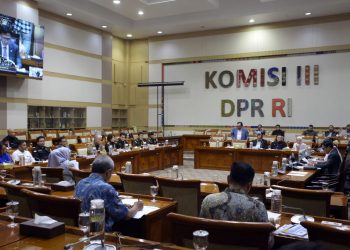
Sumbawa officials asked BRIN to conduct an independent study to clarify the historical basis of the CBSR claims. The research aims to support a more objective and lasting resolution.
Sumbawa Regional Secretary Budi Prasetiyo said the government wants to base the settlement on verified historical facts.
The dispute previously went through mediation facilitated by Komisi Nasional Hak Asasi Manusia (Komnas HAM). The process produced a peace agreement signed on July 26, 2023.
The agreement requires the Sumbawa Regency Government to commission an independent and credible study to verify the community’s customary claims.
BRIN researchers reviewed colonial archives, local historiography, and archaeological evidence. They found no primary records confirming the existence of the “Kedatuan Awan Mas Kuning,” a political entity CBSR narratives claim existed from the 16th to the 20th century.
Archaeological surveys in the upstream area also found no structures linked to a centralized kingdom. Researchers identified small and mobile farming settlements instead.
The study also found major inconsistencies in oral histories cited by the community. Informants gave different accounts about founding figures and leadership lineage.
Researchers noted that the current historical narrative appeared consistently only after the early 2000s. That period coincided with the expansion of mining activity in the region.
BRIN also analyzed burial site claims using geospatial mapping. Several coordinates pointed to steep cliffs and ravines, locations unsuitable for settlements or graves.
The study also found that the claimed customary territory of 28,975 hectares closely overlaps with existing mining concession boundaries.
Researchers concluded that the CBSR identity may reflect a process of contemporary ethnogenesis. In this process, communities form new collective identities shaped by modern political and social dynamics.
The report stresses that the study does not deny the community’s existence. However, formal recognition as an Indigenous customary law community must meet strict constitutional and administrative standards.
Local officials hope the scientific review will help stakeholders assess the dispute more objectively and move toward a fair resolution.