

Jakarta, ThedailyID — Israel’s Arab political alliance, the Joint List, has mocked Prime Minister Benjamin Netanyahu after President Isaac Herzog appointed opposition leader Gadi Eisenkot to form the next government.
In a statement on Tuesday, November 10, the Joint List described Netanyahu as being in “total hysteria” after he failed to receive the mandate to form a governing coalition.


“A prime minister responsible for bloodshed and crimes is now in a state of total hysteria. There is no other explanation for his speech today, with all its madness, incitement, racism, and hatred,” the alliance said, according to Anadolu Agency.
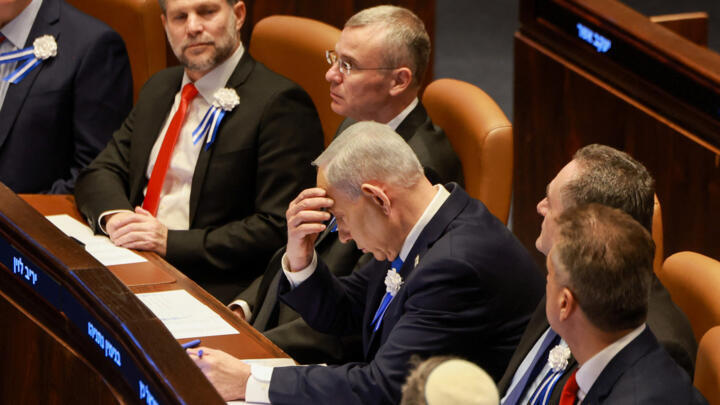
The statement responded to Netanyahu’s address at the opening of the 26th Knesset. During his speech, Netanyahu argued that Arab parties should not participate in the government because they allegedly sought to undermine Israel as a Jewish state.
He specifically accused the United Arab List (Ra’am) and the Joint List of threatening Israel’s future and Jewish identity.
Netanyahu also criticized opposition parties for considering cooperation with Arab political groups. His remarks came as Eisenkot worked to secure parliamentary support for a new coalition.
The Joint List said it would act quickly to remove Netanyahu and his government from power.
Meanwhile, Ra’am leader Mansour Abbas also condemned Netanyahu’s speech. He accused the prime minister of inciting public hostility toward Arab citizens and making false accusations against his party.
Eisenkot Needs Arab Party Support
On Sunday, November 8, President Isaac Herzog formally tasked Eisenkot with forming a new government.
He has 28 days to secure a coalition, with a possible extension of up to 14 additional days.
In the October 27 parliamentary election, Eisenkot’s political bloc secured 48 seats in the 120-member Knesset. Netanyahu’s bloc held 53 seats.
Meanwhile, Ra’am and the Joint List collectively secured 19 seats and signaled their willingness to cooperate with Eisenkot.
Their support could help Eisenkot reach the 61-seat majority required to form a government. However, disagreements over the composition of the coalition and cooperation with Arab parties remain significant challenges.