

Jakarta, ThedailyID — Indonesia ranks seventh among the countries most affected by the climate crisis in 2025, according to Germanwatch’s Climate Risk Index (CRI) 2027.
The ranking reflects extreme weather events recorded throughout the year. Jamaica tops the list, followed by Sri Lanka and Spain.


Indonesia climbed from 27th place in 2024. The latest report recorded 15 extreme weather events across the country in 2025.
These included 12 floods, two landslides, and one cyclone.
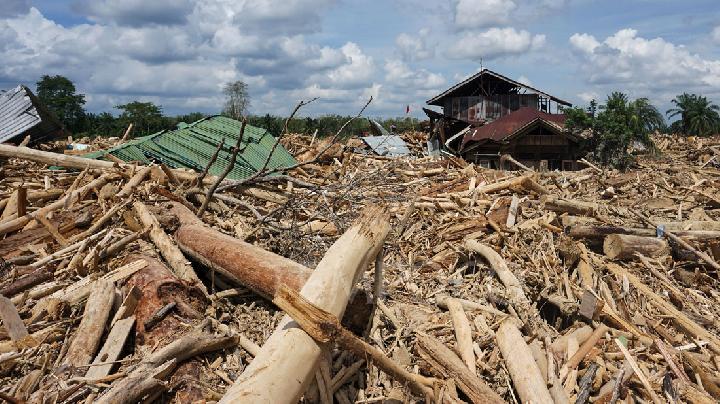
Cyclone Senyar caused the most severe damage in Indonesia. It killed more than 1,100 people and caused an estimated US$4 billion in economic losses.
David Eckstein, Germanwatch’s Senior Advisor for Climate Finance and Investment and one of the report’s authors, stressed the importance of adaptation funding.
He said countries must use COP31 to accelerate the transition away from fossil fuels. They must also work together to mobilize the funding needed to address growing climate impacts.
“Countries must use COP31 to seriously accelerate the transition away from fossil fuels, the main driver of the climate crisis. They must also work together to mobilize funding on the scale needed to address various impacts in the near future,” David said in a statement on Friday, November 20.
Here are the ten countries most affected by extreme weather in 2025, according to CRI 2027.
1. Jamaica
Jamaica ranks first after Hurricane Melissa struck the country. The disaster killed 62 people and caused US$12 billion in economic losses.
2. Sri Lanka
Cyclone Ditwah brought winds of 65 kilometers per hour and triggered widespread flooding in Sri Lanka.
The disaster killed 823 people and caused US$4.1 billion in economic losses.
3. Spain
Spain experienced seven extreme weather events: one heatwave, three storms, and three wildfires.
Extreme heat from April to September contributed to nearly 3,900 deaths. Temperatures during the heatwave reached 46 degrees Celsius.
4. Thailand
Thailand recorded 15 extreme weather events, including six tropical cyclones, four storms, and five floods.
The most severe disaster occurred between mid-November and late November. It killed 276 people.
5. Philippines
The Philippines experienced 15 extreme weather events, 12 of which involved typhoons.
Typhoon Kalmaegi caused the highest number of deaths, killing 372 people.
6. Pakistan
Pakistan experienced two floods, one storm, and one heatwave.
Monsoon rains triggered devastating floods that killed more than 1,000 people.
7. Indonesia
Indonesia recorded 15 extreme weather events in 2025. Cyclone Senyar caused the most severe impact, killing more than 1,100 people.
The cyclone also affected more than three million people.
Extreme rainfall and subsequent flooding forced 130,000 people to leave their homes in Aceh, North Sumatra, and West Sumatra.
8. Bolivia
Bolivia experienced two floods, one storm, and one wildfire.
In December 2025, heavy rainfall caused flooding along the Piraí and Espejos rivers. The disaster killed 30 people.
9. Mozambique
Mozambique faced two cyclones and one flood.
One of them, Cyclone Jude, brought winds of 195 kilometers per hour and killed 16 people.
10. Vietnam
Vietnam experienced 11 storms, including seven typhoons, and three floods.
Typhoon Kalmaegi caused eight deaths in the country.
The report stressed that climate adaptation alone cannot replace emissions reductions. It called on high-emitting countries and major producers of oil, gas, coal, and cement to increase financial support and accelerate domestic climate action.
For Indonesia, the CRI 2027 findings highlight the urgent need to strengthen climate resilience. The country also needs to close disaster data gaps and ensure vulnerable communities receive adaptation and loss-and-damage funding.
Meanwhile, CERAH Policy and Program Manager Wicaksono Gitawan urged Indonesia to develop a roadmap to reduce its dependence on fossil fuels. He also called for stronger protection for communities facing climate impacts.
“The plan to add 16.6 gigawatts (GW) of fossil fuel capacity, consisting of 10.3 GW of gas and 6.3 GW of coal, under the 2025–2034 Electricity Supply Business Plan (RUPTL) should be scrapped,” Wicaksono said.
He added that Indonesia should use COP31 as an opportunity to support the 35×35 electrification commitment.
“Amid COP31’s push for the 35×35 electrification commitment, Indonesia should seize this opportunity. It can support electrification through renewable energy and accelerate the phaseout of fossil fuels as a beneficial trade-off,” he added.