
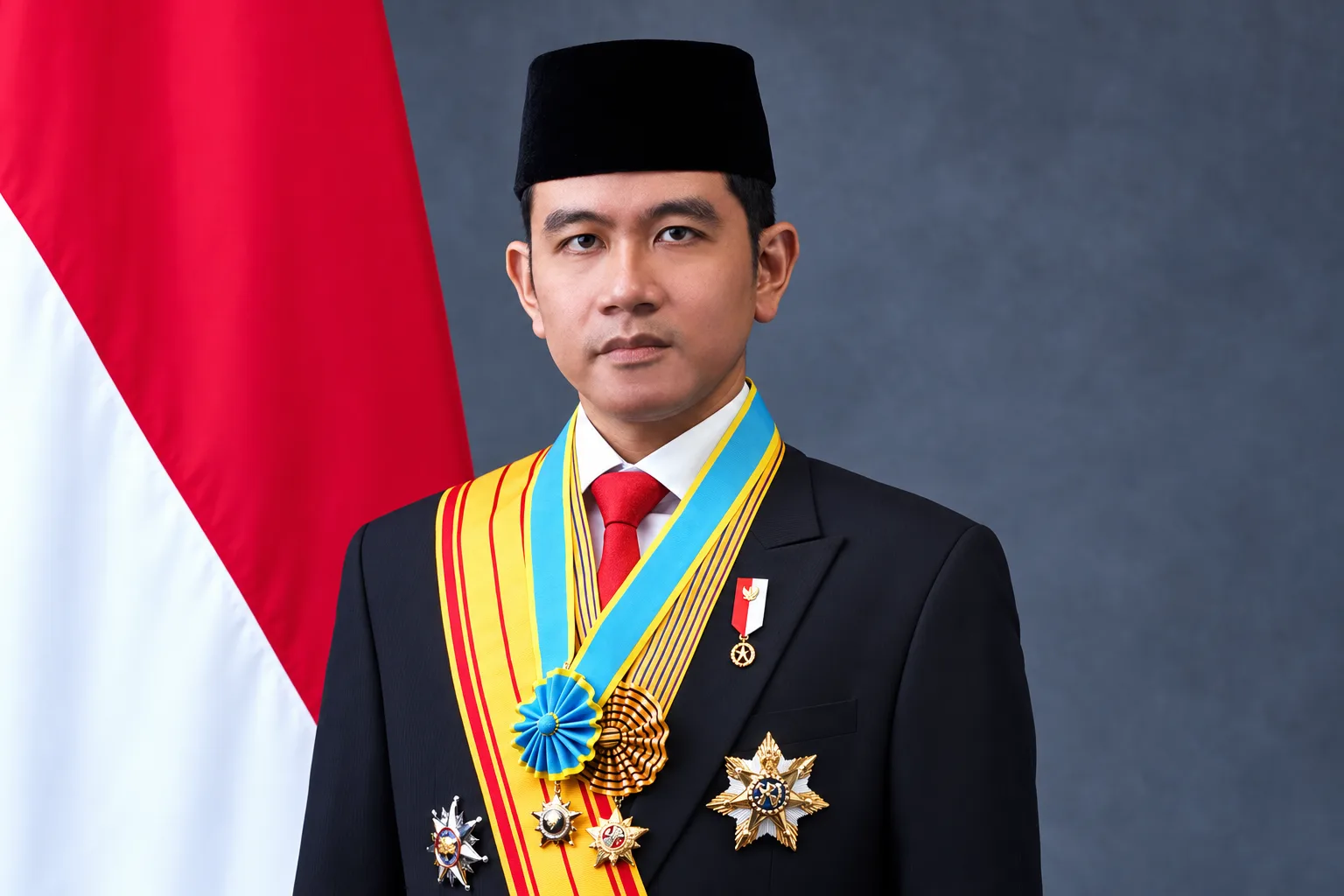
Jakarta, ThedailyID — Indonesian Vice President Gibran Rakabuming Raka faces growing political pressure following controversy over his high school education documents. Eight parliamentary factions were reportedly prepared to pursue the House of Representatives’ (DPR) right to express an opinion on Tuesday, November 10.
The development followed rulings by the Constitutional Court (MK) and Supreme Court (MA) concerning Gibran’s education documents and equivalency certificate.

Several developments have shaped the debate, including Gibran’s meeting with President Prabowo Subianto, his intention to resign, and plans to pursue legal action.
Prabowo and Gibran Hold Two-and-a-Half-Hour Meeting
State Secretary Prasetyo Hadi confirmed that Prabowo met Gibran at the Presidential Palace on Tuesday morning.
The meeting lasted approximately two and a half hours. During the discussion, Gibran reportedly expressed his intention to resign as vice president amid the controversy surrounding the court rulings.
Prasetyo clarified that Prabowo did not reject Gibran’s intention. Instead, the president offered several suggestions during their discussion.
Gibran also requested an opportunity to prove the validity of his education documents through proceedings at the State Administrative Court (PTUN).
Gibran Responds to the Resignation Controversy
Despite the political developments, Gibran continued carrying out his official duties.
On Tuesday, he accompanied Prabowo at the 2026 National Heroes Award ceremony at the State Palace in Jakarta.
Gibran also addressed questions about his possible resignation. However, he did not explicitly confirm whether he would step down.
“I respect all the appreciation, criticism, and suggestions from the public regarding the current situation. I do not want these developments to become a prolonged political controversy,” Gibran said at the Vice Presidential Palace.
Yusril Questions the Legal Route
Coordinating Minister for Legal Affairs, Human Rights, Immigration, and Corrections Yusril Ihza Mahendra also commented on Gibran’s reported plan to challenge the education documents through the PTUN.
Yusril argued that pursuing another case would serve little purpose because the Constitutional Court and Supreme Court had already issued final and binding decisions.
“There is nothing more that can be done because the Constitutional Court’s ruling is final and binding. There are no further legal remedies, and the Supreme Court’s decision is also final,” Yusril said at the Presidential Palace on Tuesday.
He explained that the defendant in the Supreme Court case was the Director General of the Ministry of Primary and Secondary Education. Therefore, Gibran could not appeal because he had not participated as an intervening defendant.
Yusril also suggested that the ongoing PTUN proceedings filed by Mercy and Denny Indrayana could be discontinued because the disputed education equivalency certificate had already been declared invalid.
Lawmakers Express Different Views
Deddy Yevry Sitorus, a member of parliament from the Indonesian Democratic Party of Struggle (PDI-P), questioned Gibran’s plan to prove his documents through the PTUN.
He argued that the administrative court could not overturn a Supreme Court ruling because the two courts handle different types of cases.
Deddy also questioned why Gibran and the Ministry of Primary and Secondary Education had not used the opportunity to present their arguments earlier.
Meanwhile, DPR Deputy Speaker Saan Mustopa said he respected Gibran’s right to pursue legal action.
However, he emphasized that parliament could continue its political process through the right to express an opinion. Therefore, the legal proceedings and parliamentary process could take place simultaneously.
Gibran’s Resignation Does Not Require Presidential Approval
Golkar Deputy Chairman and DPR Commission II member Ahmad Doli Kurnia said the Constitution does not require the president to approve a vice president’s resignation.
According to Doli, if Gibran decides to step down, the resignation process would involve the DPR and People’s Consultative Assembly (MPR), rather than requiring approval from Prabowo.
He also argued that the DPR and MPR do not have the authority to reject a vice president’s resignation.
The developments leave Gibran facing several political and legal questions. His next steps, alongside parliament’s response, will shape the future of the controversy.