

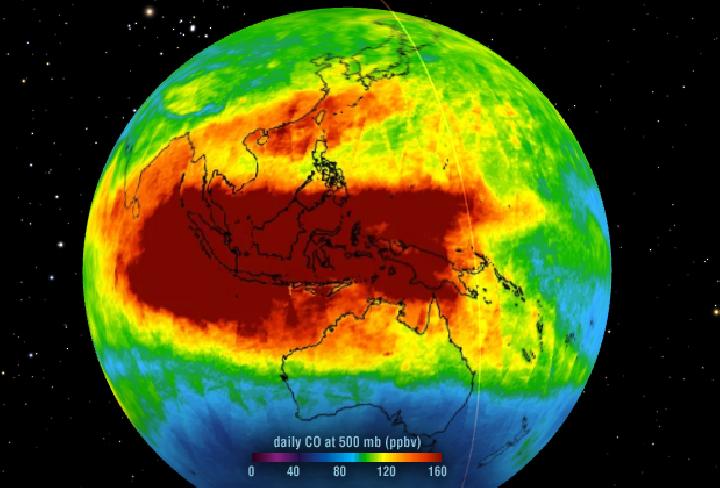
Jakarta, ThedailyID — A NASA satellite map recently drew attention online after showing high concentrations of carbon monoxide (CO) over parts of Indonesia. The gas poses serious health risks because it can interfere with the body’s oxygen supply.
Carbon monoxide is colorless and odorless, making it difficult to detect without specialized equipment. Severe exposure can damage vital organs and may prove fatal.


According to the World Health Organization’s Guidelines for Indoor Air Quality: Selected Pollutants, inhaled CO enters the lungs and reduces the blood’s ability to carry oxygen. It also interferes with the release of oxygen to body tissues.
The brain and heart are particularly vulnerable because they need a steady oxygen supply to function properly. When oxygen levels fall, brain function can deteriorate, initially causing reduced energy and other symptoms. Severe oxygen deprivation can damage nerve cells, cause unconsciousness, and lead to death.
CO can also directly affect heart cells and muscles. People with existing heart conditions face greater risks. In severe cases, exposure can trigger a heart attack or cardiac arrest.
The symptoms of carbon monoxide poisoning depend on the gas concentration, exposure duration, and a person’s medical history. The US Centers for Disease Control and Prevention (CDC) identifies several early warning signs:
-
Headache
-
Dizziness and weakness
-
Nausea or vomiting
-
Unusual fatigue
-
Difficulty concentrating
More serious symptoms include shortness of breath, chest pain, a racing heartbeat, confusion, vision problems, and loss of consciousness.
Anyone experiencing these symptoms after possible CO exposure should seek immediate medical attention. Because the gas has no color or smell, people cannot rely on their senses to detect its presence.