

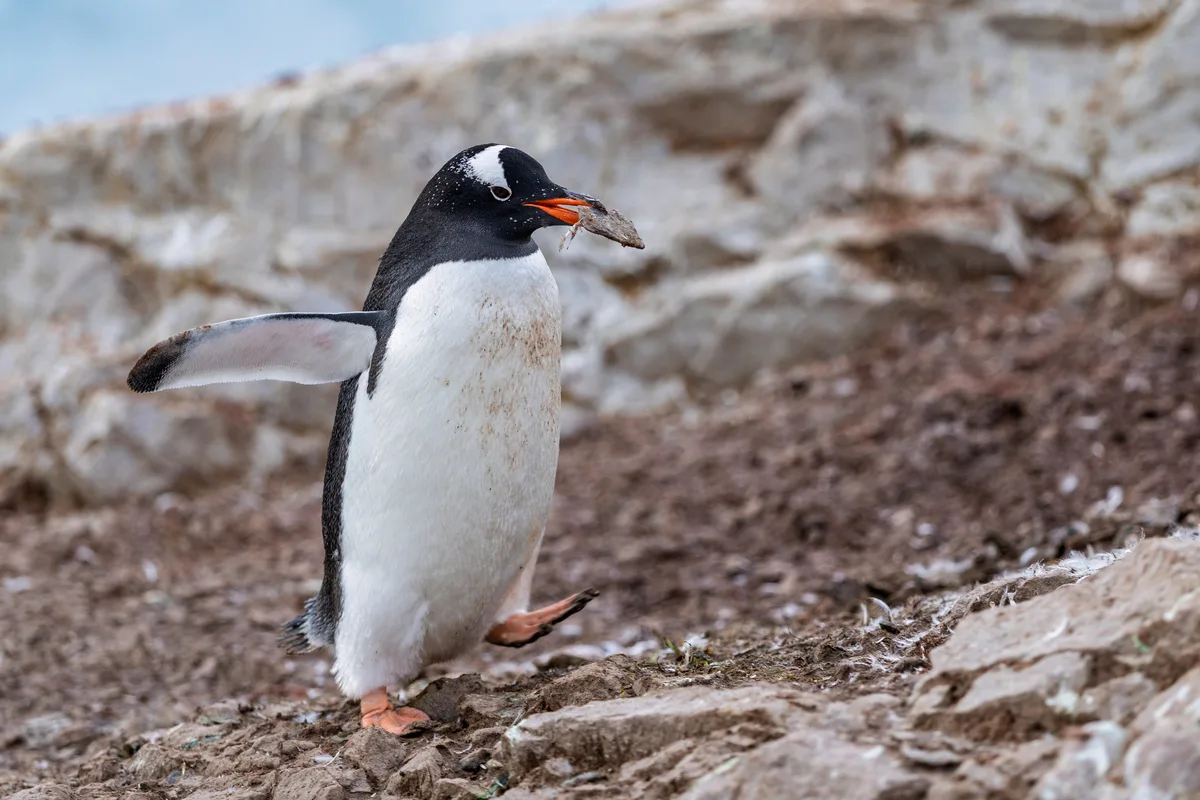


Jakarta, ThedailyID — Scientists have identified a new penguin species after more than 100 years without naming a new species. Researchers named the penguin southern gentoo, or Pygoscelis kerguelensis.
An international team led by researchers in Chile and the University of California made the discovery. The team published its findings in Communications Biology.
The penguins live on remote islands in the Southern Hemisphere. Their habitat lies in the Kerguelen Islands, almost 3,200 kilometers from the nearest permanently inhabited land.
The researchers used genetic evidence to examine gentoo penguins. They found that what scientists had considered one species actually consists of four distinct species.
The four species likely evolved between 300,000 and 500,000 years ago. Geographic isolation played a major role in that process.
The four gentoo species occupy different regions. Pygoscelis ellsworthi lives in Antarctica, while Pygoscelis taeniata occupies eastern waters.
Meanwhile, Pygoscelis papua lives in northern areas around South America. The newly recognized Pygoscelis kerguelensis lives in the southeast near the Polar Front.
At first glance, the four penguins look almost identical. They all have white undersides and black backs.
Researchers found only minor physical differences among them. Body size and vocal patterns help distinguish the southern gentoo from other gentoo penguins.
Their genes, however, tell a different story. Scientists classify organisms with this combination of similar appearance and major genetic differences as cryptic species.
The researchers also upgraded three gentoo populations that scientists previously considered subspecies. Their genetic differences now support treating them as full species.
The team reached its conclusions after analyzing whole genomes from 64 penguins. The samples came from 10 breeding colonies and covered almost the entire known geographic range of gentoo penguins.
Rauri Bowie from UC Berkeley’s Museum of Vertebrate Zoology said scientists have debated gentoo penguin taxonomy for more than a century.
“For more than 100 years, the number of species or subspecies has remained controversial,” Bowie said. “This research tries to answer that question using a modern integrative approach.”
The researchers compared physical and behavioral traits as well. Their analysis included color, vocalizations, breeding schedules, diet, and feeding behavior.
Gentoo penguins have a flexible diet compared with many other penguin species. They can eat fish, krill, squid, and cuttlefish.
That variety means they do not always need to travel far from their breeding colonies to find food. They also tend to return to the same nesting areas each year.
Over generations, isolated populations adapted to their local environments. Natural selection then reinforced differences across their genomes.
The study found that each gentoo species carries genetic adaptations linked to its environment. Southern gentoo penguins show adaptations related to extreme conditions and fat storage.
Eastern gentoo penguins show adaptations linked to carbohydrate metabolism and diving ability. Northern gentoo penguins have genetic traits associated with digestion and heart contractions.
The newly recognized southeastern gentoo adds another distinct set of adaptations to the group.
However, climate change could threaten these penguins. Rising temperatures are changing Antarctic and sub-Antarctic environments where the gentoo species live.
Juliana Vianna, a researcher and professor at Andrés Bello National University in Chile, said the situation remains particularly concerning for gentoo penguins on sub-Antarctic islands.
“It is very important for conservation institutions in all countries involved to study these penguins and take appropriate action to protect the three gentoo species,” Vianna said.